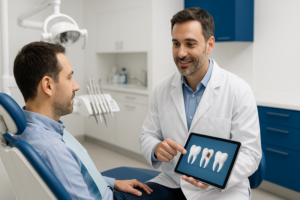
What All on Four Costs Actually Cover
The all on four implant cost is the total price of replacing one full arch of teeth with four implants and a fixed bridge supported by them. It is not a single line item. It covers surgery, the implants themselves, a temporary bridge, and the final prosthesis.
Quotes differ between offices because the clinical work differs. How much bone you have, whether teeth still need to be removed, what the final bridge is made of, and how the case is planned all move the number. Once you know which variables you are being charged for, two quotes become comparable.
All on Four is one path within dental implant care. It restores an entire arch in fewer surgical steps than placing an implant for every missing tooth, and the finished result can look very close to natural-looking dental implants.
Who This Cost Guide Is For
This guide is for patients missing most or all of their teeth in one or both jaws who are comparing quotes for full-arch treatment, or trying to read a low advertised price and work out what it leaves out.
Table of Contents
What Are All on Four Dental Implants?

All on Four replaces a full arch of teeth with four implants that carry one fixed bridge. The bridge is screwed down, so it does not come out at night and it does not rest on the gums the way a denture does.
Patients usually compare it against a denture on one side and a larger restorative treatment plan on the other.
How the All on Four Technique Works
- Where the implants go: two implants are placed upright toward the front of the jaw, where bone is usually densest, and two are angled toward the back.
- Why they are angled: tilting the back implants lets us anchor into bone that is already there, which is often how grafting is avoided in the upper jaw where the sinus sits low.
- Immediate load: in most cases a temporary fixed bridge goes on the same day or within a few days, so you do not go without teeth.
- Final bridge: after the implants integrate, usually a few months, the temporary comes off and a custom final bridge is fitted.
Not everyone is a candidate. Uncontrolled diabetes, active gum infection, heavy smoking, and severe bone loss in the back of the jaw all change the plan, and sometimes rule the technique out. That is a clinical decision, and it belongs in the exam, not in a phone quote.
What Changes the Price
Six things account for most of the spread between quotes.

The main factors behind the price of a full-arch case.
- What the bridge is made of. An acrylic bridge on a titanium bar costs less than monolithic zirconia. Zirconia resists wear and staining better and holds its shape under heavy bite force, which matters most in patients who clench.
- One arch or two. Treating both jaws roughly doubles the surgical time, the lab work, and the fee.
- Work needed first. Remaining teeth may need to come out, infected sites need to be cleaned, and bone sometimes needs to be reduced to make room for the prosthesis. Necessary extractions are usually billed separately.
- Bone volume. The angled design avoids grafting in many cases, but not all. If there is not enough bone to anchor four implants, grafting or a different implant plan adds cost and adds months.
- Sedation. Local anesthetic is included. IV sedation is an extra fee and is worth it for anxious patients or long combined extraction and placement appointments.
- Planning and lab work. A CBCT scan, a digital plan, and a surgical guide add to the fee and reduce the chance of an implant ending up in a position the prosthesis cannot use.
Provider Experience and Location
Full-arch implant work is unforgiving. Implant angle, bite, and prosthetic design have to be right the first time, because correcting a poorly positioned implant afterward is expensive and sometimes not possible. Surgeons with formal implant training charge more, and here the training is part of what you are paying for.
Geography matters too. Operating costs and lab fees in coastal Los Angeles run above the national average, so a quote from another state is not a useful benchmark.
Typical Ranges and What Is Included

In California, full-arch implant treatment typically runs $18,000 to $30,000 per arch, or $36,000 to $60,000 for both arches. Where a case lands in that range depends on the factors above, and no honest estimate is possible before a scan and an exam.
Package pricing is common, and what sits inside the package is not standard. Ask for it in writing.
- Usually included: surgical placement of four implants, the temporary fixed bridge, and the final full-arch bridge.
- Often included: imaging, digital planning, healing visits, and bite adjustments.
- Commonly billed separately: extractions, bone grafting, IV sedation, and upgraded prosthetic materials.
A low advertised fee usually excludes the final bridge. That is the single most expensive component, so a quote that stops at the temporary is not a quote for finished treatment. Ask directly: does this number include the final prosthesis, and what happens if the bridge fractures in year three.
Single Arch vs Both Arches
- Single arch, about $18,000 to $30,000: appropriate when only the upper or only the lower jaw has failed.
- Both arches, about $36,000 to $60,000: for advanced tooth loss top and bottom.
When only some teeth are failing, a mixed plan combining implants with crowns on sound teeth may cost less and preserve more of what you have. A full mouth restoration plan is worth comparing before committing to removing an arch of teeth that could be saved.
How to Budget and Plan

The planning sequence, from first exam to scheduled surgery.
Step-by-Step Budgeting Process
- Get a scan and an exam. A CBCT shows bone height and volume, sinus position, and nerve location. Until that is done, any number you are given is a guess.
- Ask for the scope in writing. It should name every stage: extractions, implant placement, the temporary, the final bridge, and follow-up visits. Compare scope before you compare totals.
- Check your benefits. Most plans do not cover the implants, but many cover part of the extractions or the prosthesis, and annual maximums can be used across two calendar years if treatment spans them.
- Look at financing. Monthly payment plans and third-party financing are common at this level. Spreading payments beats choosing a cheaper plan that omits the final bridge.
- Plan for maintenance. A fixed bridge needs professional cleaning around the implants and periodic checks of the screws and bite. Budget for those visits.
- Set your dates. Coordinate surgery and restoration appointments once financing is approved, so healing is not interrupted.
Questions Patients Ask About Cost
How much does All on Four cost in California?
Typically $18,000 to $30,000 per arch. The spread reflects prosthetic material, whether extractions or grafting are needed, and whether sedation is used. A scan and exam are needed before anyone can tell you where your case falls.
Is All on Four cheaper than individual implants?
For a full arch, usually yes. Four implants carrying one bridge means less surgery and less hardware than placing an implant for each missing tooth. If you still have several healthy teeth, though, a partial plan may cost less than removing them to fit a full arch.
What should the price include?
At minimum: the four implants, the surgery, the temporary fixed bridge, and the final full-arch bridge. Imaging, sedation, and extractions vary by office. Get the list in writing and confirm the final prosthesis is in it.
Does insurance cover any of it?
Dental insurance rarely covers the implants themselves, but it often contributes to extractions and sometimes to the prosthetic bridge. Medical insurance applies only in limited situations, such as tooth loss following trauma or certain medical conditions, and requires documentation.
How long do they last?
The implants themselves can last decades with good hygiene and regular maintenance visits. The bridge on top is the wearing part and may need repair or replacement over the years, sooner if you grind your teeth. A night guard is often recommended for that reason.
Get a Personalized Estimate
The only accurate quote comes from a scan and an exam. We will tell you whether four implants can be anchored in your bone, what has to happen before placement, and what the finished arch will cost, itemized.
Consultations and second opinions at our Marina del Rey office are free. If you are holding a quote from somewhere else and are not sure what it covers, bring it in and we will go through it line by line with you.
The Value of All on Four Implants
For a patient facing the loss of a whole arch, a fixed implant bridge restores chewing force and speech in a way a removable denture does not, and it stops the bone loss that follows tooth loss. That is what the fee buys.
Our Commitment to Patient-Centered Care
We plan these cases to last, and we say so when a patient is not a good candidate for four implants rather than proceeding anyway. If the bone or the medical history points to a different plan, you will hear that at the consultation.