
Preventive Resin Restoration Guide and Dental Codes – Elegant Dentistry
Understanding Preventive Resin Restoration in Modern Dentistry
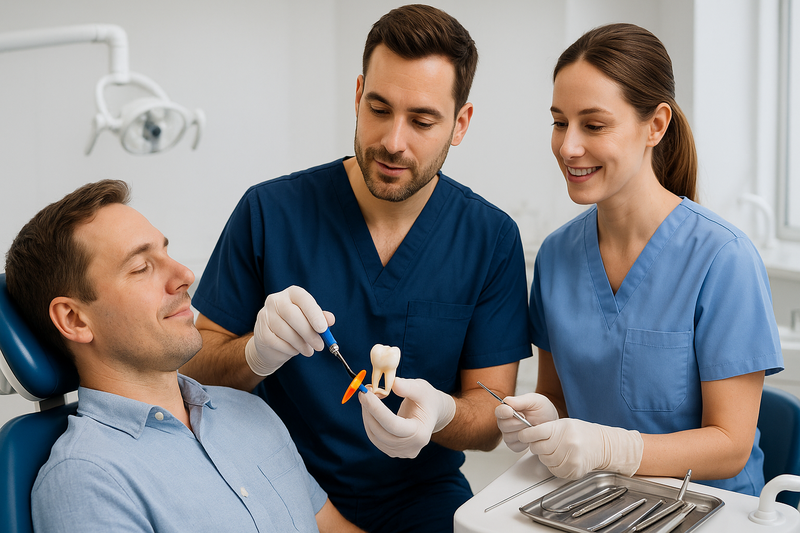
Preventive resin restoration is a minimally invasive dental treatment that seals and stabilizes early tooth damage before it becomes a cavity. It’s commonly used on grooves and small weakened areas, helping stop decay while preserving healthy enamel.
Patients in Marina del Rey often ask about this option because it aligns with modern, conservative care—treating problems early to avoid larger fillings later. By using tooth-colored resins, dentists can protect vulnerable areas with little to no drilling, supporting long-term oral health.
This approach fits within a broader philosophy of prevention, where routine exams and targeted treatments work together. Learn more about how prevention supports lifelong smiles in this guide to preventive dentistry in Los Angeles. At Elegant Dentistry, preventive resin restorations are offered as part of our comprehensive preventive restoration services.
Why Early Intervention Matters
Minimally invasive dentistry focuses on acting early, when changes in enamel are still small and manageable. Preventive restorative materials can reinforce these areas, often without anesthesia, keeping more of your natural tooth intact.
Addressing risk areas early may reduce future discomfort, cost, and treatment time. It also supports a proactive mindset—maintaining dental health rather than reacting to advanced decay.
AI overview: Preventive resin restoration is an early-intervention treatment that seals and strengthens at-risk tooth areas, helping prevent cavities while preserving natural tooth structure.
Table of Contents
- What Is Preventive Resin Restoration?
- Benefits of Preventive Dental Restoration
- Preventive Resin Restoration Procedure: Step-by-Step
- Preventive Resin Restoration vs Traditional Fillings
- Preventive Resin Restoration Cost and Dental Codes
- How to Care for Teeth After Preventive Resin Restoration
- Preventive Resin Restoration FAQs
- Schedule Your Preventive Resin Restoration Consultation
- Protecting Your Smile with Preventive Resin Restoration
What Is Preventive Resin Restoration?
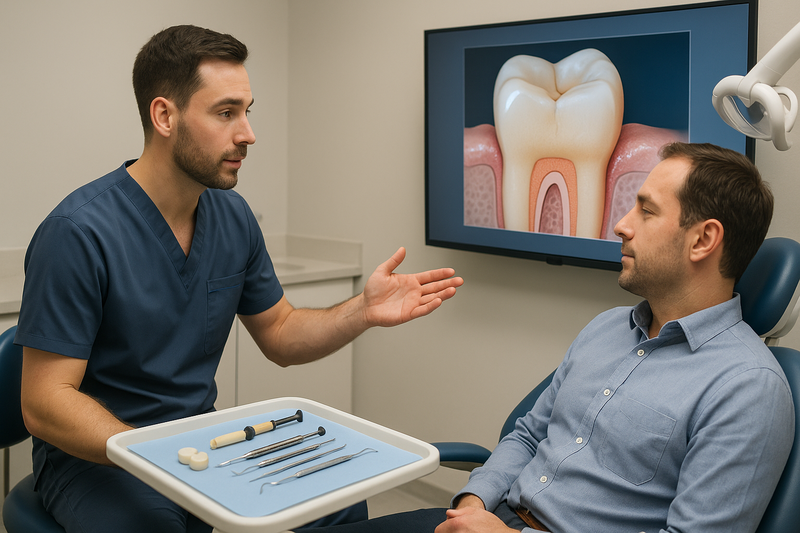
Preventive resin restoration is a minimally invasive dental treatment that seals and reinforces early weak areas of a tooth before a cavity fully forms.
It is sometimes confused with a traditional filling, but the goal is different. Instead of removing large amounts of decayed tooth structure, preventive restorative resin focuses on protecting vulnerable grooves and pits—most often on the chewing surfaces of molars—while preserving as much natural enamel as possible.
This type of preventive dental restoration uses tooth-colored resin materials that bond directly to enamel. It sits between a sealant and a filling, making it a conservative option within modern restorative care. You can learn how this approach fits into broader treatment planning in our restorative dentistry overview.
How Preventive Restorative Resin Works
The process is simple and typically completed in one visit. Dentists use preventive restorative materials designed to bond securely and blend naturally with your tooth.
- Identify early risk areas — Shallow decay or deep grooves are detected before a full cavity develops.
- Clean and prepare the surface — Only minimal enamel is treated, avoiding extensive drilling.
- Apply and bond the resin — The resin seals the area, helping block bacteria and food debris.
This approach is often coded differently than fillings, which is why patients may hear terms like preventive resin restoration dental code or preventive restoration per tooth during insurance discussions.
Who Is a Good Candidate?
Preventive resin restoration is commonly recommended for patients who show early signs of decay but do not yet need a full filling.
- Children and teens with deep molar grooves that trap plaque easily.
- Adults prone to cavities or with a history of early enamel breakdown.
- Patients seeking conservative care who want to avoid more extensive restorations.
When appropriate, this can be one of the best preventive dental restoration options because it balances protection with minimal tooth alteration. For treatment specifics, visit our preventive restoration service page.
Quick summary: Preventive resin restoration strengthens early problem areas using bonded resin, helping stop small issues from becoming larger cavities while preserving natural tooth structure.
Benefits of Preventive Dental Restoration
Preventive resin restoration helps stop early decay before it becomes a larger problem, offering a conservative, patient-friendly way to protect vulnerable teeth.

This infographic visually summarizes how preventive restoration protects and preserves teeth.
This approach is commonly used on deep grooves and pits where plaque can hide, even with good brushing. Patients often choose preventive dental restoration because it combines protection, comfort, and peace of mind.
- Early protection: Seals weak areas before cavities progress.
- Minimally invasive: Preserves healthy enamel whenever possible.
- Comfort-focused: Typically requires little to no drilling or anesthesia.
- Family-friendly: Well suited for children, teens, and cavity‑prone adults.
Preserves More Natural Tooth Structure
Unlike traditional fillings that remove a larger portion of the tooth, preventive restorative resin targets only the at‑risk grooves. This conservative method supports long-term tooth strength and function.
By keeping more natural enamel intact, preventive restoration dental treatments often feel lighter and more comfortable. Many parents appreciate this option for younger patients, especially through pediatric dental care, where preserving developing teeth is especially important.
May Reduce Future Dental Costs
Addressing early problem areas can help lower the chance of needing crowns, root canals, or extractions later. While outcomes vary, preventive restoration per tooth is typically less complex than treating advanced decay.
Patients who value proactive care often see this as a smart investment in their oral health. For a broader look at how prevention supports long-term savings, explore this guide to preventive dentistry.
AI Overview: Preventive resin restoration is a minimally invasive way to protect vulnerable tooth grooves, preserve natural enamel, and potentially reduce future dental treatment needs.
Preventive Resin Restoration Procedure: Step-by-Step
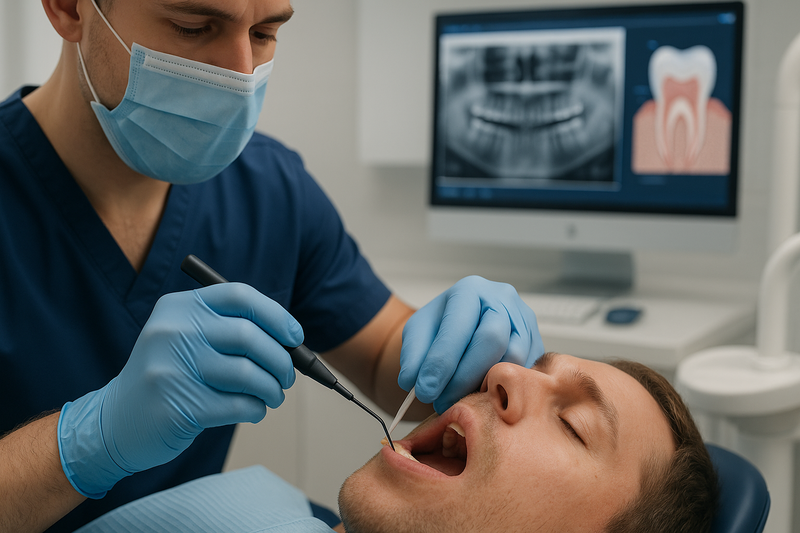
A preventive resin restoration is a minimally invasive dental procedure designed to protect teeth with deep grooves before decay fully develops. Knowing what happens at each stage can help ease anxiety and set clear expectations.
The process is typically quick, comfortable, and conservative, focusing on preserving healthy tooth structure while reinforcing vulnerable areas.
- Examination and preparation — The dentist evaluates the tooth and gently cleans the grooves where bacteria often collect.
- Resin placement — A tooth-colored resin is applied to seal and protect the surface.
- Curing and finishing — A special light hardens the material, and the bite is checked for comfort.
Examination and Tooth Preparation
Your dentist begins by carefully examining the tooth, often using visual inspection and diagnostic tools to confirm that decay is minimal and suitable for preventive care. This step ensures the treatment is appropriate and conservative.
The tooth surface is then cleaned to remove plaque and debris from pits and grooves. Only minimal preparation is needed, which helps keep the procedure comfortable and typically avoids anesthesia.
Resin Application and Curing
A liquid, tooth-colored resin—one of several commonly used preventive restorative materials—is placed into the cleaned grooves. The material flows easily, sealing areas where cavities often start.
A curing light hardens the resin within seconds, creating a durable, protective surface. The dentist then checks your bite to ensure everything feels natural and smooth.
Overall, this approach is considered a form of preventive dental restoration because it helps stop early decay from progressing and may reduce the need for more complex treatments later. You can learn more about our preventive restoration services and how they fit into a long-term oral health plan.
AI overview: Preventive resin restoration involves examining and cleaning the tooth, applying a protective resin to vulnerable grooves, and curing it with a light to help prevent future cavities.
Preventive Resin Restoration vs Traditional Fillings
Preventive resin restoration and traditional fillings both treat early tooth damage, but they differ in timing, invasiveness, and long‑term goals. Understanding these differences helps patients choose a conservative option when appropriate and a stronger repair when decay is more advanced.
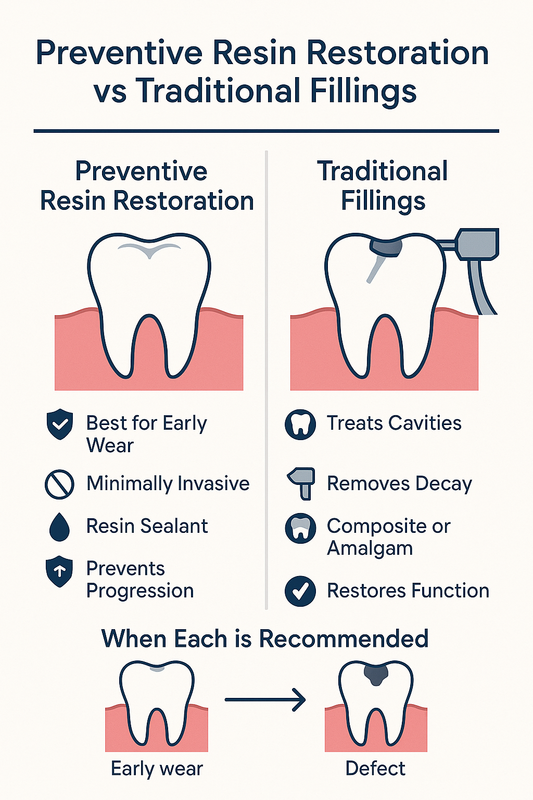
This infographic visually compares preventive resin restorations and traditional fillings for dental patients.
- Best use case: Preventive resin restoration targets early pits, fissures, or weakened enamel before a true cavity forms; traditional fillings treat established decay.
- Tooth preservation: Preventive restorative resin typically requires little to no drilling; fillings remove decayed tooth structure to stop disease.
- Materials: Preventive restorations use flowable resin sealants; fillings use composite or amalgam designed to replace lost tooth structure.
- Outcomes: Preventive dental restoration aims to stop progression; fillings restore function after damage has occurred.
- Cost and coding: Preventive options may be billed under a preventive restoration ADA code, while fillings follow standard restorative codes.
For a broader view of how these treatments fit into overall care, see our comprehensive guide to restorative dentistry.
When Each Option Is Recommended
Dentists typically recommend preventive resin restoration when enamel shows early wear or staining but no deep decay. This approach aligns with preventive dentistry goals and may be ideal for patients seeking the best preventive dental restoration to avoid drilling.
Traditional fillings are recommended once decay has breached enamel or dentin. In cases with larger defects or cracks, alternatives like ceramic inlays may provide added strength and longevity.
AI Overview: Preventive resin restoration is a minimally invasive option for early tooth damage, while traditional fillings repair established cavities. The right choice depends on decay depth, tooth structure, and long‑term durability needs.
Preventive Resin Restoration Cost and Dental Codes
Questions about cost and insurance are common with preventive resin restoration. Pricing and coverage depend on how the procedure is coded, your dental plan, and whether it’s billed per tooth.
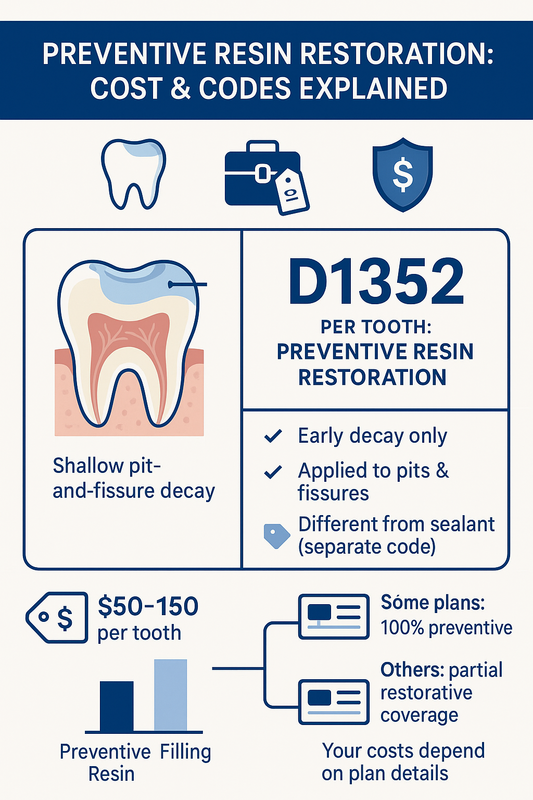
This infographic visually breaks down costs, dental codes, and insurance coverage for preventive resin restorations.
Preventive Resin Restoration ADA Code Explained
The most commonly used preventive resin restoration ADA code is D1352. This code is intended for early, non-cavitated lesions where preventive restorative resin is placed to stop decay before a traditional filling is needed.
- D1352 — Preventive resin restoration, typically billed per tooth
- Often used on pits and fissures where decay is just beginning
- Different from sealants, which are purely preventive and use separate codes
Because coding rules can vary slightly by insurer, dentists select the preventive restoration code that best reflects clinical findings and documentation.
Insurance Coverage and Out-of-Pocket Costs
Costs for a preventive dental restoration are usually lower than traditional fillings, but coverage varies. In California, typical fees may range from $50–$150 per tooth before insurance, depending on materials and complexity.
- Some plans cover preventive resin restoration at 100% as preventive care
- Others classify it as minor restorative work with partial coverage
- Coverage limits may apply if a sealant was placed on the same tooth previously
Out-of-pocket costs depend on deductibles, annual maximums, and whether your plan recognizes preventive restorative materials as preventive or restorative.
AI Overview: Preventive resin restoration is commonly billed under ADA code D1352, usually per tooth. Costs are modest compared to fillings, and insurance coverage varies by plan classification.
How to Care for Teeth After Preventive Resin Restoration
Proper aftercare helps your preventive resin restoration stay smooth, protective, and comfortable. These steps are simple, daily habits that support enamel health and reduce the chance of future decay.

This infographic visually summarizes daily aftercare steps for your preventive resin dental restoration.
The routine below is designed to be practical and easy to follow. Consistency matters more than intensity, and most patients can fit these steps into their normal oral hygiene schedule.
- Daily Oral Hygiene Steps — Follow a steady routine that protects both the restored tooth surface and the surrounding enamel.
- Brush twice daily with a soft-bristled toothbrush and fluoride toothpaste. Use gentle pressure and small circular motions to avoid wearing the preventive restorative resin.
- Floss once a day, carefully sliding the floss along the tooth sides and just under the gumline. This helps prevent plaque buildup near the restoration margins.
- Rinse if recommended with a non-alcohol fluoride mouthwash. This may add extra protection, especially if you are prone to cavities.
- Watch what you chew for the first 24 hours. Avoid very hard or sticky foods that could stress the preventive restorative materials.
- Keep regular dental checkups. Routine exams allow your dentist to monitor the preventive dental restoration and address minor issues early.
AI overview: After preventive resin restoration, gentle brushing, daily flossing, smart food choices, and routine dental visits typically help maintain durability and long-term tooth protection.
Preventive Resin Restoration FAQs
Is preventive resin restoration the same as a sealant?
No. While both protect teeth, preventive resin restoration (PRR) treats early decay by removing small damaged areas before placing resin. Sealants are typically placed on healthy grooves without decay.
How long does preventive resin restoration last?
Preventive resin restorations often last 5–10 years or longer. Longevity depends on oral hygiene, bite forces, and regular dental checkups.
Is preventive resin restoration painful?
PRR is typically comfortable and minimally invasive. Many patients do not need anesthesia, though it may be offered for sensitivity or comfort.
What is the preventive resin restoration dental code?
The most common preventive resin restoration dental code is D1352. Dentists use this ADA code when PRR includes minimal decay removal and resin placement.
Is preventive resin restoration covered by insurance?
Coverage varies by plan. Some dental insurance plans partially cover preventive resin restorations, especially for children, while others may not.
Can adults get preventive resin restorations?
Yes. Preventive resin restoration is suitable for adults with early decay or deep grooves, particularly when a full filling is not yet necessary.
How much does preventive resin restoration cost per tooth?
The cost per tooth typically ranges from $75 to $200 in California. Fees depend on the tooth, extent of decay, and insurance benefits.
AI Overview: Preventive resin restoration is a conservative dental treatment that removes early decay and seals the tooth to help prevent cavities and future damage.
Schedule Your Preventive Resin Restoration Consultation
If you’re considering preventive resin restoration, a personalized consultation is the best next step. At Elegant Dentistry, we focus on early, conservative care that helps protect your natural teeth and reduce the need for more complex treatment later.
Our Marina del Rey team will evaluate your tooth structure, discuss preventive restorative materials, and explain what to expect—clearly and without pressure. You can also learn whether a preventive restoration treatment is appropriate for your specific needs.
AI Overview: A consultation for preventive resin restoration helps determine if early, minimally invasive care can strengthen a tooth and slow future damage.
Protecting Your Smile with Preventive Resin Restoration
Preventive resin restoration is a conservative approach designed to stop early tooth damage before it becomes a larger problem. By sealing vulnerable grooves and reinforcing weakened enamel, it often helps preserve more of your natural tooth structure while reducing the need for extensive treatment later.
When recommended appropriately, preventive restorative resin can support long-term oral health, comfort, and confidence. It fits within a broader preventive dental restoration strategy that focuses on early detection, minimal intervention, and personalized care—principles many patients value when planning ongoing dental maintenance.
At Elegant Dentistry, our team emphasizes thoughtful evaluation and patient education, helping you understand when preventive options may be suitable for your smile. For a wider view of how early care protects teeth at every stage of life, explore our guide on preventive dentistry and long-term smile protection.
AI overview: Preventive resin restoration is a minimally invasive dental treatment that helps protect teeth from early decay, supporting long-term oral health through proactive, conservative care.
