
How Preventive Resin Restoration Saves Your Smile – Elegant Dentistry
Why Preventive Resin Restoration Matters for Long-Term Oral Health
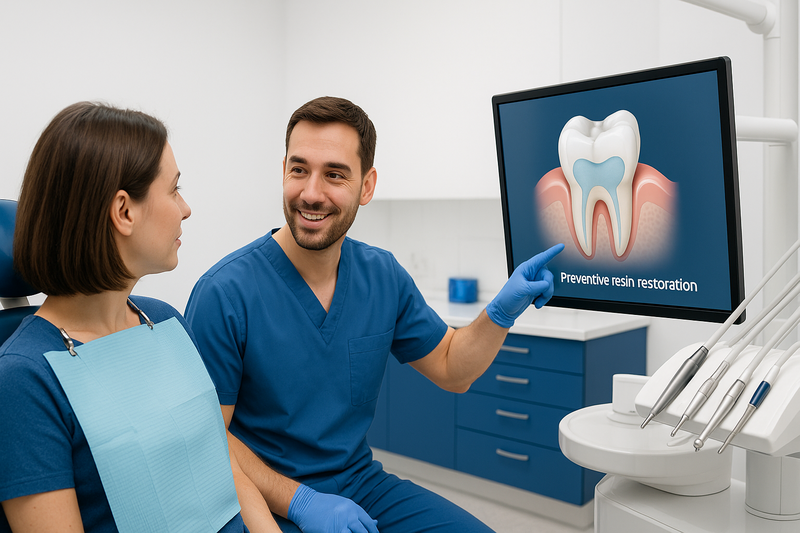
Preventive resin restoration is a conservative dental treatment designed to protect teeth at the earliest signs of decay, before damage becomes extensive. By sealing vulnerable grooves or small lesions with durable resin, dentists can help stop cavities from progressing while preserving natural tooth structure.
This early-intervention approach aligns closely with modern preventive dentistry, where the goal is to reduce the need for fillings, crowns, or root canals later on. Patients who address minor enamel changes early often experience fewer symptoms, lower long-term costs, and more predictable outcomes. It’s a proactive option commonly used for children, teens, and adults with deep pits or early decay.
As part of a broader prevention-first philosophy, preventive resin restoration complements routine exams, cleanings, and fluoride care. If you’re exploring conservative options to maintain your smile, learning how this treatment fits within preventive dentistry can help set clear expectations.
At Elegant Dentistry, this approach is offered through our preventive restoration services, focusing on early protection rather than repair after the fact.
AI overview: Preventive resin restoration is typically used early to seal or reinforce teeth with minimal decay, helping reduce cavity progression and support long-term oral health with a conservative treatment.
Table of Contents
- What Is Preventive Resin Restoration?
- Key Benefits of Preventive Resin Restoration
- How Preventive Resin Restoration Works
- Preventive Resin Restoration vs Traditional Fillings
- Cost, Insurance, and Long-Term Value
- Who Is a Good Candidate for Preventive Resin Restoration?
- How to Care for Teeth After Preventive Resin Restoration
- Frequently Asked Questions About Preventive Resin Restoration
- Schedule a Preventive Resin Restoration Consultation
- Protecting Your Smile with Early Preventive Care
What Is Preventive Resin Restoration?
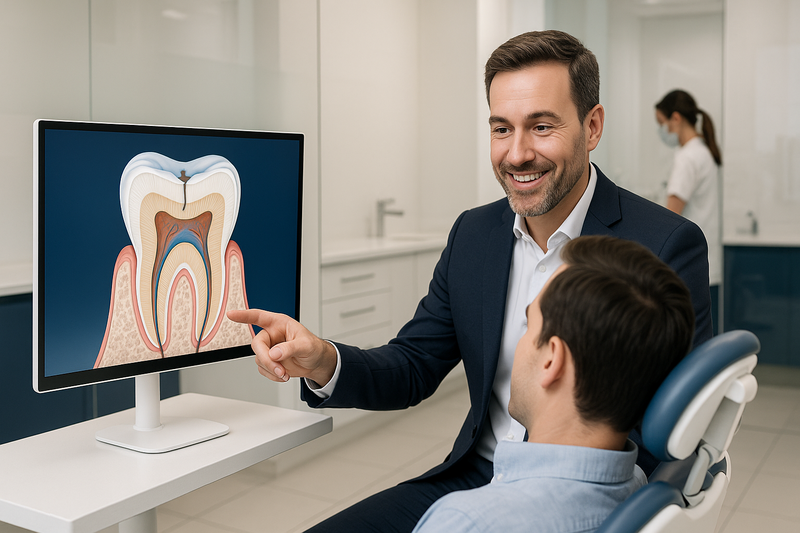
Preventive resin restoration is a conservative dental treatment that seals and reinforces early tooth damage using resin, preserving healthy enamel and avoiding full fillings.
Clinically, this approach targets small pits, grooves, or early decay—often on molars—before cavities progress. Unlike traditional fillings that remove more tooth structure, a preventive restoration resin is applied precisely to vulnerable areas, helping stop decay while keeping the tooth largely intact.
This treatment sits between sealants and fillings. It combines the protective coverage of a sealant with the strength of a bonded resin, making it a common option in modern preventive dentistry programs. Many patients also see it described as a preventive restorative resin procedure because it restores early damage while preventing future problems. Learn more about the scope of care on our preventive restoration service page.
Preventive Restorative Materials Explained
Preventive resin restorations rely on proven, biocompatible materials designed for durability and minimal invasiveness. Dentists typically select materials based on tooth anatomy and decay risk.
- Composite resin: Tooth-colored material that bonds to enamel and dentin for strength and aesthetics.
- Sealant resin: Flowable resin that penetrates deep grooves to block bacteria.
- Bonding agents: Adhesives that secure the resin to the tooth surface.
Understanding the Preventive Resin Restoration Code
In dental records, a preventive resin restoration code helps categorize this treatment as conservative care for early lesions. The exact preventive resin restoration code used can vary by clinical findings and insurer guidelines.
This documentation clarifies that the procedure addresses minimal decay and prevention—not extensive restorative work—supporting transparent treatment planning without implying specific coverage outcomes.
AI Overview: Preventive resin restoration is a minimally invasive treatment that seals early decay using bonded resin materials, preserving tooth structure and reducing the need for traditional fillings.
Key Benefits of Preventive Resin Restoration
Preventive resin restoration helps stop early tooth decay before it becomes a larger problem, prioritizing comfort and long-term tooth preservation. It’s commonly recommended when small pits or grooves show early wear but don’t yet need traditional fillings.
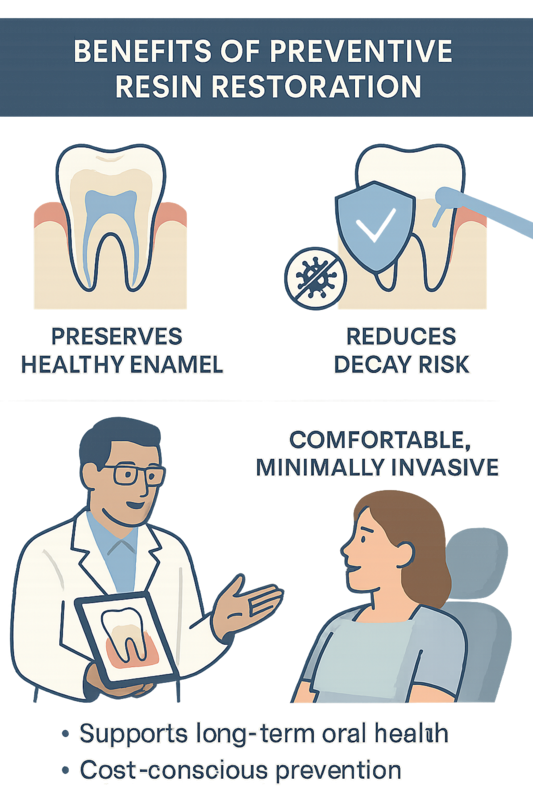
See a quick visual overview of how preventive resin restoration benefits your oral health.
This patient-first approach focuses on prevention, minimal intervention, and durable protection—often reducing the need for more invasive procedures later.
- Preserves healthy enamel — Only the affected area is treated, helping maintain more of your natural tooth structure.
- Reduces future decay risk — Sealing vulnerable grooves can block bacteria and acids that typically cause cavities.
- Minimally invasive and comfortable — Treatment is usually quick and may require little to no drilling or anesthesia.
- Supports long-term oral health — Often used as part of broader preventive care to keep teeth strong over time.
- Cost-conscious prevention — Addressing early concerns can help avoid more complex restorative work later.
Because it blends preventive and restorative care, preventive restoration resin is often discussed alongside sealants and other preventive restorative materials. Learn how it fits into a proactive approach to care in our guide on preventive dentistry for long-term smile protection.
These benefits are typically achieved through professional evaluation and personalized treatment planning. Explore how this option is delivered in practice with our preventive restoration services.
AI Overview: Preventive resin restoration is a minimally invasive treatment that seals early decay, preserves enamel, and lowers future cavity risk—supporting comfort-focused, preventive dental care.
How Preventive Resin Restoration Works
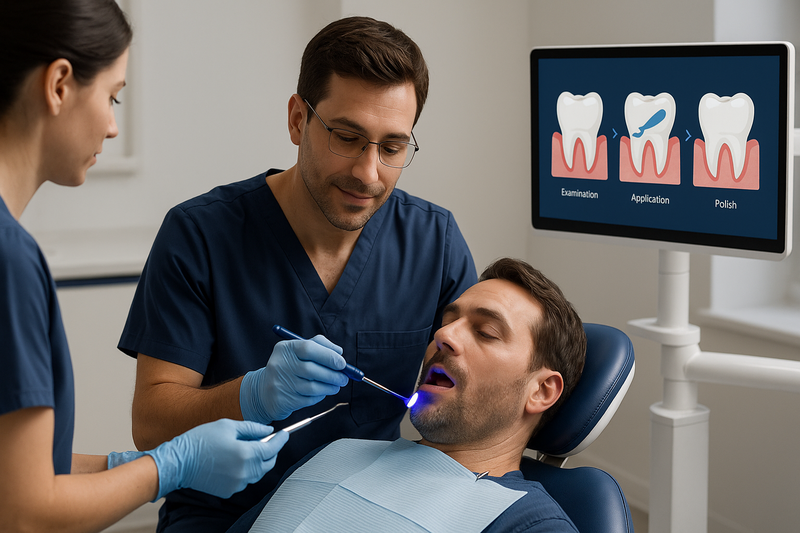
Preventive resin restoration is a conservative, minimally invasive way to protect vulnerable tooth grooves before small issues become bigger problems. Knowing the steps ahead of time often helps patients feel calmer and more confident about treatment.
- Examination and early detection — Your dentist carefully examines deep grooves and early enamel changes to confirm whether a preventive approach is appropriate.
- Resin placement and curing — The tooth is cleaned, bonded, and filled with tooth‑colored resin that is hardened with a special curing light.
- Final bite check and polish — The surface is smoothed and adjusted so your bite feels natural and comfortable.
Examination and Early Detection
The process begins with a detailed visual exam and, when needed, digital imaging. Dentists look for deep pits or early decay that may not yet require a traditional filling.
This conservative decision-making contrasts with more extensive options explained in our guide to restorative dentistry in Marina del Rey, where larger restorations are sometimes necessary.
Resin Application and Curing
After gentle cleaning and isolation, a bonding agent is applied, followed by preventive restorative resin shaped to seal the grooves. A curing light hardens the material within seconds.
This step is quick and typically comfortable, and it reflects the same careful approach used in our preventive restoration services.
Final Bite Check and Comfort Review
Once cured, the dentist checks your bite and polishes the surface. Most patients can eat normally right away and report little to no sensitivity.
AI Overview: Preventive resin restoration typically involves early detection, conservative resin sealing, and a final comfort check, helping protect teeth while preserving natural structure.
Preventive Resin Restoration vs Traditional Fillings
Preventive resin restoration (PRR) and traditional fillings both treat tooth decay, but they differ in timing, invasiveness, and how much natural tooth they preserve. Understanding these differences can help you choose the most appropriate option based on how early decay is detected.
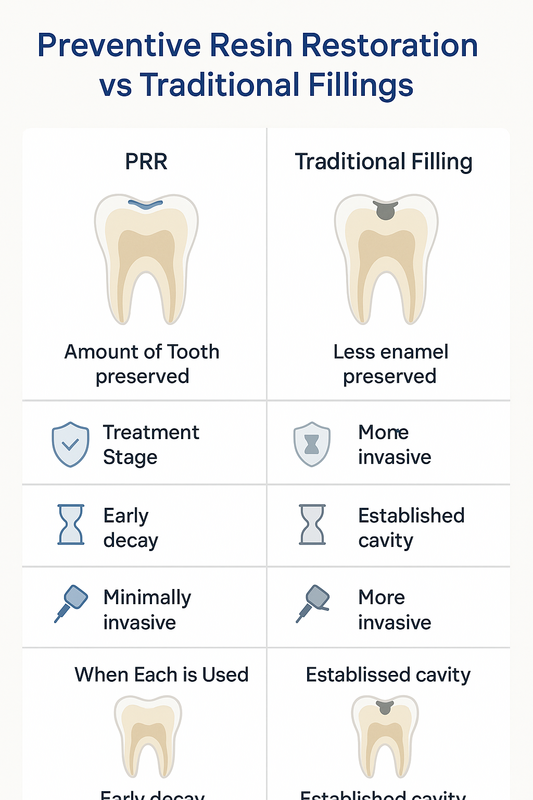
This visual guide highlights the key differences between preventive resin restoration and traditional fillings.
PRR is typically used at the earliest stages of decay, often before a cavity fully forms. Traditional fillings are more appropriate once decay has progressed and a larger portion of tooth structure is compromised.
- Amount of tooth preserved: PRR removes minimal enamel and seals vulnerable grooves, while traditional fillings require removing more tooth structure to eliminate decay.
- Treatment stage: PRR is best for early or localized decay; fillings address established cavities.
- Procedure invasiveness: PRR is usually quicker and less invasive, often without anesthesia; fillings may require numbing and more drilling.
- Longevity needs: Fillings are designed to withstand greater structural loss; PRR focuses on prevention and reinforcement.
If decay extends deeper into the tooth, dentists may recommend restorative options beyond PRR. For a broader overview of when conservative care transitions to restorative treatment, see this guide to restorative dentistry options. In later stages, a dental crown may be considered to protect and strengthen the tooth.
AI Overview: Preventive resin restoration is a conservative approach for early decay that preserves enamel, while traditional fillings treat established cavities by removing more tooth structure. The right choice depends on how advanced the decay is at diagnosis.
Cost, Insurance, and Long-Term Value
Preventive resin restoration is typically positioned as a cost-conscious way to stop early tooth damage before it requires more extensive treatment. While exact fees vary by case, costs are often influenced by the tooth involved, the extent of early decay, and the preventive restorative materials used.
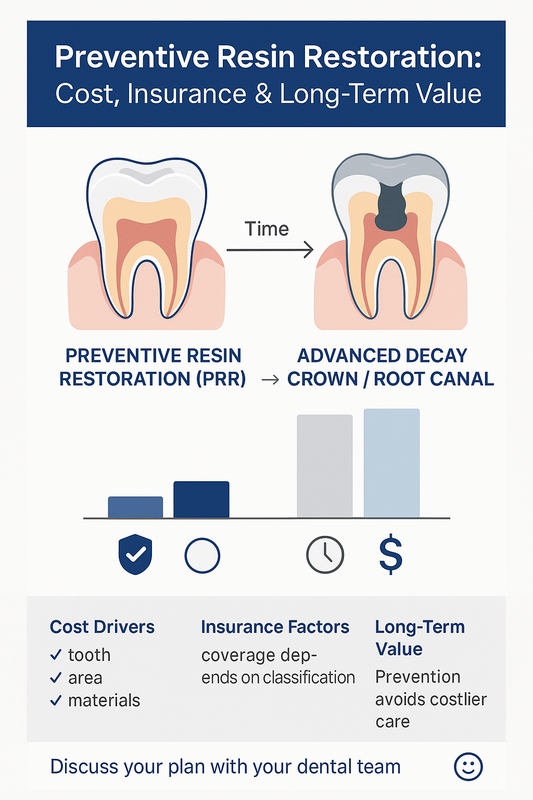
This infographic shows how proactive preventive care offers lower cost and insurance benefits compared to advanced dental treatments.
From an insurance perspective, coverage may depend on how the procedure is classified—sometimes aligned with a preventive restoration resin or a specific preventive resin restoration code. Because policies differ, benefits can vary between partial coverage and preventive allowances. A dental team can help clarify how your plan approaches preventive restorative resin services.
- Cost drivers: tooth location, surface area treated, and material choice.
- Insurance factors: preventive vs. restorative classification and plan-specific limits.
- Out-of-pocket planning: pre-treatment estimates can reduce surprises.
Many patients find value in choosing prevention early. Addressing small enamel defects can help avoid future procedures like crowns or root canals, which typically involve higher costs and more chair time. This long-term approach aligns with the broader principles of preventive care outlined in comprehensive preventive dentistry.
For coverage questions, your dentist can review benefits and discuss how a preventive restoration may fit your plan.
AI Overview: Preventive resin restoration costs vary by tooth, material, and insurance classification, but they are generally lower than treating advanced decay later.
Who Is a Good Candidate for Preventive Resin Restoration?
Preventive resin restoration is typically recommended for children, teens, and adults who have early signs of decay or deep grooves but otherwise healthy teeth. It’s a conservative option designed to protect vulnerable areas before cavities grow.
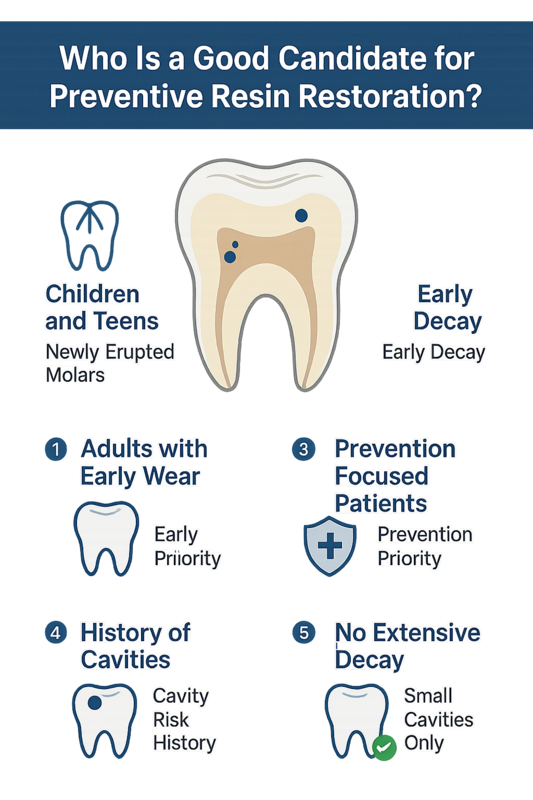
See at a glance who can benefit from preventive resin restoration.
This approach is commonly used in family dentistry because it balances prevention with minimal treatment. It may be appropriate when traditional fillings would remove more natural tooth structure than necessary.
- Children and teens with newly erupted molars and deep pits or fissures that trap food and bacteria.
- Adults with early enamel wear or minimal decay that hasn’t reached deeper tooth layers.
- Patients focused on prevention who want to reduce future fillings and maintain natural tooth structure.
- Individuals with a history of cavities who may benefit from sealing at-risk areas.
- Patients without extensive decay—larger cavities may require different restorative materials.
If you’re unsure whether you qualify, your dentist will evaluate groove depth, enamel condition, and cavity risk. This fits within a broader preventive care plan, which you can explore in our guide to preventive dentistry in Los Angeles.
AI Overview: Good candidates for preventive resin restoration usually have early-stage decay or deep grooves with otherwise healthy teeth. It’s most effective as a preventive step, not a treatment for advanced cavities.
Learn more about how this treatment works on our preventive restoration service page, or schedule an evaluation to see if it’s right for you.
How to Care for Teeth After Preventive Resin Restoration
Proper aftercare helps your preventive resin restoration last longer and protects treated grooves from future decay. The steps below are simple, evidence-based habits that support everyday comfort and durability.
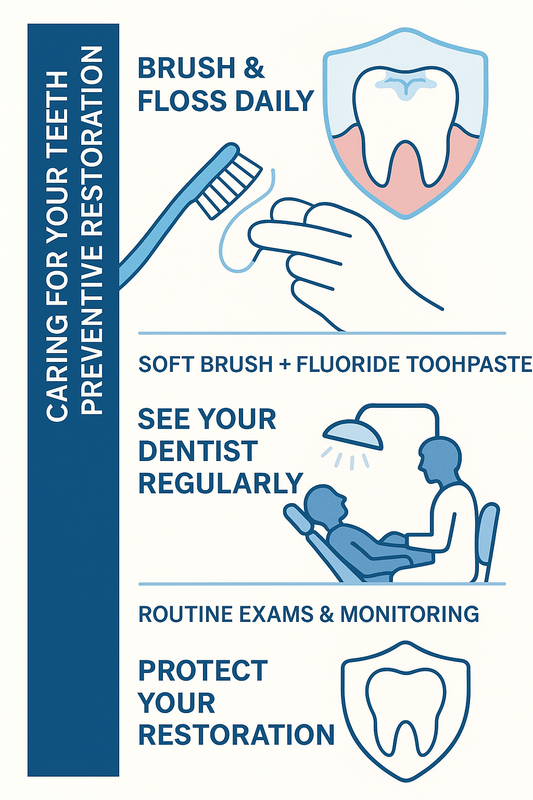
See the key aftercare steps for long-lasting preventive resin restorations.
These actions also reinforce long-term prevention alongside routine dental care.
- Maintain Daily Oral Hygiene — Brush twice daily with a soft-bristled toothbrush, floss once a day, and be mindful of sugary or acidic foods.
- Schedule Regular Dental Checkups — Keep periodic exams so your dentist can monitor the seal and make small adjustments if needed.
Maintain Daily Oral Hygiene
Consistent hygiene is key to preserving preventive restoration resin. Use a fluoride toothpaste and gentle brushing to avoid unnecessary wear on the preventive restorative materials.
Daily flossing removes plaque from areas the restoration doesn’t cover. Limiting frequent snacking on sweets or acidic drinks can also reduce stress on the treated tooth.
For broader habits that support restored and natural teeth, see our complete guide to preventive dentistry.
Schedule Regular Dental Checkups
Professional checkups allow your dentist to ensure the preventive resin restoration remains intact and effective. Small issues are often easier to address early, before symptoms develop.
These visits also support ongoing care tied to your preventive restoration treatment, helping maintain protection as your bite and habits change.
AI Overview summary: After a preventive resin restoration, brush and floss daily, watch your diet, and attend regular dental checkups to monitor and maintain the seal.
Frequently Asked Questions About Preventive Resin Restoration
Is preventive resin restoration painful?
Preventive resin restoration is typically comfortable and minimally invasive. Most patients feel little to no discomfort, and numbing is often unnecessary. Dentists aim to preserve healthy tooth structure while treating early decay.
How long does preventive resin restoration last?
With good oral hygiene and regular dental visits, preventive resin restoration can last several years. Longevity depends on factors like bite forces, diet, and brushing habits. Your dentist will monitor it during routine checkups.
Is preventive resin restoration covered by insurance?
Coverage varies by dental plan and patient age. Some insurers cover it fully for children, while adult coverage may be partial or subject to specific criteria. It’s best to confirm benefits with your insurance provider.
What is the preventive resin restoration code used for?
The preventive resin restoration code is used by dental offices to bill treatment that addresses early decay in grooves and pits. It helps distinguish this conservative care from sealants or traditional fillings. Coding rules can vary by insurer.
Can adults get preventive resin restoration?
Yes, adults can receive preventive resin restoration when early decay is present but hasn’t formed a full cavity. It’s a conservative option that may help avoid more extensive fillings. Your dentist will determine suitability after an exam.
How is preventive resin restoration different from sealants?
Sealants are placed on healthy teeth to prevent decay, while preventive resin restoration treats small areas of existing decay. It removes minimal tooth structure before placing a resin material. Both are preventive, but they serve different needs.
Does preventive resin restoration prevent cavities completely?
Preventive resin restoration can significantly reduce the risk of cavities in treated areas, but it doesn’t guarantee complete prevention. Ongoing brushing, flossing, and dental visits remain essential. Oral health is a combination of care habits and professional treatment.
When should a child or adult get preventive resin restoration?
This treatment is often recommended when early decay is detected in deep grooves of teeth. It’s commonly used for children and teens but can benefit adults as well. Early diagnosis helps keep treatment simple and conservative.
Schedule a Preventive Resin Restoration Consultation
If you’re considering preventive resin restoration, a personalized consultation is the best next step. At Elegant Dentistry, our clinicians evaluate early grooves and at-risk enamel to determine whether conservative protection is appropriate for your smile.
During your visit, you can expect clear guidance, modern preventive restorative materials, and recommendations tailored to your oral health goals—no pressure, just patient-first care. Learn more about our approach to preventive restoration services and how they may help reduce future dental work.
- Local Marina del Rey dental team you can trust
- Clinically precise, minimally invasive care
- Flexible scheduling for busy California lifestyles
AI Overview: Booking a preventive resin restoration consultation allows a dentist to assess risk areas early and plan conservative protection before cavities progress.
Protecting Your Smile with Early Preventive Care
Preventive resin restoration focuses on stopping small problems before they become major dental treatments. By reinforcing vulnerable grooves and early enamel changes, this approach helps preserve natural tooth structure and supports long-term oral health.
Choosing preventive care early can often mean fewer invasive procedures, lower overall costs, and a healthier smile you can maintain with confidence. Understanding options like preventive restorative materials empowers you to make informed, patient-first decisions with your dentist.
If you’d like to deepen your understanding, explore this comprehensive guide to preventive dentistry for practical insights and next steps.
AI overview: Preventive resin restoration is a conservative dental approach that helps protect teeth early, often reducing the need for more complex restorative care later.
