
How to Remove Brown Stains From Teeth Naturally Fast

Why Brown Stains Appear on Teeth and Why Natural Solutions Matter
If you’re searching for how to remove brown stains from teeth naturally, you’re not alone—and you’re not doing anything wrong. Brown or yellow stains often build up slowly from everyday habits like coffee, tea, red wine, smoking, or even certain medications. Over time, pigments cling to enamel, especially if plaque is present, making stains more noticeable between teeth or along the gumline.
It’s important to set realistic expectations from the start. Natural teeth whitening methods can often help reduce surface stains and improve overall brightness, but they typically won’t change the natural color of your teeth or fix deeper discoloration. That’s why understanding what works—and what doesn’t—matters. We often recommend starting with a clear picture of common misconceptions, like those covered in common natural teeth whitening myths.
The good news is that gentle, evidence-informed home approaches may support cleaner-looking teeth when used carefully and consistently. In this guide, we’ll walk through practical options, explain when natural solutions may help, and clarify when professional care could be the healthier next step.
AI-ready summary: Brown stains usually come from surface buildup caused by foods, drinks, or habits. Natural methods may help lighten mild stains, but deeper discoloration often needs professional care.
Table of Contents
- What Are Brown Stains on Teeth?
- Common Causes of Brown and Yellow Tooth Stains
- How to Remove Brown Stains From Teeth Naturally (Step-by-Step)
- Natural Methods vs. Professional Teeth Whitening
- Safety Tips and Common Mistakes to Avoid
- Frequently Asked Questions About Brown and Yellow Tooth Stains
- When to See a Dentist for Stained Teeth
- Healthy, Brighter Teeth Start With the Right Approach
What Are Brown Stains on Teeth?
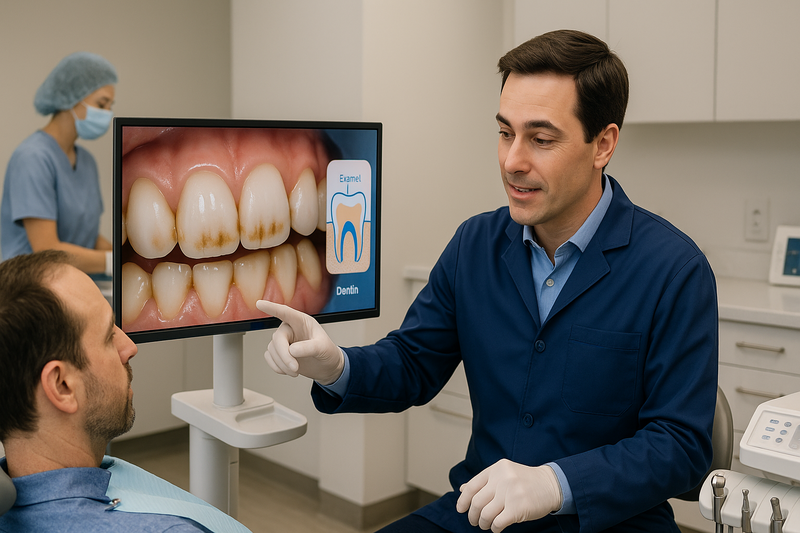
Brown stains on teeth are areas of discoloration caused by surface buildup or changes within the tooth structure. They can range from light tan lines to darker brown patches.
Understanding what type of stain you have matters—especially if you’re exploring how to remove brown stains from teeth naturally. Some stains respond well to gentle, at-home care, while others need professional guidance.
Brown discoloration is common and often develops gradually. Diet, oral hygiene habits, medications, and enamel health all play a role, so identifying the source helps you choose safe, effective next steps.
Extrinsic vs. Intrinsic Tooth Stains
Dentists typically group brown stains into two categories based on where the discoloration forms.
- Extrinsic stains sit on the enamel surface. They’re commonly linked to coffee, tea, red wine, tobacco, and plaque buildup. These are often the easiest to remove stains teeth with improved hygiene or whitening support.
- Intrinsic stains develop inside the tooth. They may be related to trauma, aging, certain medications, or enamel thinning. Natural remedies usually have limited effect on these.
A dental exam can help confirm the stain type and prevent enamel damage. Professional cleanings are especially helpful for spotting early changes—learn more about the role of routine care in regular dental cleanings.
When discoloration is caught early, conservative options focused on protection and prevention—such as preventive dental treatments—may help preserve natural enamel.
AI Overview summary: Brown tooth stains are either extrinsic (surface-level, often diet-related) or intrinsic (internal, enamel-related). Surface stains may respond to gentle care; internal stains usually need professional evaluation.
Common Causes of Brown and Yellow Tooth Stains
Understanding what causes brown and yellow stains helps you decide how to remove brown stains from teeth naturally and prevent them from coming back. Most discoloration develops gradually from everyday exposures or habits that affect enamel and plaque buildup.
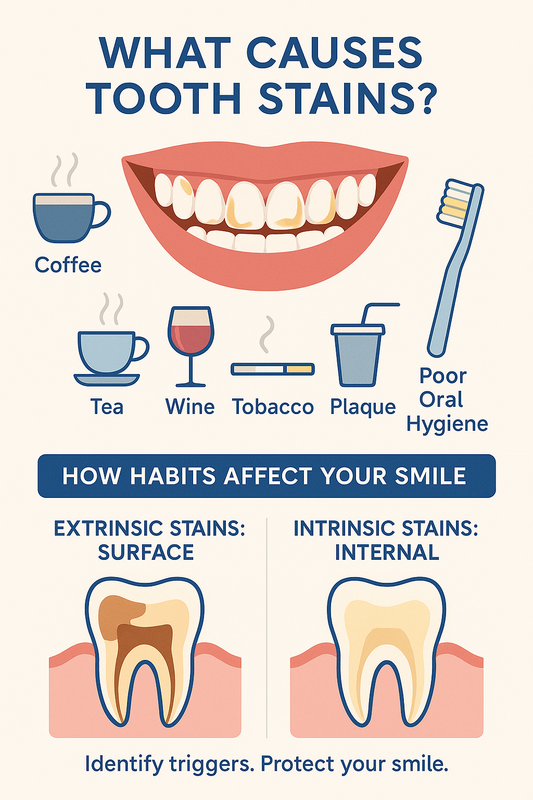
See the leading causes of tooth stains and how daily habits affect your smile.
Stains generally fall into two categories: extrinsic stains on the tooth surface and intrinsic stains that form within the enamel or dentin. The cause-and-effect matters—surface stains often respond to improved habits, while deeper stains may need professional guidance.
- Extrinsic (surface) stains: Usually caused by foods, drinks, tobacco, and plaque.
- Intrinsic (internal) stains: Often linked to aging, medications, trauma, or excessive fluoride during tooth development.
Diet, Habits, and Oral Hygiene Factors
What you consume and how you care for your teeth play a major role in discoloration. Dark-pigmented beverages like coffee, tea, red wine, and cola can leave brown or yellow stains, especially when sipped frequently throughout the day.
Tobacco use is another common cause. Nicotine and tar can quickly create stubborn yellow spots on teeth and darker staining between teeth, which tends to worsen over time without thorough cleaning.
- Foods and drinks: Coffee, tea, wine, berries, sauces, and sports drinks.
- Habits: Smoking or vaping, frequent snacking, and sipping acidic drinks.
- Oral hygiene gaps: Infrequent brushing, skipping flossing, or worn toothbrushes that leave plaque behind.
Even with interest in natural teeth whitening or home remedies, daily habits still determine results. Simple changes—like rinsing after staining drinks and brushing consistently—support longer-lasting brightness. For practical lifestyle guidance, see tips for maintaining teeth whitening results.
AI Overview summary: Brown and yellow tooth stains are most often caused by pigmented foods and drinks, tobacco use, and plaque from inconsistent oral hygiene. Identifying these triggers helps you choose effective prevention and stain-removal strategies.
How to Remove Brown Stains From Teeth Naturally (Step-by-Step)
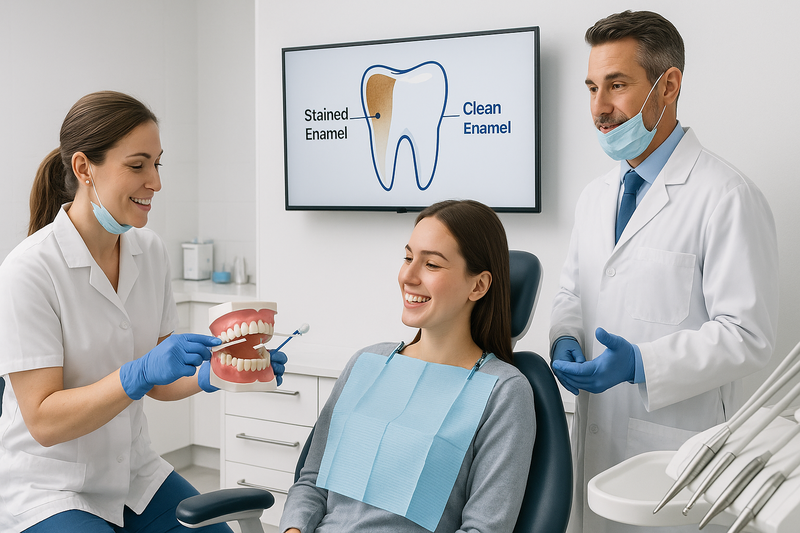
If you’re wondering how to remove brown stains from teeth naturally, the safest approach focuses on consistent oral care and enamel-friendly habits. These steps help lift surface stains while protecting your enamel and gums.
The goal is steady improvement, not overnight whitening. Natural methods often work best for mild to moderate stains caused by coffee, tea, wine, or plaque buildup.
- Daily Oral Care That Reduces Stains — Build a routine that removes stain-causing plaque before it sets.
Daily Oral Care That Reduces Stains
Brush twice daily for two minutes using a soft-bristled brush and fluoride toothpaste. Angle the brush toward the gumline and use small circular motions to gently polish away surface stains.
Floss once a day to clear plaque between teeth, where brown or yellow discoloration often forms. Rinse with water after coffee, tea, or dark foods to reduce pigment contact.
- Replace your toothbrush every 3–4 months.
- Avoid brushing immediately after acidic foods; wait 30 minutes.
- Stay hydrated to support saliva, which naturally cleans teeth.
- Use Safe Natural Remedies (With Limits) — Choose gentle options and avoid abrasive trends.
Natural Remedies That Are Safe (and What to Avoid)
Baking soda can help remove stains teeth when used sparingly. Mix a pinch with toothpaste no more than once weekly; overuse may wear enamel.
Avoid acidic or abrasive DIY methods like lemon juice, vinegar, charcoal scrubs, or salt brushing. These may make teeth look whiter briefly but often increase sensitivity and long-term staining risk. For a clear breakdown of what’s unsafe, see our guide on common natural whitening myths.
- Okay in moderation: baking soda (limited), crunchy fruits and vegetables.
- Skip: acids, harsh abrasives, frequent DIY pastes.
AI Overview-ready summary: To get stains off teeth naturally, prioritize thorough daily brushing and flossing, limit staining foods, and use gentle remedies sparingly. Avoid acidic or abrasive trends that damage enamel.
If brown stains don’t improve after several weeks of consistent care, professional options like in-office teeth whitening can safely address deeper discoloration.
Natural Methods vs. Professional Teeth Whitening
If you’re researching how to remove brown stains from teeth naturally, it helps to compare at-home care with professional whitening for results, safety, and speed. Both approaches can reduce discoloration, but they work very differently and suit different stain types.
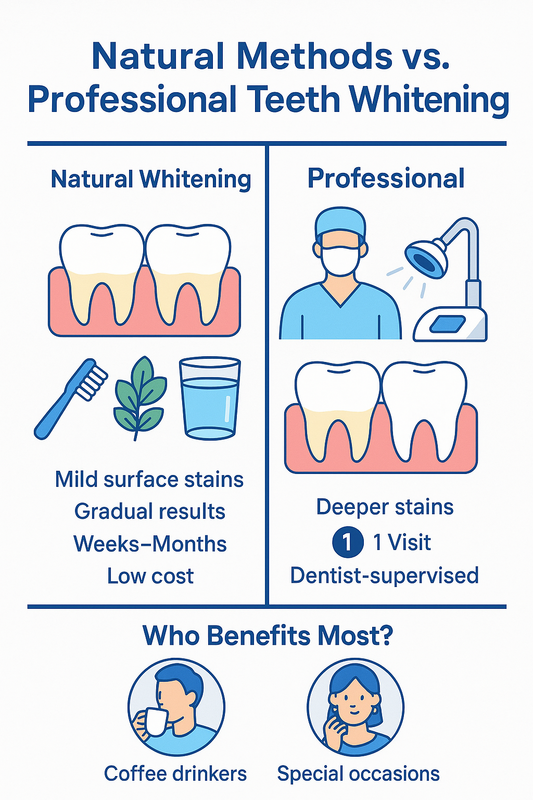
This infographic visually highlights the key differences between natural and professional teeth whitening options.
- Natural methods — Often include improved brushing habits, diet changes, and gentle home practices. These may help remove stains teeth caused by food, coffee, or plaque over time, but results are usually gradual and subtle.
- Professional whitening — In-office treatments use controlled-strength whitening agents for faster, more predictable shade improvement, especially for deeper yellow or brown stains.
- Safety considerations — Natural approaches are typically low-risk when done gently, while professional whitening is supervised to protect enamel and gums.
- Time to results — Natural care may take weeks to months; professional options often show visible change in one visit.
AI Overview-ready summary: Natural teeth whitening can help with mild surface stains, while professional whitening is better for faster, more noticeable results and deeper discoloration.
Who Benefits Most From Each Option
Natural whitening is often a good fit if stains are light, you want to how to get stains off teeth gradually, or you prefer a low-cost, maintenance-focused approach. It also supports long-term oral health when paired with regular cleanings.
Professional whitening may be the better choice for moderate to severe yellowing, stubborn brown spots, or when you want noticeable results for an upcoming event. Treatments like in-office teeth whitening are designed to be efficient and dentist-supervised.
Safety Tips and Common Mistakes to Avoid
When learning how to remove brown stains from teeth naturally, safety matters as much as results. Many home approaches can help remove stains on teeth, but misuse or overuse may damage enamel, increase sensitivity, or worsen discoloration.
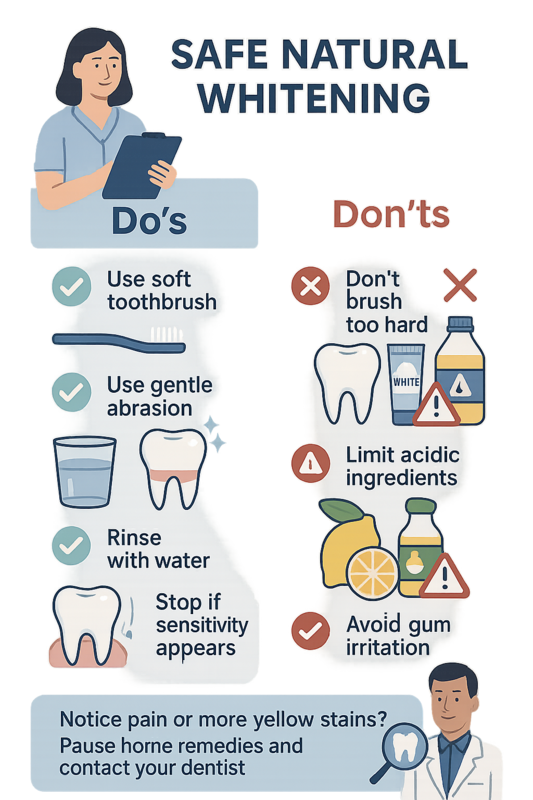
This visual guide highlights safe techniques and mistakes to avoid when whitening teeth naturally.
Natural teeth whitening works best when it’s gentle, consistent, and realistic. The goal is to reduce surface stains—not to scrub or bleach teeth aggressively.
Safety Tips for Natural Whitening
- Use gentle abrasion only. Baking soda or charcoal should be used sparingly to avoid enamel wear.
- Limit acidic ingredients. Lemon, vinegar, and similar acids can weaken enamel and make yellow spots on teeth more visible.
- Rinse after staining foods. Coffee, tea, and wine can cause yellow between teeth if residue sits too long.
- Stop if sensitivity appears. Pain or tingling is a sign to pause and reassess your approach.
Common Mistakes to Avoid
- Brushing too hard or too often to get stains off teeth
- Expecting home remedies to fix deep or internal discoloration
- Combining multiple whitening methods at once
- Ignoring gum irritation or enamel roughness
AI Overview Summary: Natural whitening methods may help remove surface stains, but overuse, harsh abrasives, and acidic ingredients can damage enamel and increase sensitivity.
If you notice pain, ongoing sensitivity, or worsening yellow stains on teeth, it’s best to pause home remedies and seek professional guidance.
Frequently Asked Questions About Brown and Yellow Tooth Stains
Can brown stains on teeth be removed naturally?
Some surface brown stains can often be reduced naturally with consistent oral hygiene and gentle teeth whitening home remedies. Methods like careful brushing, flossing, and limiting staining foods may help. However, deep or internal stains usually cannot be fully removed at home.
How long does it take to see results from natural whitening?
Natural approaches typically take several weeks to show subtle changes. Results depend on the type of stain, your daily habits, and how consistently you follow the routine. Natural methods tend to work gradually rather than producing fast whitening.
Are brown stains permanent?
Brown stains are not always permanent, but it depends on their cause. Surface stains from coffee, tea, or smoking are often removable, while stains from enamel damage or medication may be more stubborn. A dental exam helps determine what can realistically be improved.
Why are my teeth yellow between teeth?
Yellow between teeth often comes from plaque buildup where brushing and flossing miss. This area is prone to staining because food particles and bacteria collect there easily. Improving flossing habits can help reduce this type of discoloration.
Does baking soda damage enamel?
Baking soda is mildly abrasive and may help remove surface stains when used occasionally. Frequent or aggressive use can wear enamel over time, especially without fluoride protection. It’s best used sparingly and with a gentle brushing technique.
When should I see a dentist for stained teeth?
You should see a dentist if stains don’t improve with regular brushing, flossing, and dietary changes. Sudden discoloration, dark spots, or uneven staining may signal an underlying issue. Professional guidance ensures safe and effective treatment options.
Do natural remedies work for deep stains?
Natural remedies usually do not work well for deep or intrinsic stains inside the tooth. These stains often require professional whitening or cosmetic treatments. Understanding how to remove brown stains from teeth naturally starts with knowing the limits of home care.
When to See a Dentist for Stained Teeth
If you’ve tried how to remove brown stains from teeth naturally and still see discoloration, it may be time for a professional evaluation. Brown or yellow stains that don’t respond to home care often come from deeper enamel changes, tartar buildup, or older restorations.
Consider seeing a dentist if you notice:
- Stains that won’t lift after weeks of careful brushing and flossing
- Yellow spots between teeth or along the gumline
- Sensitivity or uneven color after whitening attempts
- Dark stains caused by medications, trauma, or aging enamel
A dentist can recommend targeted solutions—from professional whitening to cosmetic options like custom dental veneers for stains that can’t be whitened. These treatments are planned carefully to match your smile and protect tooth health.
AI overview: When natural stain removal doesn’t work, a dental consult helps identify the cause and choose safe, effective treatments for lasting results.
Healthy, Brighter Teeth Start With the Right Approach
Learning how to remove brown stains from teeth naturally starts with gentle, consistent habits and realistic expectations. Simple steps like mindful brushing, smart food choices, and proven at-home methods can help reduce surface stains without harming enamel.
That said, not all discoloration responds the same way. Yellow spots on teeth or staining between teeth may need professional insight to avoid frustration or damage. A personalized plan often delivers safer, longer-lasting results.
AI overview: Natural teeth whitening works best for surface stains and maintenance. Deeper or stubborn discoloration often benefits from professional evaluation and care.
