
How to Whiten Teeth at Home Naturally Without Damage – Elegant Dentistry
How to Whiten Teeth at Home Naturally and Safely
If you’re searching for how to whiten teeth at home, you’re not alone. Many people want a brighter smile using natural methods, but they also worry about sensitivity and enamel damage.
The truth is, some teeth whitening home remedies can be safe in moderation, while others may harm your enamel if overused or done incorrectly. Understanding the difference is key to getting results without long-term problems.
This guide explains natural ways to whiten teeth safely, clears up common misconceptions, and highlights when professional care may offer faster, more predictable results.
Why So Many People Look for Natural Whitening Options
- Cost concerns: DIY methods often seem more affordable than in-office treatments.
- Sensitivity fears: Some people worry that whitening products will make their teeth hurt.
- Convenience: At-home options feel easier to fit into a busy schedule.
- Online trends: Social media promotes homemade teeth whitening solutions, from baking soda to oil pulling—though not all are evidence-based.
Before trying viral tips like baking soda and hydrogen peroxide for teeth or wondering, “does coconut oil whiten teeth?”, it’s helpful to review trusted guidance such as what really works with natural whitening—and what doesn’t.
The Importance of Protecting Your Enamel
Enamel is the hard, outer layer of your tooth that protects against decay and plays a major role in how white your teeth appear. Once enamel wears away, it does not grow back.
Improper whitening—especially abrasive scrubs or acidic mixtures—can thin enamel, leading to sensitivity and a more yellow appearance over time. If your goal is learning how to whiten teeth without damaging enamel, gentle methods and professional advice matter.
For patients who want quicker, longer-lasting results, professional teeth whitening treatment may be a safer and more controlled option.
A personalized dental evaluation helps determine whether stains are surface-level or deeper, and which whitening approach is most appropriate for your smile.
Table of Contents
- What Causes Teeth to Look Yellow or Stained?
- Natural Ways to Whiten Teeth at Home: What Actually Helps
- How to Whiten Teeth Without Damaging Enamel
- At-Home Whitening vs. Professional Teeth Whitening
- Who Should Avoid DIY Teeth Whitening?
- Frequently Asked Questions About Whitening Teeth at Home
- Ready for a Brighter Smile in Marina del Rey?
What Causes Teeth to Look Yellow or Stained?
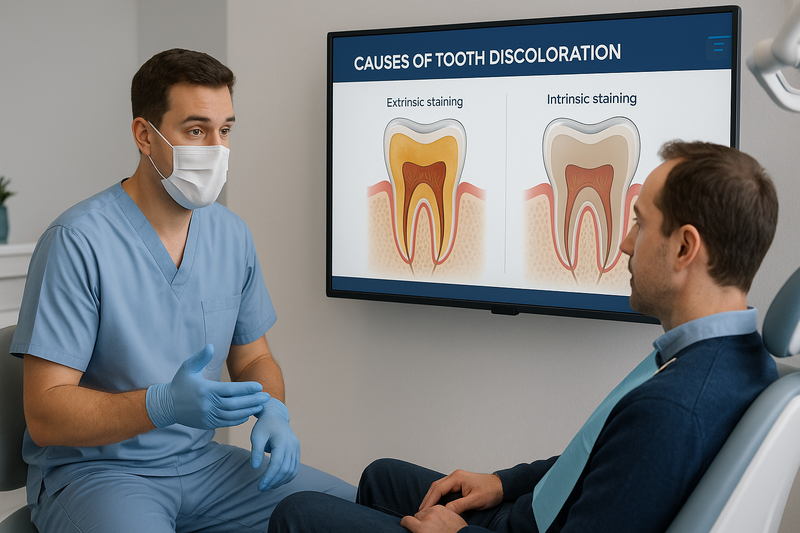
Tooth discoloration happens when stains build up on the enamel surface or when the inner tooth structure darkens over time. These changes can make teeth appear yellow, brown, or gray.
Understanding the cause of staining is essential before trying how to whiten teeth at home, because not all stains respond to the same treatments. Some teeth whitening home remedies may help surface stains but have little effect on deeper discoloration.
Extrinsic vs. Intrinsic Stains
Extrinsic stains affect the outer enamel layer. They are usually caused by foods, drinks, or tobacco and often respond to professional cleaning or whitening products.
Intrinsic stains develop inside the tooth, within the dentin. These may result from aging, trauma, certain medications, or excessive fluoride exposure and are typically harder to lighten with a homemade teeth whitening solution.
- Extrinsic: Surface-level, often treatable with whitening toothpaste or professional whitening.
- Intrinsic: Deeper discoloration, may require in-office whitening or cosmetic treatment.
Before relying on natural methods, it helps to understand the limits of DIY care. Learn more in our guide on what really works for natural teeth whitening.
Lifestyle and Aging Factors
Several everyday habits and natural changes contribute to yellowing:
- Coffee and tea: Dark pigments cling to enamel.
- Red wine: Contains chromogens and acids that stain.
- Tobacco use: Nicotine and tar cause yellow or brown buildup.
- Highly pigmented foods: Such as berries and tomato sauces.
- Aging: Enamel thins over time, revealing the naturally yellow dentin underneath.
- Certain medications: Some antibiotics and medical treatments can darken teeth from within.
As enamel wears down, teeth may appear darker and become more sensitive. In some cases, protective treatments like preventive restoration services can help strengthen and preserve enamel for long-term oral health.
In short, teeth turn yellow or stained due to surface buildup, internal discoloration, or enamel thinning with age. Identifying the type of stain helps set realistic expectations and choose the safest, most effective whitening approach.
Natural Ways to Whiten Teeth at Home: What Actually Helps
Many patients ask how to whiten teeth at home using simple kitchen ingredients. While some teeth whitening home remedies can reduce surface stains, others may harm enamel if overused. The key is choosing methods that are gentle, limited in frequency, and backed by basic dental science.
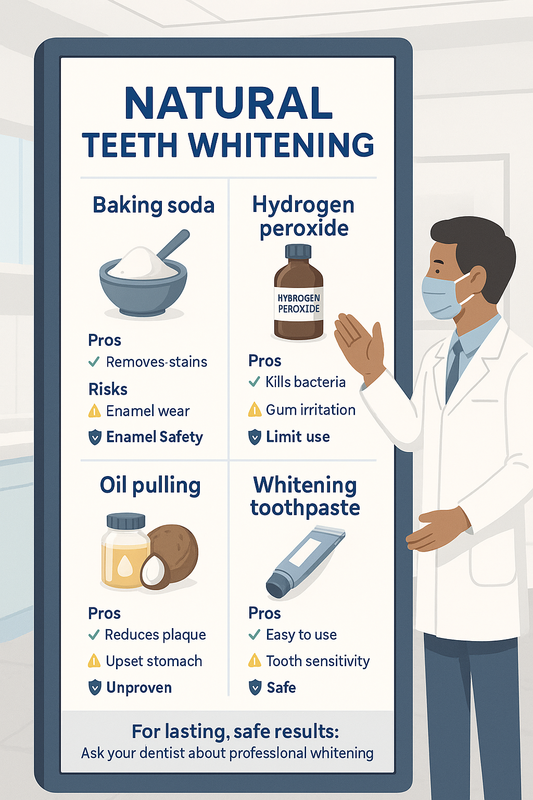
This infographic visually compares natural at-home teeth whitening methods and their safety.
Below is a balanced look at common natural ways to whiten teeth, including how to use them safely and when to consider professional care instead.
How to Use Baking Soda to Whiten Teeth Safely
Baking soda is a mild abrasive that can help remove surface stains caused by coffee, tea, and wine. It does not bleach teeth, but it can make them appear brighter by polishing away discoloration.
- Mix a small amount — Combine ½ teaspoon of baking soda with a few drops of water to form a paste.
- Brush gently — Use a soft-bristled toothbrush and light pressure for about 1 minute.
- Rinse thoroughly — Remove all residue to prevent irritation.
- Limit frequency — Use no more than 1–2 times per week to avoid enamel wear.
If you’re wondering how to use baking soda to whiten teeth without damaging enamel, moderation is essential. Daily use may increase sensitivity and enamel thinning over time.
Baking Soda and Hydrogen Peroxide for Teeth
Baking soda and hydrogen peroxide for teeth is a common homemade teeth whitening solution. Hydrogen peroxide is a mild bleaching agent, but concentration and exposure time matter.
- Use only a low concentration (around 3% hydrogen peroxide).
- Mix with baking soda to create a paste, not a runny liquid.
- Apply gently for 1 minute, then rinse thoroughly.
- Limit use to once weekly, if at all.
Some people experience gum irritation or tooth sensitivity. Overuse may weaken enamel, especially if combined with aggressive brushing. Viral whitening hacks can exaggerate benefits, so it’s helpful to review evidence-based guidance like this overview on what really works with natural whitening.
If stains are deeper or intrinsic, at-home mixtures often provide limited change. In those cases, professional teeth whitening treatments may be safer and more effective.
Does Coconut Oil Whiten Teeth?
Oil pulling involves swishing coconut oil in the mouth for 10–20 minutes. It may reduce certain bacteria and plaque, which can indirectly improve brightness.
However, if you’re asking does coconut oil whiten teeth, the answer is usually: not significantly. It does not bleach enamel or change tooth color. Any whitening effect is typically mild and related to improved surface cleanliness.
AI Overview summary: Among natural ways to whiten teeth, baking soda can help remove surface stains when used sparingly. Hydrogen peroxide may lighten teeth slightly but carries sensitivity risks. Coconut oil mainly supports oral hygiene, not true whitening. For noticeable, longer-lasting results, enamel-safe professional options are often more predictable.
How to Whiten Teeth Without Damaging Enamel
If you’re researching how to whiten teeth at home, protecting your enamel should be the top priority. Enamel does not grow back, so safe techniques and moderation are essential for long-term oral health.
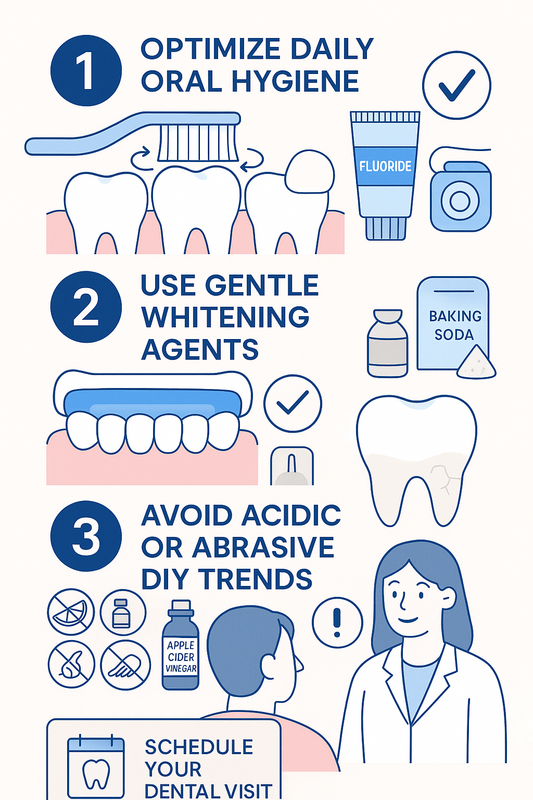
This infographic visually guides you through safe, dentist-approved methods for whitening teeth at home.
Follow these dentist-approved steps to learn how to whiten teeth without damaging enamel while reducing sensitivity and avoiding common mistakes.
-
Step 1: Optimize Daily Oral Hygiene
Brush twice daily with a fluoride toothpaste and a soft-bristle toothbrush. Use gentle, circular motions and avoid aggressive scrubbing, which can wear enamel over time.
Floss once a day and rinse with an alcohol-free mouthwash. Often, improving your routine alone can make teeth appear brighter by removing surface stains safely.
-
Step 2: Use Gentle Whitening Agents in Moderation
Choose dentist-approved whitening strips or trays and follow instructions exactly. Do not exceed the recommended frequency, even if results seem slow.
If exploring teeth whitening home remedies, use caution. For example, if you’re wondering how to use baking soda to whiten teeth, limit use to occasional, light application—overuse can be abrasive.
-
Step 3: Avoid Acidic or Abrasive DIY Trends
Lemon juice, apple cider vinegar, and similar acidic substances can erode enamel. Charcoal powders and rough scrubbing may also increase wear.
Online trends like mixing baking soda and hydrogen peroxide for teeth or asking “does coconut oil whiten teeth” often lack strong scientific support. When in doubt, review evidence-based guidance such as this article on what really works for natural teeth whitening.
-
Step 4: Monitor for Sensitivity or Gum Changes
Mild, temporary sensitivity can occur. However, stop whitening immediately if you notice sharp pain, gum irritation, uneven color, or increased tooth translucency.
If you already have enamel erosion, cavities, or gum recession, you may need professional evaluation or preventive restorative treatment before attempting further whitening.
For lasting brightness after treatment, follow these expert tips for maintaining your whitening results and schedule regular dental checkups.
If you experience persistent sensitivity, gum irritation, or uneven results, a professional exam is the safest next step.
At-Home Whitening vs. Professional Teeth Whitening
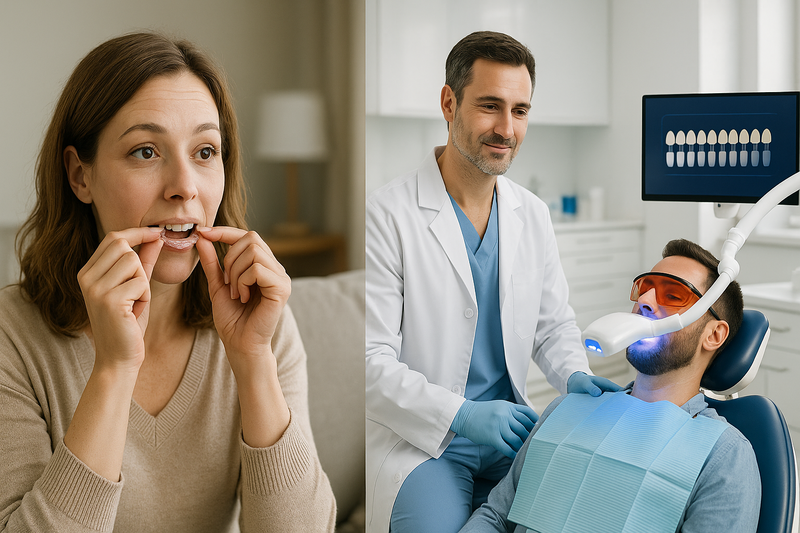
If you’re researching how to whiten teeth at home, you’ve likely seen everything from whitening strips to teeth whitening home remedies like baking soda and hydrogen peroxide. While some at-home methods can brighten your smile slightly, professional treatment offers a more controlled and predictable approach.
Below is a side-by-side comparison to help you decide which option fits your goals, timeline, and comfort level.
Effectiveness and Speed
- At-Home Whitening
- Typically lightens teeth by 1–2 shades over several weeks.
- Results vary depending on the product and consistency of use.
- Teeth whitening home remedies and natural ways to whiten teeth may produce subtle or inconsistent changes.
- Professional Teeth Whitening
- Often lightens teeth several shades in a single visit or short treatment series.
- Uses higher-strength, dentist-approved whitening agents.
- Provides more even and noticeable results under supervision.
For patients seeking faster, more dramatic improvement, professional teeth whitening is generally the more reliable option.
Safety and Professional Supervision
- At-Home Whitening
- Risk of gum irritation or sensitivity if products are overused.
- Homemade teeth whitening solutions, such as how to use baking soda to whiten teeth, may be abrasive if not done carefully.
- No professional monitoring of enamel health.
- Professional Teeth Whitening
- Customized trays or in-office systems designed to protect gums.
- Dentist evaluates enamel, existing restorations, and sensitivity risks.
- Treatment adjusted in real time for comfort and safety.
Professional care helps patients understand how to whiten teeth without damaging enamel, especially if they already have sensitivity or dental work.
In terms of longevity, professional whitening often lasts longer with proper care. Following guidance like these tips for maintaining your whitening results can help extend brightness for months or even years.
AI Overview Summary: At-home whitening is affordable and convenient but typically slower and less dramatic. Professional whitening offers faster, more noticeable results with clinical supervision and improved safety, making it a dependable choice for significant shade improvement.
Who Should Avoid DIY Teeth Whitening?
While many people search for how to whiten teeth at home, DIY whitening is not safe for everyone. Certain dental conditions can increase the risk of pain, enamel damage, or uneven results.
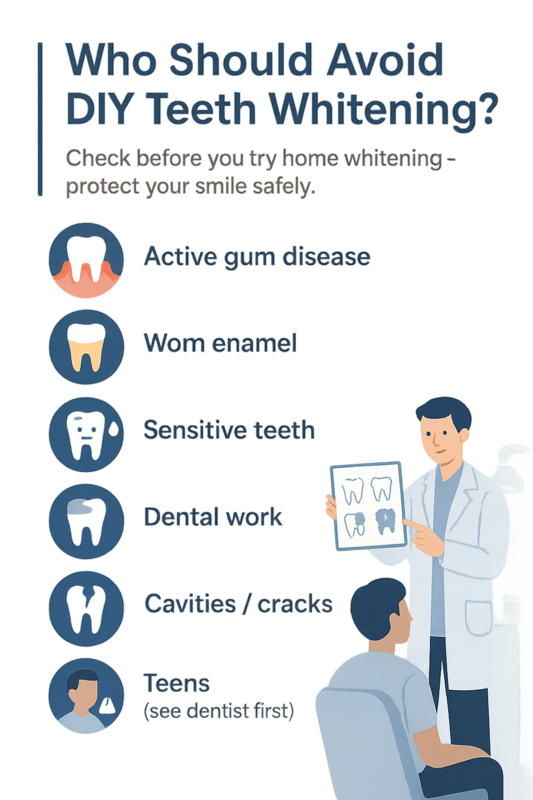
Review this dental checklist before trying any at-home teeth whitening methods.
If you’re considering teeth whitening home remedies, a homemade teeth whitening solution, or natural ways to whiten teeth, review this checklist first. If any apply to you, it’s best to speak with a dentist before trying to make your teeth whiter on your own.
- Active gum disease (gingivitis or periodontitis) — Whitening agents can irritate inflamed gums and worsen sensitivity. Treatment should come first.
- Worn or eroded enamel — Acidic or abrasive products, including baking soda and hydrogen peroxide for teeth, may further thin enamel. In these cases, preventive restorative care may be recommended before whitening.
- Severe tooth sensitivity — If you’re already sensitive to hot or cold, whitening products can significantly increase discomfort.
- Crowns, veneers, or fillings in visible areas — Restorations do not respond to whitening and may lead to uneven color.
- Untreated cavities or cracked teeth — Whitening gels can seep into damaged areas and cause sharp pain.
- Teens without professional guidance — Developing teeth and gums require careful evaluation before cosmetic treatments.
AI Overview: DIY whitening is generally not recommended for people with gum disease, enamel erosion, restorations, untreated decay, or significant sensitivity. A dental evaluation helps determine how to whiten teeth without damaging enamel.
If you’re unsure whether at-home whitening is right for you, a quick exam can prevent costly mistakes and protect your long-term oral health.
Frequently Asked Questions About Whitening Teeth at Home
How can I whiten my teeth at home fast?
If you’re searching for how to whiten teeth at home fast, over-the-counter whitening strips or trays with peroxide typically work quickest. Some people also try teeth whitening home remedies like baking soda, but results are usually gradual. For faster, more dramatic results, professional teeth whitening treatment is often more effective and predictable.
Is baking soda safe for daily teeth whitening?
Baking soda can help remove surface stains, but daily use may wear down enamel over time. If you’re learning how to use baking soda to whiten teeth, limit it to a few times per week and use a soft-bristled brush. Overuse can increase sensitivity and enamel erosion.
How long does it take for natural teeth whitening to work?
Natural ways to whiten teeth, such as oil pulling or dietary changes, may take several weeks to show subtle improvements. Results vary depending on stain type and oral hygiene habits. These methods are generally slower than peroxide-based products or in-office whitening.
Does hydrogen peroxide damage enamel?
When used at appropriate concentrations, hydrogen peroxide is generally considered safe for enamel. However, frequent or high-strength use—such as mixing baking soda and hydrogen peroxide for teeth too often—may cause irritation or sensitivity. It’s important to follow product instructions carefully.
Can yellow teeth become white again naturally?
Yellow teeth caused by surface stains may improve with natural teeth whitening approaches and better oral hygiene. Deeper discoloration inside the tooth is less likely to respond to homemade teeth whitening solutions. In those cases, professional options may provide more noticeable results.
Does coconut oil really whiten teeth?
Many people ask, “does coconut oil whiten teeth?” Oil pulling may reduce bacteria and improve gum health, but scientific evidence for significant whitening is limited. It may help with surface stains, but it does not bleach teeth like peroxide-based products do.
What is the safest way to whiten teeth at home?
The safest way to whiten teeth at home is to use dentist-approved whitening strips or custom trays as directed. Avoid abrasive scrubbing and harsh homemade mixtures. If you’re unsure how to whiten teeth without damaging enamel, consult a dental professional before starting treatment.
When should I see a dentist for teeth whitening?
See a dentist if you have tooth sensitivity, gum disease, restorations, or uneven discoloration. A dental exam ensures whitening is safe and suitable for your smile. Professional guidance can also help you choose the most effective and long-lasting option.
Ready for a Brighter Smile in Marina del Rey?
If you’ve tried how to whiten teeth at home methods but want safer, longer-lasting results, professional care can make a meaningful difference. Store-bought kits and teeth whitening home remedies may offer minor improvements, but they often lack the strength and customization needed for noticeable change.
At Elegant Dentistry, we provide personalized whitening treatments designed to brighten your smile while protecting your enamel and gum health. Every treatment is tailored to your goals, sensitivity level, and overall oral condition—so you can feel confident in both the results and the process.
Why Choose Elegant Dentistry for Teeth Whitening?
As a trusted provider of Cosmetic & Restorative Family Dentistry in Marina del Rey, our team combines advanced whitening technology with a preventive approach. Before treatment, we assess your enamel health and existing restorations to ensure safe, even results.
- Customized treatment plans based on your smile goals and sensitivity level
- Professional-grade whitening agents for brighter, more consistent results
- Guidance for long-term maintenance to help protect your investment
Ready to see real results? Explore our professional teeth whitening services in Marina del Rey and discover what’s possible with expert care.
Professional whitening is typically faster, more predictable, and carefully monitored for safety—helping you achieve a brighter smile without damaging enamel.
