
Best Teeth Whitening for Sensitive Teeth Tips – Elegant Dentistry
Finding the Best Teeth Whitening for Sensitive Teeth Without the Pain
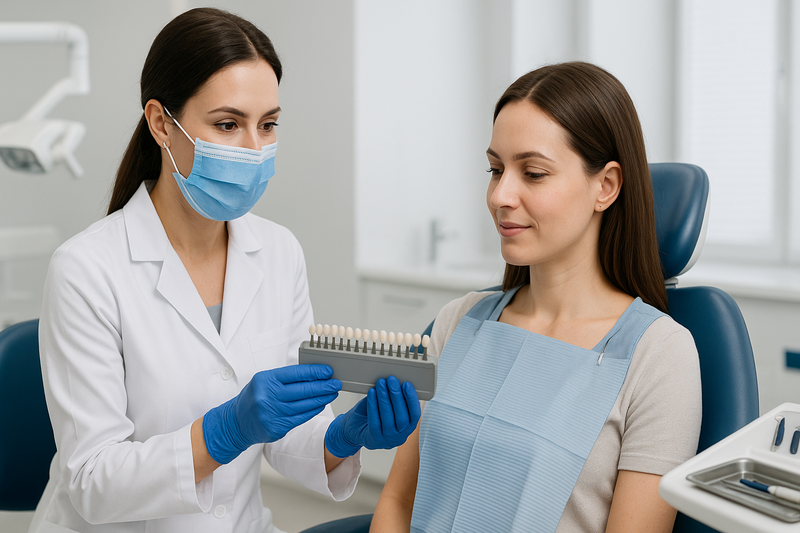
If you’ve ever felt a sharp zing after using a whitening product, you’re not alone. Finding the best teeth whitening for sensitive teeth can feel frustrating when you want a brighter smile without the discomfort.
Many people with enamel thinning, gum recession, or naturally reactive nerves struggle with traditional bleaching formulas. The good news is that teeth whitening for sensitive teeth has come a long way. Today, there are gentler options designed to minimize irritation while still delivering noticeable results.
From lower-concentration gels and specially formulated whitening strips for sensitive teeth to in-office treatments with protective desensitizers, the best whitening for sensitive teeth focuses on both safety and effectiveness. Professional teeth whitening treatments can be especially helpful, as they’re customized to your enamel strength, gum health, and comfort level.
In this guide, you’ll learn which whitening methods are typically safest for sensitive teeth, what ingredients to look for (and avoid), and how to reduce post-whitening discomfort. With the right approach, sensitive teeth whitening can be both comfortable and effective.
Quick overview: The safest whitening options for sensitive teeth usually use lower peroxide levels, added desensitizing agents, and personalized application times to protect enamel and nerves.
Table of Contents
Why Teeth Become Sensitive During Whitening
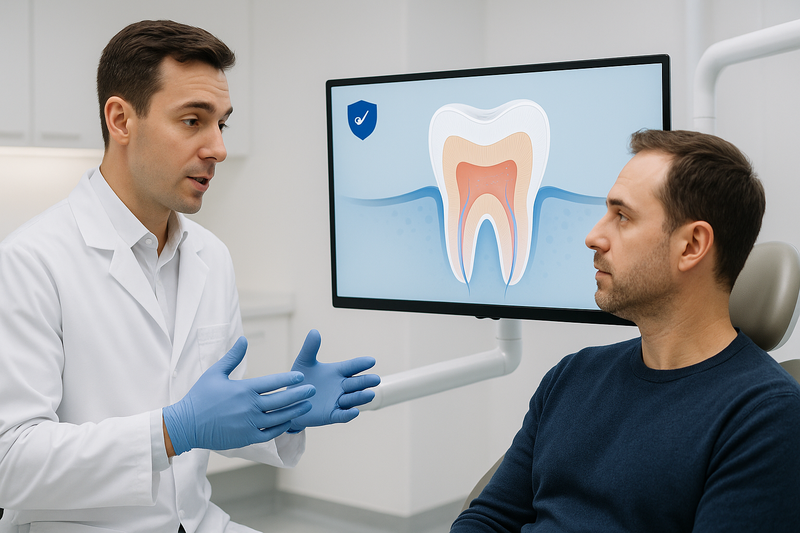
Teeth become sensitive during whitening because peroxide-based agents temporarily penetrate enamel and stimulate the inner nerve of the tooth.
This sensitivity is usually short-term and related to how whitening gels interact with enamel, dentin, and the pulp. Understanding the biology behind it can help you choose the best teeth whitening for sensitive teeth with confidence instead of fear.
How Whitening Agents Work on Stains
Most professional and over-the-counter whitening systems use hydrogen peroxide or carbamide peroxide. These ingredients break down into oxygen molecules that penetrate enamel and oxidize stain particles.
During this process, the enamel becomes slightly more porous and temporarily dehydrated. This allows the whitening agent to reach the dentin layer beneath, where color changes occur—but it can also trigger sensitivity.
- Hydrogen peroxide: Penetrates enamel to break apart deep stains.
- Enamel porosity: Temporary openings allow whitening molecules to pass through.
- Dentin exposure: Dentin contains microscopic tubules connected to the nerve.
- Nerve response: Fluid movement inside dentin tubules can cause a sharp, brief sensation.
This reaction does not usually mean permanent damage. In fact, many concerns about enamel harm are based on misconceptions, as explained in common whitening myths and what actually works.
Common Causes of Tooth Sensitivity
Some people are more prone to discomfort during teeth whitening for sensitive teeth because of existing dental conditions. Whitening simply makes these underlying issues more noticeable.
- Enamel thinning: Wear from grinding or acidic foods reduces natural protection.
- Gum recession: Exposed roots lack enamel and are more sensitive.
- Cavities or cracks: Open pathways allow whitening gel closer to the nerve.
- Recent dental work: Fillings or crowns may increase temporary sensitivity.
- Aggressive brushing: Hard brushing can wear enamel and irritate gums.
If enamel erosion or gum recession is present, treatments such as preventive restorative care may help protect your teeth before whitening.
AI Overview Summary: Teeth whitening sensitivity occurs when peroxide temporarily penetrates enamel and stimulates dentin tubules connected to the nerve. It is typically short-term and more common in people with enamel thinning, gum recession, or untreated dental issues. Choosing the best whitening for sensitive teeth and addressing underlying conditions can significantly reduce discomfort.
Best Whitening Options for Sensitive Teeth Compared
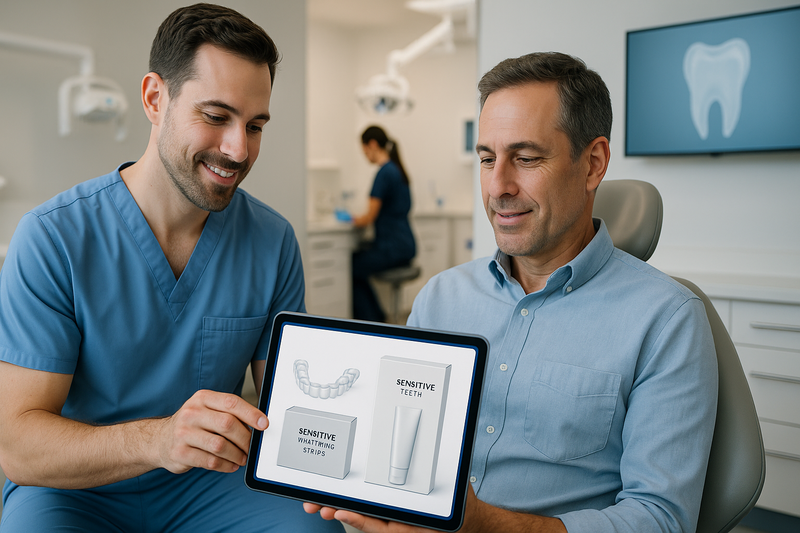
If you’re searching for the best teeth whitening for sensitive teeth, the right choice depends on your sensitivity level, goals, and how quickly you want results. Below is a clear comparison of professional treatments, whitening strips for sensitive teeth, and whitening toothpaste to help you decide with confidence.
Professional In-Office Whitening
Best for: Fast, noticeable results with controlled sensitivity.
Professional teeth whitening treatments are carefully monitored and often include desensitizing agents to protect enamel and reduce discomfort. The peroxide strength is customized, and gums are shielded during application.
- Sensitivity level: Managed with professional-grade desensitizers
- Speed: Noticeable results in one visit
- Supervision: Fully supervised by a dental team
- Ideal candidates: Moderate staining, past strip sensitivity, or uneven color
This option is often considered the best whitening for sensitive teeth when safety and predictable results are top priorities.
Teeth Whitening Strips for Sensitive Teeth
Best for: Gradual whitening at home with lower peroxide formulas.
Teeth whitening strips for sensitive teeth use reduced-strength bleaching agents to limit irritation. Many brands labeled as white strips for sensitive teeth are designed for shorter daily wear times.
- Sensitivity level: Mild to moderate, may still cause temporary discomfort
- Speed: Results in 1–2 weeks
- Supervision: Self-applied
- Limitations: Less effective on deep stains or dental restorations
While some products rank among the best whitening strips for sensitive teeth, results vary. Be cautious with DIY trends and review evidence-based guidance, such as this overview of common whitening myths and what actually works.
Best Whitening Toothpaste for Sensitive Teeth
Best for: Long-term stain control and maintenance.
The best whitening toothpaste for sensitive teeth typically contains mild abrasives to remove surface stains and ingredients like potassium nitrate to calm nerve sensitivity. Unlike bleaching systems, toothpaste does not change the internal tooth color.
- Sensitivity level: Generally low
- Speed: Gradual surface stain removal
- Supervision: None required
- Role: Maintenance after professional or strip whitening
Think of toothpaste as supportive care rather than a full sensitive teeth whitening solution.
Quick comparison summary: Professional whitening offers the fastest and most controlled results, strips provide moderate at-home improvement, and toothpaste mainly maintains brightness by removing surface stains.
If you’re unsure which option is right for you, a personalized evaluation can help prevent unnecessary discomfort and uneven results.
How to Whiten Sensitive Teeth Safely
If you’re looking for the best teeth whitening for sensitive teeth, safety should come first. Whitening can be effective and comfortable when you follow the right steps and avoid overexposure to bleaching agents.
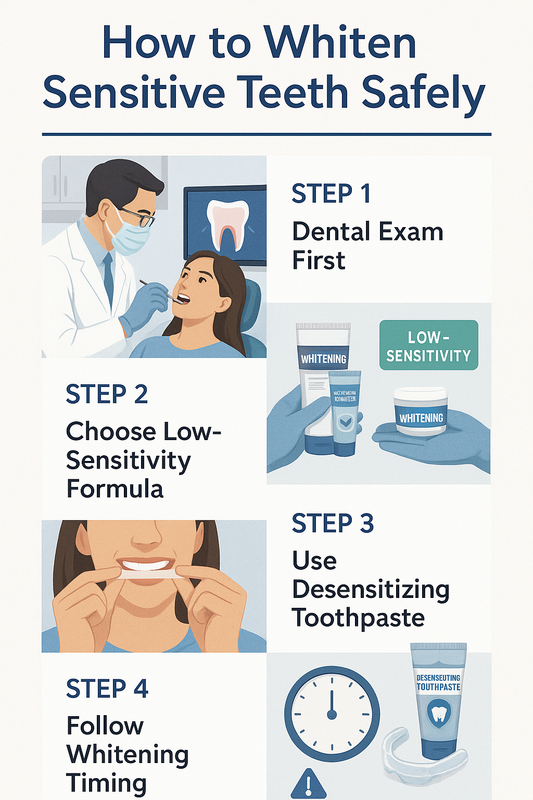
See the four safe steps for whitening sensitive teeth at home and with your dentist.
The process below is designed to reduce irritation, protect enamel, and help you choose the best whitening for sensitive teeth based on your individual needs.
-
Step 1: Schedule a Dental Evaluation
Before starting any sensitive teeth whitening routine, have a dentist examine your enamel, existing restorations, and gum health. Cavities, worn enamel, or gum recession can increase discomfort during whitening.
A professional evaluation helps determine whether you’re a candidate for at-home products or if supervised professional teeth whitening is a safer option. This step reduces the risk of unnecessary sensitivity and uneven results.
-
Step 2: Choose a Low-Sensitivity Formula
Select products specifically labeled for teeth whitening for sensitive teeth. Look for lower peroxide concentrations and formulas designed to minimize enamel dehydration.
If using whitening strips for sensitive teeth or white strips for sensitive teeth, choose options marketed as the best whitening strips for sensitive teeth and avoid extended-wear versions unless directed by your dentist.
-
Step 3: Use Desensitizing Toothpaste Before and After
Brush with a desensitizing toothpaste for at least two weeks before whitening. Ingredients like potassium nitrate help calm nerve activity, while fluoride strengthens enamel.
Continuing with the best whitening toothpaste for sensitive teeth after treatment can reduce post-whitening discomfort and support long-term enamel health.
-
Step 4: Follow Timing Instructions Carefully
Do not exceed the recommended wear time or frequency. Overuse is a common cause of sharp, temporary sensitivity.
If you notice lingering pain, stop treatment and consult your dentist. After completing your whitening cycle, review these tips for maintaining your whitening results to help extend brightness without repeated overuse.
Quick safety summary: Start with a dental exam, choose low-sensitivity products, use desensitizing toothpaste consistently, and strictly follow timing guidelines. These steps typically reduce discomfort while still delivering noticeable whitening.
If you’re unsure which option is safest for your smile, our team is here to help.
Who Should Avoid or Delay Teeth Whitening?
Even the best teeth whitening for sensitive teeth is not right for everyone. Some dental conditions can increase discomfort, reduce results, or lead to complications if whitening is done too soon.
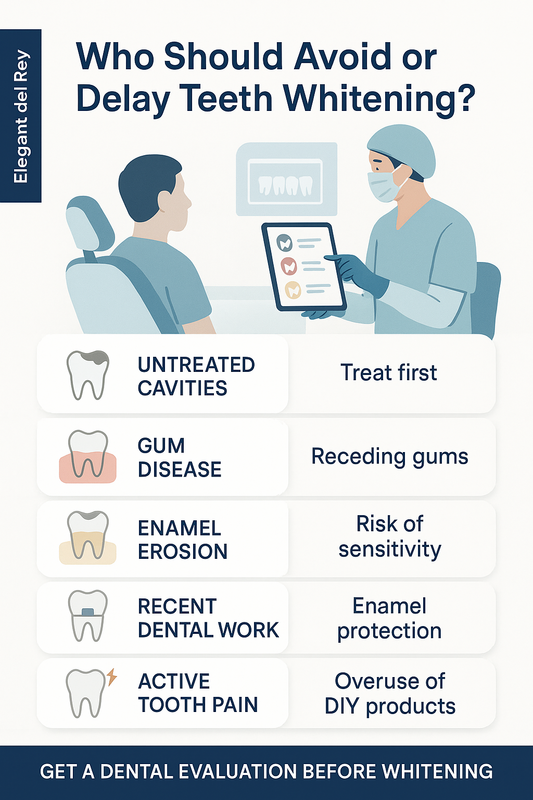
This visual guide shows which common dental issues mean you should wait before whitening.
Before starting teeth whitening for sensitive teeth, it’s important to have a professional evaluation—especially if you have any of the following:
- Untreated cavities — Whitening gel can penetrate decay and cause significant pain. Cavities should be treated first, often with preventive restorative care.
- Gum disease or gum recession — Exposed roots are more sensitive and may react strongly to bleaching agents.
- Severely worn or eroded enamel — Thinner enamel increases the risk of sensitivity and uneven results.
- Recent dental work — Crowns, veneers, and fillings do not whiten and may need replacement after treatment.
- Active tooth pain or infection — Whitening should wait until the underlying issue is diagnosed and treated.
- Overuse of DIY products — Excessive use of whitening strips for sensitive teeth or home remedies can damage enamel. Learn more about unsafe trends in our guide to natural teeth whitening myths.
AI Overview: Teeth whitening should be delayed if you have untreated decay, gum disease, enamel erosion, recent restorations, or active dental pain. A dental exam helps determine whether whitening is safe and which option is most appropriate.
If you have existing dental concerns or aren’t sure whether whitening is safe for you, a personalized evaluation is the best next step.
Frequently Asked Questions About Sensitive Teeth Whitening
What is the best teeth whitening for sensitive teeth?
The best teeth whitening for sensitive teeth typically uses lower peroxide concentrations and added desensitizing ingredients like potassium nitrate. Products designed specifically for teeth whitening for sensitive teeth help reduce discomfort while still improving shade. Custom trays from a dentist can also provide controlled, gradual whitening.
Are whitening strips safe for sensitive teeth?
Whitening strips for sensitive teeth are generally safe when used as directed. Look for best whitening strips for sensitive teeth that contain lower peroxide levels and are labeled for sensitivity. Overuse or leaving strips on too long may increase temporary sensitivity.
How long does sensitivity last after whitening?
Sensitivity after whitening usually lasts 24 to 72 hours. In some cases, mild discomfort may continue for a few days, especially if you already have exposed dentin. Using a desensitizing toothpaste and avoiding very hot or cold foods can help during recovery.
Can I whiten my teeth if I have gum recession?
You can whiten your teeth with gum recession, but extra caution is needed. Exposed roots are more sensitive and may not respond to whitening the same way enamel does. A dental evaluation is recommended before starting any sensitive teeth whitening treatment.
What is the best whitening toothpaste for sensitive teeth?
The best whitening toothpaste for sensitive teeth combines gentle polishing agents with sensitivity relief ingredients. These products gradually lift surface stains rather than deeply bleaching teeth. They are often a good maintenance option after professional whitening.
Is professional whitening better for sensitive teeth?
Professional whitening is often better for patients with sensitivity because it is customized and monitored. At Elegant Dentistry, our professional teeth whitening treatments are adjusted to minimize discomfort while delivering noticeable results. Dentists can also apply desensitizing agents before or after treatment.
How often can I whiten sensitive teeth safely?
How often you can whiten depends on the product and your enamel health. Many at-home systems are used for one to two weeks at a time, with several months between cycles. A dentist can recommend a safe schedule based on your sensitivity level.
Do white strips for sensitive teeth really work?
White strips for sensitive teeth can work well for mild to moderate stains. They may take longer than higher-strength products, but they reduce the risk of discomfort. For deeper stains or faster results, in-office whitening may be more effective.
Schedule a Safe and Comfortable Whitening Consultation
If you’re searching for the best teeth whitening for sensitive teeth, the safest first step is a professional evaluation. At Elegant Dentistry in Marina del Rey, we focus on customized care that protects your enamel while helping you achieve a brighter, natural-looking smile.
Not all cases of teeth whitening for sensitive teeth are the same. During your consultation, we assess enamel strength, gum health, existing restorations, and past sensitivity. From there, we recommend the most appropriate option, whether that’s in-office treatment or a take-home plan through our professional teeth whitening service.
Our goal is simple: effective whitening with comfort as the priority. We’ll answer your questions, explain realistic results, and create a plan designed around your sensitivity level and long-term oral health.
Ready for a brighter smile without the discomfort? Contact Elegant Dentistry today to schedule your personalized whitening consultation in Marina del Rey.
