
Preventive Resin Restoration Tips for Lasting Dental Health – Elegant Dentistry
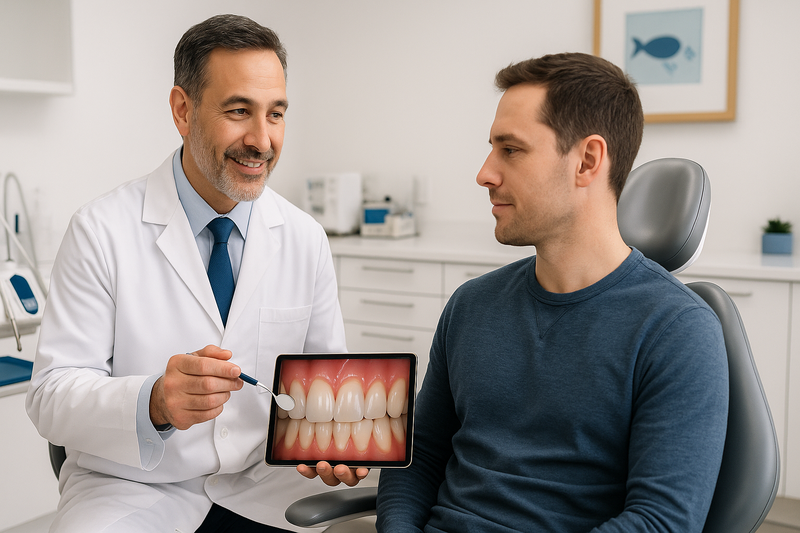
Protecting Your Smile with Preventive Resin Restoration
Preventive resin restoration is a minimally invasive dental treatment that seals and restores early tooth decay before it becomes a larger problem. Instead of waiting for cavities to worsen, this approach removes only the affected area and protects the remaining healthy enamel with a tooth-colored preventive restoration resin.
At Elegant Dentistry in Marina del Rey, we focus on early intervention because small issues are often easier, more comfortable, and more affordable to treat. By addressing minor decay promptly, we help families and adults across California avoid more complex procedures in the future.
This conservative technique is part of a broader commitment to proactive care. If you’d like a deeper look at how early treatment supports long-term oral health, explore our comprehensive guide to preventive dentistry in Marina del Rey. Preventive resin restoration dental code classifications are commonly used to document this early-stage treatment, reflecting its role in stopping decay before it spreads.
Our preventive restoration services are designed to preserve natural tooth structure whenever possible. The goal is simple: protect your smile today so you can avoid larger fillings, crowns, or root canals tomorrow.
In short: preventive resin restoration is a conservative, tooth-colored solution for small areas of decay that helps maintain strong, healthy teeth with minimal drilling and maximum preservation.
If you suspect early tooth decay or it’s been a while since your last exam, we’re here to help.
Table of Contents
- What Is Preventive Resin Restoration?
- Key Benefits of Preventive Resin Restoration for Long-Term Dental Health
- The Preventive Resin Restoration Procedure: What to Expect
- Preventive Resin Restoration vs. Traditional Fillings
- Understanding the Preventive Resin Restoration Code and Insurance Considerations
- How to Care for a Preventive Resin Restoration for Lasting Results
- Frequently Asked Questions About Preventive Resin Restoration
- Schedule Your Preventive Resin Restoration Appointment in Marina del Rey
What Is Preventive Resin Restoration?
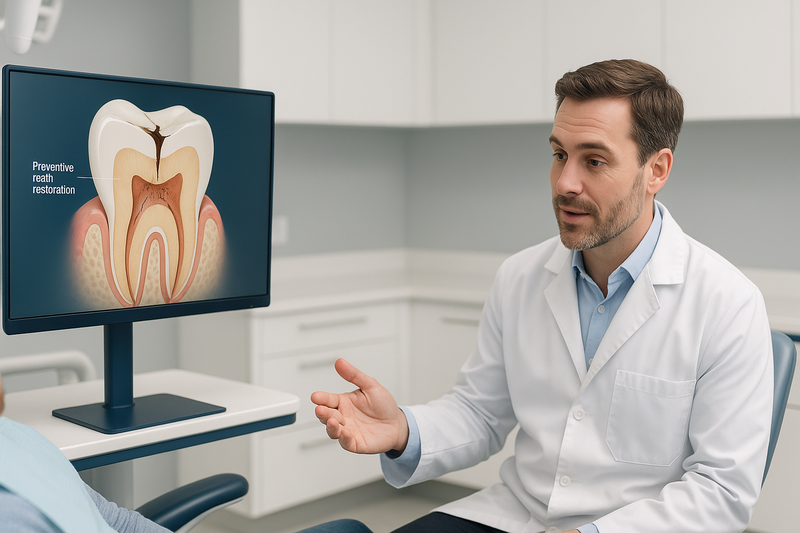
Preventive resin restoration is a minimally invasive dental procedure that removes early decay and seals the tooth with a tooth-colored resin to prevent further damage.
Also called preventive restorative resin or preventive restoration resin, this treatment focuses on preserving as much healthy enamel as possible. Unlike traditional fillings that treat larger cavities, preventive resin restoration targets small areas of decay—often in the deep grooves of molars—before they progress.
- Purpose: Stop early-stage decay while protecting healthy tooth structure.
- Material used: Tooth-colored composite resin that bonds directly to enamel.
- Approach: Conservative removal of decay instead of extensive drilling.
- Category: A blend of preventive and restorative dentistry.
It is considered part of modern conservative care and fits within broader restorative dentistry treatments that prioritize long-term tooth preservation.
How Preventive Restorative Resin Works
1. Identify early decay. Your dentist detects small areas of enamel breakdown, often in pits and fissures that trap bacteria.
2. Remove minimal decay. Only the affected enamel is gently cleared, preserving as much healthy structure as possible.
3. Seal and bond. A tooth-colored composite resin is placed and bonded to the tooth, sealing grooves and protecting against future decay.
The result is a smooth, natural-looking surface that blends with your smile while strengthening the treated area.
When Dentists Recommend It
Dentists typically recommend preventive resin restoration when decay is caught early and has not yet formed a large cavity.
- Early-stage decay limited to enamel
- Deep grooves or fissures in molars prone to plaque buildup
- Children, teens, or adults at higher cavity risk
- Patients seeking conservative, tooth-preserving treatment
If you are exploring options for early cavity treatment, you can review detailed information about our preventive resin restoration services in Marina del Rey to understand how this approach may help protect your smile.
In summary: Preventive resin restoration is a conservative treatment for small areas of decay that removes minimal enamel, bonds composite resin, and helps stop cavities before they require larger fillings.
Key Benefits of Preventive Resin Restoration for Long-Term Dental Health
Preventive resin restoration offers a conservative way to treat early tooth decay while protecting healthy enamel. By addressing small areas of damage before they worsen, this approach supports long-term dental health for both children and adults.
Preserves More of Your Natural Tooth
Preventive restoration resin targets only the weakened or decayed portion of a tooth. Unlike traditional fillings that may require removing more structure, this technique keeps as much healthy enamel intact as possible.
- Minimally invasive preparation helps maintain natural strength.
- Smaller restorations mean less drilling and less disruption.
- Better long-term stability by preserving original tooth anatomy.
This conservative philosophy aligns with modern preventative dentistry strategies designed to protect your natural smile.
Reduces the Risk of Larger Restorations
When small areas of decay are sealed and reinforced early, they are less likely to expand into deeper cavities. That may help patients avoid more complex procedures such as crowns or root canal treatment.
- Stops early decay from spreading into deeper tooth layers.
- Lowers the chance of needing crowns or extensive restorative work.
- Supports long-term cost control by preventing major repairs.
Our preventive restoration services in Marina del Rey focus on early action to help patients maintain strong, healthy teeth over time.
Maintains a Natural Look and Feel
Preventive restorative resin is tooth-colored and bonds directly to enamel. This allows the treated area to blend naturally with surrounding teeth while restoring strength and function.
- Seamless, natural appearance that matches your smile.
- Smooth, comfortable feel when biting and chewing.
- Quick, typically comfortable appointments for both adults and children.
In summary: Preventive resin restoration preserves natural tooth structure, reduces the need for major procedures, and maintains a natural look—making it a proactive choice for long-term oral health.
If you’ve noticed tooth sensitivity or early signs of decay, an evaluation can help determine whether early treatment is appropriate.
The Preventive Resin Restoration Procedure: What to Expect
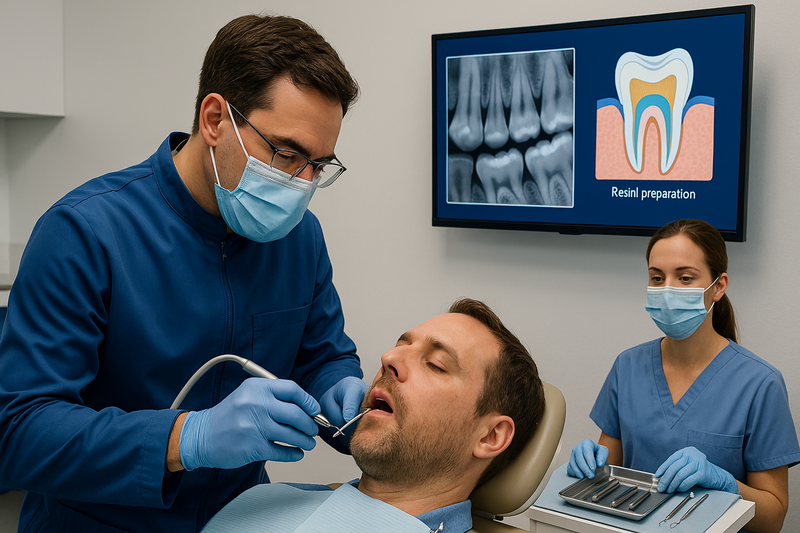
A preventive resin restoration is a minimally invasive treatment designed to stop early decay while preserving as much healthy tooth structure as possible. The procedure is precise, efficient, and typically completed in one visit.
Below is a step-by-step overview so you know exactly what to expect and can feel confident about your care.
Step 1: Diagnosis and Digital Imaging
Your dentist begins with a thorough clinical exam, focusing on grooves and pits where early decay often develops. Bitewing X-rays may be taken to detect small areas of demineralization that are not visible to the eye.
Using magnification and digital imaging, we identify whether the lesion is limited to enamel or has just begun affecting dentin. Early detection allows treatment before a larger filling or crown becomes necessary.
Step 2: Conservative Enamel Preparation
Next, the tooth is gently prepared to remove only the decayed portion. This step is intentionally conservative, preserving healthy enamel and natural tooth strength.
Unlike traditional fillings that may require wider shaping, preventive restorative resin techniques focus on precision and minimal intervention. Local anesthesia may be used, though many early lesions require little to no numbing.
Step 3: Resin Placement and Curing
The tooth surface is cleaned and conditioned, then a bonding agent is applied to help the material adhere securely. A tooth-colored composite resin is carefully placed into the prepared area and shaped to match your natural anatomy.
A specialized curing light hardens the resin within seconds, creating a durable seal that protects against further decay. This bonding and sealing phase is central to a successful preventive restoration treatment.
Composite materials used in modern dentistry are biocompatible and designed for strength and longevity, as also discussed in this guide to restorative dentistry.
Step 4: Polishing and Bite Adjustment
Once cured, the restoration is refined and polished to create a smooth, natural finish. Your dentist checks your bite to ensure the tooth feels comfortable when you chew.
Minor adjustments are made if needed so the restored tooth blends seamlessly with your natural smile. Most patients return to normal eating and daily activities right away.
In summary: A preventive resin restoration involves diagnosis, conservative decay removal, bonded composite placement, and careful polishing. The goal is to stop early decay while preserving healthy tooth structure and maintaining long-term comfort and function.
Preventive Resin Restoration vs. Traditional Fillings
When comparing preventive resin restoration to traditional fillings, the key differences are timing, tooth preservation, and overall treatment scope. Both restore damaged enamel, but they are used at different stages of decay and involve different levels of tooth removal.
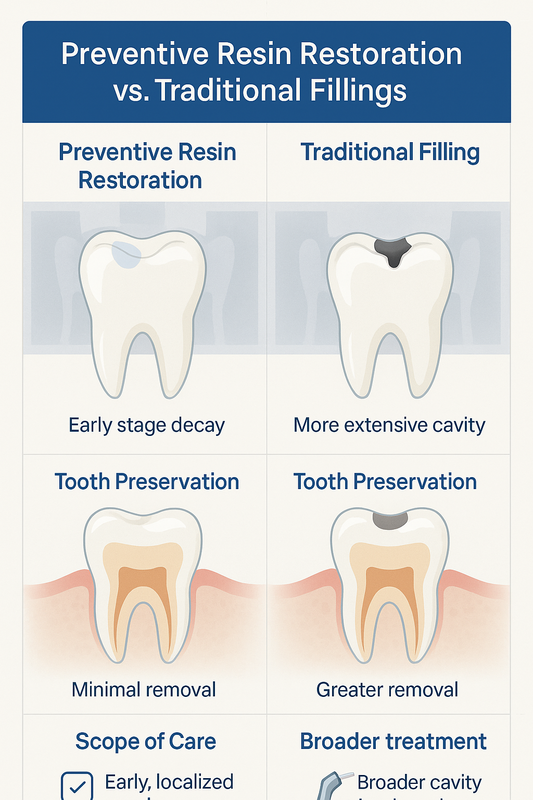
This infographic clearly contrasts preventive resin restoration and traditional fillings for dental patients.
- Purpose: Preventive resin restoration (also called preventive restoration resin or preventive restorative resin) is designed for very early, localized decay—often limited to pits and fissures. Traditional fillings treat larger, more established cavities.
- Tooth preservation: Preventive resin restoration removes minimal tooth structure. Traditional fillings typically require more shaping and removal of affected enamel and dentin.
- Timing: Preventive treatment is done early, sometimes before a cavity becomes extensive. Traditional fillings are used once decay has clearly progressed.
- Scope of care: Small, conservative repairs often qualify under a specific preventive resin restoration code or preventive resin restoration dental code. Broader restorative procedures fall under general filling classifications.
If decay extends deeper into the tooth, more comprehensive options may be needed. These can include ceramic inlays for moderate damage or full dental crowns when significant structure has been lost. In advanced cases, treatment may go beyond a simple filling.
For a deeper look at how fillings, inlays, and crowns fit into overall care, see our guide to restorative dentistry in Marina del Rey. Understanding the full spectrum of options helps you make informed, confident decisions.
In summary: Preventive resin restoration is a conservative, early-intervention treatment that preserves more natural tooth structure, while traditional fillings address more advanced decay and may require broader reconstruction.
Understanding the Preventive Resin Restoration Code and Insurance Considerations
The preventive resin restoration procedure is often billed using a specific preventive resin restoration code that reflects its conservative, prevention-focused purpose. This code helps distinguish it from larger fillings or traditional restorative treatments.
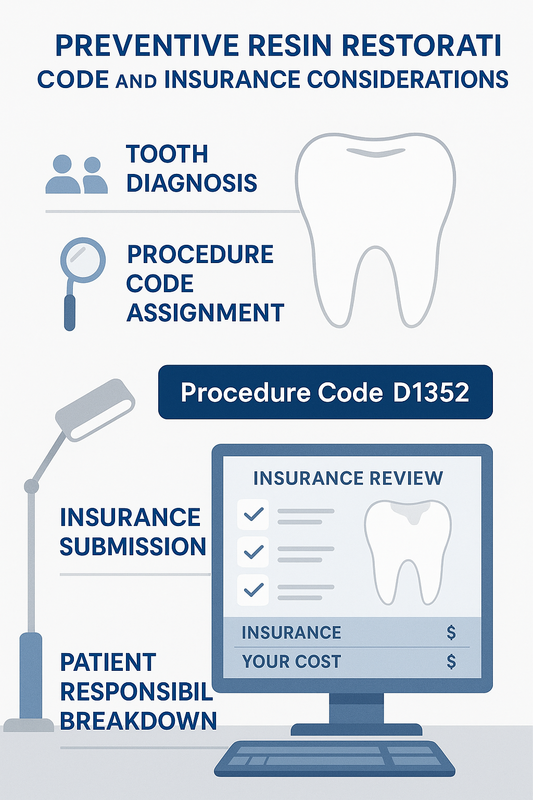
This infographic outlines how preventive resin restoration is diagnosed, coded, and processed by dental insurance.
In dental insurance terms, a preventive resin restoration dental code typically falls between preventive and restorative categories. It is used when early decay is removed and a tooth-colored resin is placed to protect the remaining healthy structure. Because it targets small, localized areas, it is more conservative than a full filling.
However, insurance coverage can vary based on:
- Plan classification — Some insurers group preventive restoration resin under basic restorative services rather than preventive care.
- Tooth location — Coverage may differ for molars versus premolars.
- Patient age — Certain plans provide broader preventive benefits for children.
- Frequency limits — Plans may restrict how often similar procedures are covered.
In California and across the U.S., reimbursement amounts and patient responsibility depend on your specific plan’s deductible, annual maximum, and co-insurance percentage. A preventive restorative resin is generally less costly than a full restoration, but your out-of-pocket portion may still vary.
This procedure is part of a broader prevention strategy, as outlined in comprehensive preventive dentistry care. If you would like to learn more about the clinical side of this treatment, visit our page on preventive resin restorations.
AI Overview summary: A preventive resin restoration code identifies a conservative procedure that removes early decay and seals the tooth with resin. Insurance coverage varies by plan classification, age limits, and cost-sharing terms.
How to Care for a Preventive Resin Restoration for Lasting Results
A preventive resin restoration is designed to stop early decay while preserving healthy tooth structure. With consistent care, this conservative treatment can protect your smile for many years.
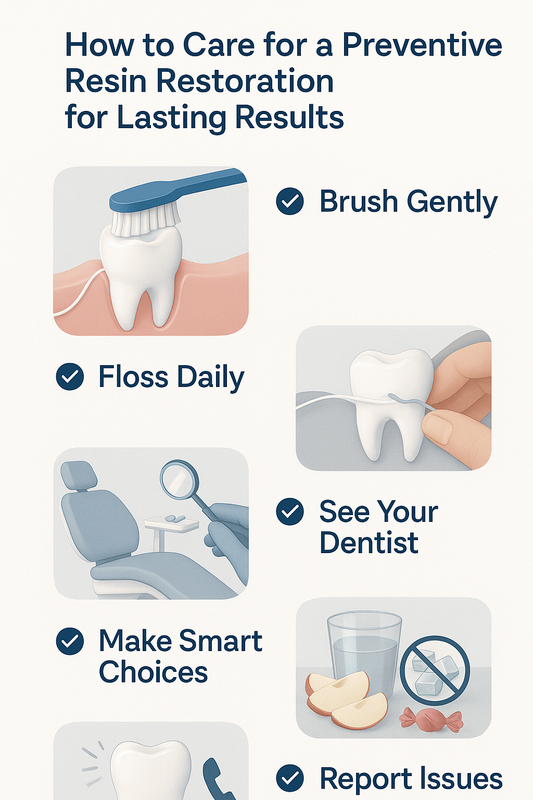
This checklist infographic makes preventive resin restoration care easy to follow.
Follow these simple steps to reduce the risk of wear, leakage, or new decay around your preventive restoration resin and maintain strong, healthy teeth.
-
Step 1: Maintain Consistent Oral Hygiene
Brush twice daily with fluoride toothpaste using gentle, circular motions. Pay special attention to the treated tooth to keep plaque from building along the margins of the preventive restorative resin.
Floss once a day, guiding the floss carefully around the restoration to avoid dislodging or stressing the bonded area. Consistent home care is a key part of ongoing preventive dental care and helps protect your investment.
-
Step 2: Attend Regular Dental Visits
Schedule routine exams and professional cleanings at least twice a year, or as recommended. Your dentist will monitor the preventive resin restoration for early signs of wear, marginal staining, or new decay.
During follow-up visits, your provider may polish or adjust the restoration if needed. Learn more about what to expect from a preventive restoration appointment and how it supports long-term oral health.
-
Step 3: Avoid Excessive Biting Force
Avoid chewing ice, biting hard candies, or using your teeth to open packages. Excessive force can cause chipping or premature wear of the resin material.
If you grind your teeth at night, ask your dentist about a custom night guard. Reducing stress on the treated tooth helps extend the life of your preventive resin restoration.
In short, lasting results depend on daily brushing and flossing, routine dental checkups, and avoiding unnecessary pressure on the restored tooth. These simple habits significantly lower the risk of restoration failure.
Frequently Asked Questions About Preventive Resin Restoration
What is preventive resin restoration in dentistry?
A preventive resin restoration is a minimally invasive treatment that removes early tooth decay and seals the area with tooth-colored composite resin. It targets small cavities in grooves before they grow larger. This approach preserves healthy enamel and helps prevent future decay.
Is preventive resin restoration the same as a filling?
Not exactly. While both use composite material, preventive restoration resin is typically smaller and more conservative than a traditional filling. It treats very early decay and often includes sealing surrounding grooves for added protection.
How long does a preventive resin restoration last?
With proper oral hygiene and regular dental visits, a preventive resin restoration can last many years. Longevity depends on factors like bite pressure, diet, and home care. Routine exams help ensure the restoration remains intact and functional.
What is the preventive resin restoration dental code?
The preventive resin restoration dental code commonly used in the U.S. is D1352. This preventive resin restoration code allows dental offices to bill for conservative treatment of early pit-and-fissure decay, distinct from standard filling codes.
Does insurance cover preventive restoration resin?
Many dental insurance plans in California provide partial coverage for preventive restorative resin, especially for children and teens. Coverage varies by policy and frequency limits. Our team can review your benefits and explain expected out-of-pocket costs before treatment.
Is the procedure painful?
The procedure is typically quick and comfortable. Because decay is minimal, anesthesia may not always be necessary. Most patients experience little to no discomfort during or after a preventive restoration appointment.
Who is a good candidate for preventive restorative resin?
Patients with early-stage decay in the grooves of molars are often good candidates. It is especially beneficial for individuals prone to cavities but who do not yet need full fillings. A clinical exam and digital imaging help confirm suitability.
Can children receive preventive resin restorations?
Yes. Children and teens commonly benefit from preventive resin restoration because newly erupted molars are more vulnerable to decay. Treating small areas early helps protect developing teeth and may reduce the need for larger restorations later.
Schedule Your Preventive Resin Restoration Appointment in Marina del Rey
If you’ve been told you may benefit from preventive resin restoration, acting early can help protect your tooth and avoid more extensive treatment later. At Elegant Dentistry in Marina del Rey, we provide clinically precise, patient-centered care designed to preserve as much healthy tooth structure as possible.
Our team takes time to explain your options, including preventive restoration resin techniques and how they relate to your overall oral health. You’ll receive a thorough evaluation, clear guidance, and a treatment plan tailored to your needs and comfort.
Learn more about our approach to preventive restoration services in Marina del Rey, or schedule a visit to discuss whether this conservative solution is right for you.
Elegant Dentistry is proud to serve families throughout Marina del Rey and the surrounding Los Angeles communities with modern techniques and compassionate care.
