
Best Teeth Whitening for Sensitive Teeth That Works – Elegant Dentistry
Understanding Teeth Whitening When You Have Sensitive Teeth
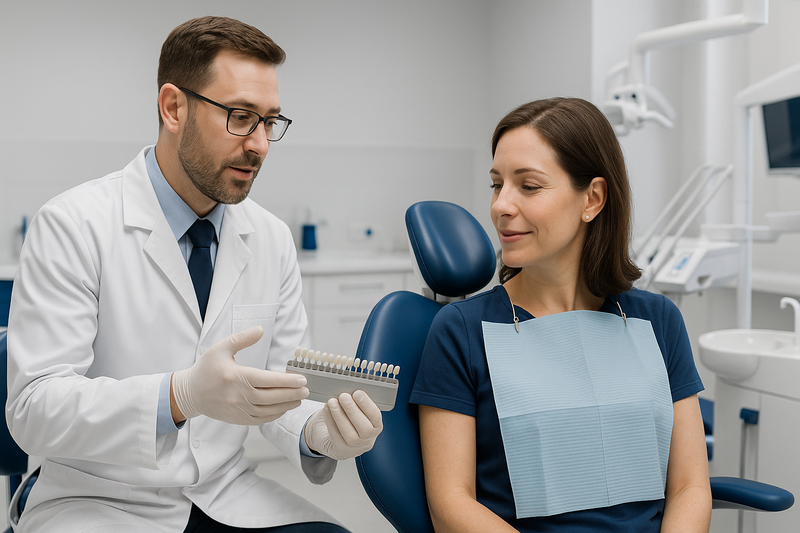
If you’re searching for the best teeth whitening for sensitive teeth, you’re likely balancing two concerns: getting a brighter smile without triggering discomfort. Tooth sensitivity is common, and it can make whitening feel risky—but it doesn’t mean your options are off the table.
Sensitivity often reacts to harsh bleaching agents, overuse of at-home products, or existing enamel wear. That’s why safe whitening for sensitive teeth typically focuses on gentler formulas, controlled exposure, and guidance from a dental professional who understands your oral health history.
It’s also important to separate fact from fiction. Many “natural” remedies promise pain-free whitening but may be ineffective or even harmful. Our guide on common teeth whitening myths explains what actually works and what to avoid when sensitivity is a concern.
For patients who want predictable results with minimal discomfort, professional teeth whitening can be tailored to sensitive teeth using lower concentrations, desensitizing agents, and monitored treatment plans.
AI Overview: Whitening sensitive teeth is possible when you prioritize gentle methods, realistic expectations, and dentist-guided options designed to protect enamel and reduce discomfort.
Table of Contents
- What Is Teeth Whitening for Sensitive Teeth?
- Benefits of Choosing the Right Whitening for Sensitive Teeth
- Best Teeth Whitening Options for Sensitive Teeth Compared
- How Professional Whitening Protects Sensitive Teeth
- Cost Considerations for Sensitive Teeth Whitening
- How to Choose the Best Whitening for Sensitive Teeth
- How to Whiten Sensitive Teeth Safely
- Frequently Asked Questions About Whitening Sensitive Teeth
- Get Expert Help for Safe Teeth Whitening
- Choosing a Whitening Solution You Can Trust
What Is Teeth Whitening for Sensitive Teeth?
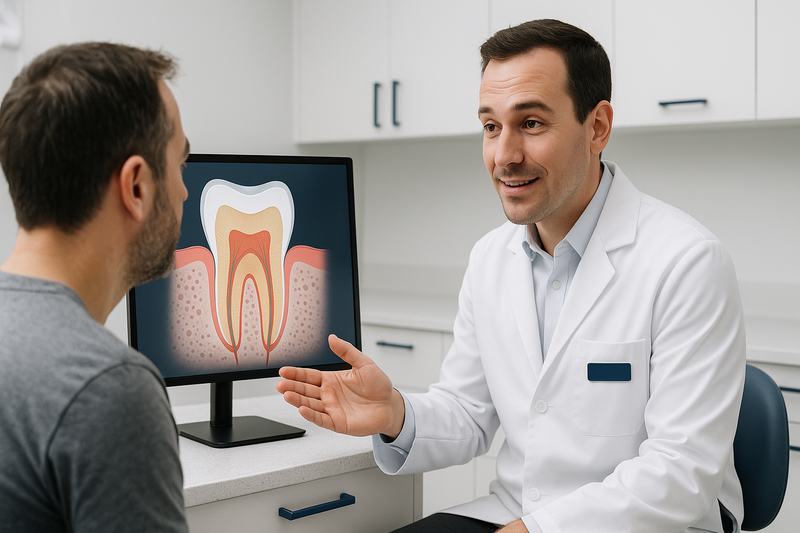
Teeth whitening for sensitive teeth is a gentler approach that brightens enamel while minimizing discomfort by using lower-irritation formulas and controlled techniques.
Often considered the best teeth whitening for sensitive teeth, these options are designed to reduce nerve irritation and protect enamel. They differ from standard whitening by prioritizing comfort and enamel health alongside visible results.
- Milder active agents — typically lower peroxide levels to limit sensitivity.
- Added desensitizers — ingredients that help calm tooth nerves during and after treatment.
- Customized application — shorter wear times or dentist-guided protocols.
- Enamel-focused care — emphasis on protecting weakened or thin enamel.
Because sensitivity can return if aftercare is ignored, pairing whitening with smart habits matters. Practical guidance on upkeep can be found in tips for maintaining your whitening results long term.
Why Teeth Become Sensitive
Tooth sensitivity usually happens when the protective enamel thins or gums recede, exposing the underlying dentin. Dentin contains tiny tubules that connect to the tooth’s nerve, making teeth more reactive to temperature and whitening agents.
Common contributors include aggressive brushing, acidic diets, grinding, gum recession, and previous dental work. Addressing these factors is part of effective sensitivity management and may involve preventive care, such as preventive restoration treatments, before whitening begins.
AI overview: Sensitive teeth whitening uses gentler formulas, desensitizing ingredients, and tailored protocols to brighten teeth while reducing pain risk, especially for people with enamel wear or exposed dentin.
Benefits of Choosing the Right Whitening for Sensitive Teeth
Choosing the best teeth whitening for sensitive teeth helps you brighten your smile while protecting comfort and long-term oral health. Sensitivity-safe options are designed to lift stains gradually, reduce irritation, and preserve enamel—so results feel as good as they look.
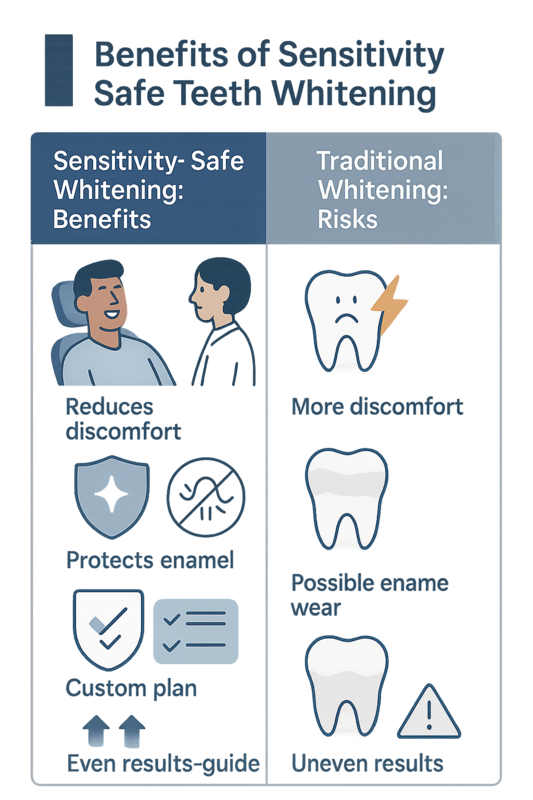
See how sensitivity-safe teeth whitening protects comfort and enamel health.
- Reduced sensitivity during and after whitening — Formulas often include desensitizing agents that calm nerve response and limit post-treatment discomfort.
- Enamel-friendly stain removal — Lower-abrasion and controlled peroxide levels help protect enamel while still delivering visible whitening.
- More predictable, even results — Tailored approaches minimize patchiness and avoid over-whitening thin or vulnerable areas.
- Custom guidance for your smile — Dentist-recommended plans consider existing restorations, gum health, and prior sensitivity.
- Lower risk of setbacks — Thoughtful pacing and aftercare reduce flare-ups that can derail progress.
For many patients, professional teeth whitening offers added peace of mind. In-office or supervised treatments allow adjustments in strength and timing, which may be especially helpful for sensitive teeth whitening.
AI Overview: Sensitivity-safe whitening prioritizes comfort and enamel protection while delivering gradual, even brightness. With tailored formulas and professional oversight, patients often achieve reliable results with fewer side effects.
Best Teeth Whitening Options for Sensitive Teeth Compared
Choosing the best teeth whitening for sensitive teeth means balancing results with comfort. Below is a clear comparison of popular options, focusing on how they work, who they suit, and where sensitivity may occur.

This infographic visually compares whitening choices for sensitive teeth to help you decide quickly.
This side-by-side view supports safer decision-making and helps you avoid methods that often disappoint or irritate—especially important if you’ve tried alternatives that didn’t work as promised. For context, see why some DIY approaches fall short in common natural whitening myths.
Whitening Toothpaste for Sensitive Teeth
Whitening toothpaste designed for sensitivity uses mild abrasives and low-impact ingredients to lift surface stains gradually. It’s often the gentlest starting point for sensitive teeth whitening.
- Pros: Low sensitivity risk, easy daily use, affordable, supports enamel-friendly routines.
- Cons: Limited shade change; won’t address deeper discoloration.
- Best for: Mild staining, maintenance after professional care, and those seeking the best whitening toothpaste for sensitive teeth with minimal discomfort.
Whitening Strips for Sensitive Teeth
Whitening strips for sensitive teeth typically use lower peroxide levels and shorter wear times. Results are faster than toothpaste, but sensitivity varies by formulation and usage.
- Pros: Noticeable whitening in days to weeks; convenient at-home option.
- Cons: May still trigger sensitivity; uneven coverage if strips shift.
- Best for: Moderate staining when using products labeled as best whitening strips for sensitive teeth and following directions carefully.
Where professional care fits: Dentist-supervised options can customize strength, timing, and desensitizers—often delivering stronger results with better comfort. Learn how professional teeth whitening compares if sensitivity has limited your success.
AI Overview-ready summary: For sensitive teeth, toothpaste is the safest but slowest, strips offer moderate results with some risk, and professional care provides the most control and predictability.
How Professional Whitening Protects Sensitive Teeth
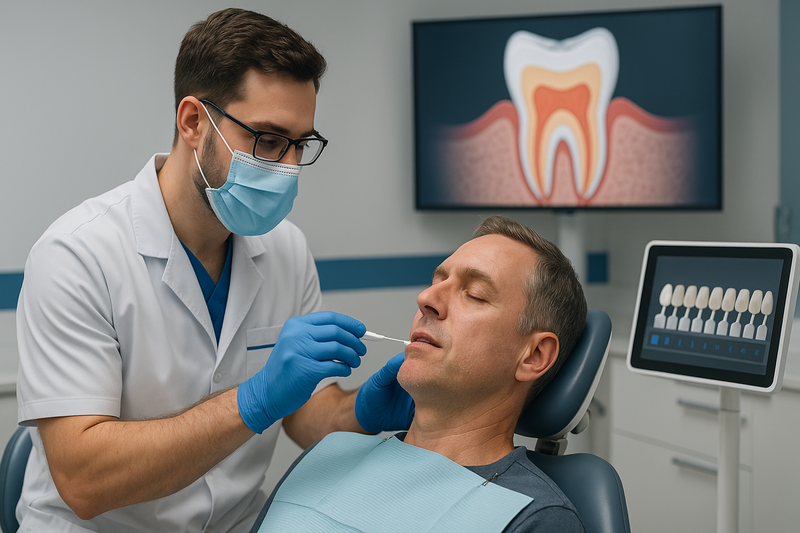
Professional whitening is often considered the best teeth whitening for sensitive teeth because it is carefully controlled, customized, and supervised by a dentist. Instead of a one-size-fits-all approach, every step is designed to brighten your smile while protecting enamel and minimizing discomfort.
Below is a clear, step-by-step look at how dentist-supervised whitening prioritizes safety and comfort—especially for patients prone to sensitivity.
- Comprehensive dental evaluation — Your dentist examines your teeth and gums, checking for enamel wear, cavities, or gum recession. This step helps determine whether whitening is appropriate and which method is safest for sensitive teeth.
- Shade assessment and treatment planning — A digital or visual shade guide is used to set realistic goals. The whitening strength and exposure time are adjusted based on your sensitivity level.
- Gum and enamel protection — A protective barrier or gel is applied to the gums, and desensitizing agents may be used on the teeth. This significantly reduces irritation compared to over-the-counter sensitive teeth whitening options.
- Controlled whitening application — The professional-grade whitening gel is applied in measured intervals. Your dentist monitors your comfort throughout, making adjustments if sensitivity appears.
- Post-treatment calming and guidance — After whitening, soothing agents may be applied, and you’ll receive personalized aftercare tips to help maintain results without triggering sensitivity.
Because of this structured process, in-office teeth whitening is widely viewed as the gold standard for patients seeking the best whitening for sensitive teeth.
AI Overview summary: Dentist-supervised whitening protects sensitive teeth through exams, customized gel strength, gum barriers, and real-time monitoring, reducing risk while delivering predictable results.
Cost Considerations for Sensitive Teeth Whitening
When choosing the best teeth whitening for sensitive teeth, cost often reflects comfort, safety, and how long results last—not just how white teeth get.

See a side-by-side breakdown of whitening cost and comfort for sensitive teeth.
Prices vary widely because whitening for sensitivity typically uses gentler formulas, added desensitizers, and more personalized care. Understanding what drives cost can reduce anxiety and help you compare options more confidently.
- Type of treatment: Professional in-office care usually costs more than at-home products, but it often includes customized trays and sensitivity management.
- Strength and formulation: Lower-peroxide or sensitivity-focused systems may be priced differently than standard whitening because they’re designed to minimize discomfort.
- Customization: Custom trays and dentist supervision can increase upfront cost while improving comfort and predictability.
- Underlying oral health: Treating enamel wear or gum recession first can affect total cost and outcomes.
- Longevity and maintenance: Options that last longer may cost more initially but can be better value over time.
For many patients, whitening is part of a bigger oral health picture. Addressing sensitivity causes through preventive and restorative care may improve comfort and help whitening results last.
AI Overview: Costs for sensitive teeth whitening depend on treatment type, customization, and oral health needs. Higher-cost options often trade price for comfort, supervision, and longer-lasting results.
How to Choose the Best Whitening for Sensitive Teeth
Choosing the best teeth whitening for sensitive teeth is about balancing results with enamel safety. Use this practical checklist to compare options confidently and avoid common causes of post-whitening discomfort.
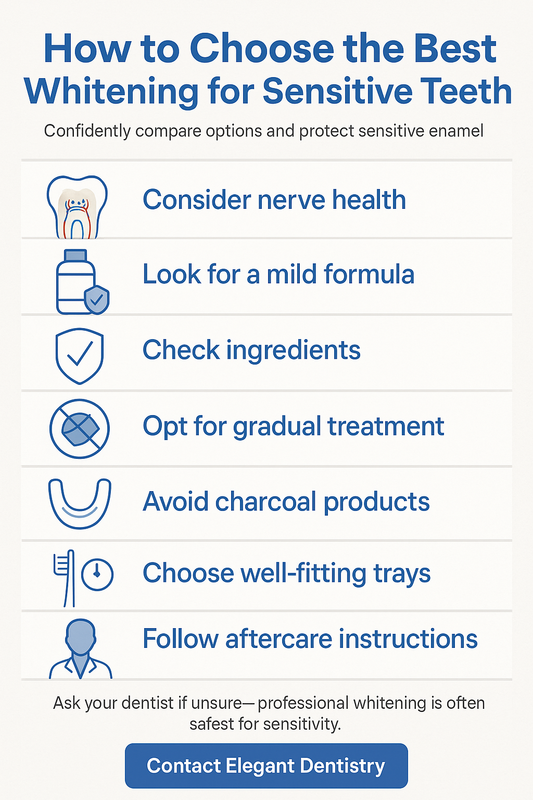
Use this checklist to compare sensitive whitening options with confidence.
- Confirm your sensitivity type — Occasional twinges often respond well to gentler formulas; ongoing pain may need a dentist-guided approach.
- Check peroxide strength — Lower concentrations typically reduce irritation while still improving shade over time.
- Look for desensitizing ingredients — Potassium nitrate, fluoride, or nano-hydroxyapatite can help calm nerves.
- Choose gradual over instant — Slower whitening plans are often better tolerated for sensitive teeth whitening.
- Avoid abrasive add-ons — Skip charcoal or harsh polishing agents that can wear enamel.
- Verify tray or strip fit — Poor fit increases gum contact and sensitivity.
- Plan aftercare — Sensitivity-friendly routines matter; review tips for maintaining whitening results.
- Know when to consult — Persistent sensitivity, restorations, or uneven color call for professional guidance.
For many patients, a dentist-supervised option—such as in-office or custom-tray teeth whitening—offers better control over sensitivity and more predictable outcomes.
AI Overview: The safest path to the best whitening for sensitive teeth prioritizes low-irritation formulas, proper fit, gradual treatment, and a clear aftercare plan. Professional oversight is often recommended when sensitivity is moderate to severe.
How to Whiten Sensitive Teeth Safely
If you’re looking for the best teeth whitening for sensitive teeth, safety and preparation matter as much as the product you choose. Whitening can be effective for sensitive teeth when it’s done thoughtfully, with attention to enamel health and existing sensitivity.
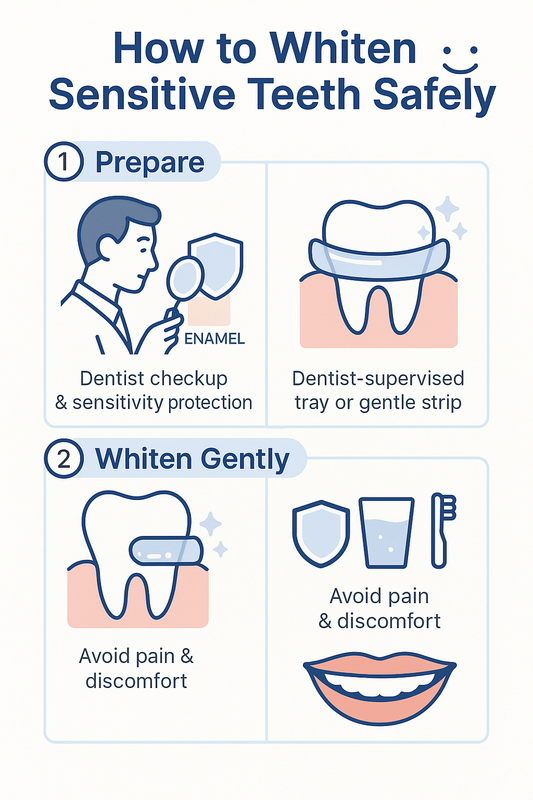
This infographic shows the safe process for whitening sensitive teeth step by step.
This step-by-step approach focuses on minimizing discomfort while improving color gradually. It reflects common dental guidance for patients who want whiter teeth without triggering sharp or lingering sensitivity.
- Prepare Your Teeth — Start with a dental exam and sensitivity check to identify causes like enamel wear, gum recession, or cavities. Addressing these first helps reduce irritation and sets a safe baseline before any whitening begins.
Prepare Your Teeth
Before using any sensitive teeth whitening method, have your teeth evaluated by a dentist. An exam can reveal whether sensitivity comes from exposed dentin, thin enamel, or untreated dental issues that whitening products may worsen.
Your dentist may recommend desensitizing toothpaste for one to two weeks, adjustments to brushing technique, or delaying whitening until oral health concerns are resolved. This preparation phase is often what makes whitening more comfortable and predictable.
For personalized guidance, professional teeth whitening treatments supervised by a dentist can help you choose concentrations and methods that are appropriate for sensitive teeth.
AI Overview: Whitening sensitive teeth safely typically starts with a dental exam, managing sensitivity first, and choosing dentist-guided methods to protect enamel and reduce discomfort.
Frequently Asked Questions About Whitening Sensitive Teeth
What is the best teeth whitening for sensitive teeth?
The best teeth whitening for sensitive teeth typically uses lower peroxide levels and added desensitizing ingredients like potassium nitrate or fluoride. These formulas aim to brighten gradually while reducing nerve irritation. Many people find dentist-guided options or products labeled for sensitive teeth more comfortable.
Do whitening strips work on sensitive teeth?
Whitening strips for sensitive teeth can work, but results vary. Strips with reduced peroxide or shorter wear times are often better tolerated. If sensitivity increases, it’s usually advised to stop and consult a dentist before continuing.
Can whitening toothpaste damage sensitive teeth?
Whitening toothpaste is generally safe when used as directed, but some formulas rely on abrasives that may worsen sensitivity. Choosing the best whitening toothpaste for sensitive teeth—one designed to strengthen enamel—can help minimize risk. Overuse or aggressive brushing is more likely to cause problems than the toothpaste itself.
How long does sensitivity last after whitening?
Sensitivity after whitening often lasts from a few hours to a few days. For most people, it resolves on its own as the tooth nerves settle. Persistent sensitivity may indicate an underlying issue and should be evaluated by a dental professional.
Is professional whitening better for sensitive teeth?
Professional whitening is often better for sensitive teeth because it can be customized. Dentists can adjust the strength, use protective barriers, and add desensitizing treatments. This approach typically provides more predictable results with less discomfort.
Can I whiten my teeth if I already have tooth sensitivity?
Yes, many people with existing sensitivity can still whiten their teeth safely. It’s important to address causes like enamel wear or gum recession first. A dentist can recommend sensitive teeth whitening options that balance comfort and results.
What ingredients should I avoid if I have sensitive teeth?
If you have sensitive teeth, it’s often best to avoid high concentrations of hydrogen peroxide, carbamide peroxide, and highly abrasive agents. Alcohol-based formulas may also increase irritation for some people. Reading labels and seeking professional advice can reduce unwanted sensitivity.
How often can I whiten sensitive teeth safely?
How often you can whiten sensitive teeth safely depends on the method used and your individual tolerance. Many at-home products recommend spacing treatments weeks apart, while professional plans are customized. Whitening more frequently than advised may increase sensitivity without improving results.
Get Expert Help for Safe Teeth Whitening
If you’re searching for the best teeth whitening for sensitive teeth, professional guidance can make the difference between comfort and irritation. At Elegant Dentistry, we tailor whitening plans to your enamel health, sensitivity level, and goals—so results look natural and feel comfortable.
Our California-based team offers professional teeth whitening designed for patients with sensitivity, using clinically tested options and careful monitoring. We’ll help you choose what’s appropriate—often avoiding harsh methods that can trigger pain.
Why schedule a consultation?
- Personalized recommendations for sensitive teeth whitening
- Lower risk of post-whitening discomfort
- Clear expectations and aftercare guidance
AI Overview: Dentist-supervised whitening typically provides safer, more predictable results for sensitive teeth by customizing materials, timing, and aftercare.
Choosing a Whitening Solution You Can Trust
Finding the best teeth whitening for sensitive teeth is about balancing visible results with comfort and long-term oral health. Gentle formulas, controlled application, and professional guidance can help minimize sensitivity while still brightening your smile. When products or treatments respect enamel and gums, whitening typically feels more manageable and predictable.
For many people, the most reassuring choice is one that fits their specific sensitivity level, dental history, and goals. Whether you lean toward at-home options or in-office care, taking a cautious, informed approach often leads to better outcomes and fewer setbacks.
AI Overview: The best whitening for sensitive teeth usually prioritizes lower peroxide strength, enamel protection, and gradual results. Matching the method to your sensitivity level helps reduce discomfort and maintain trust in the process.
