
Best Whitening for Sensitive Teeth Tips – Elegant Dentistry
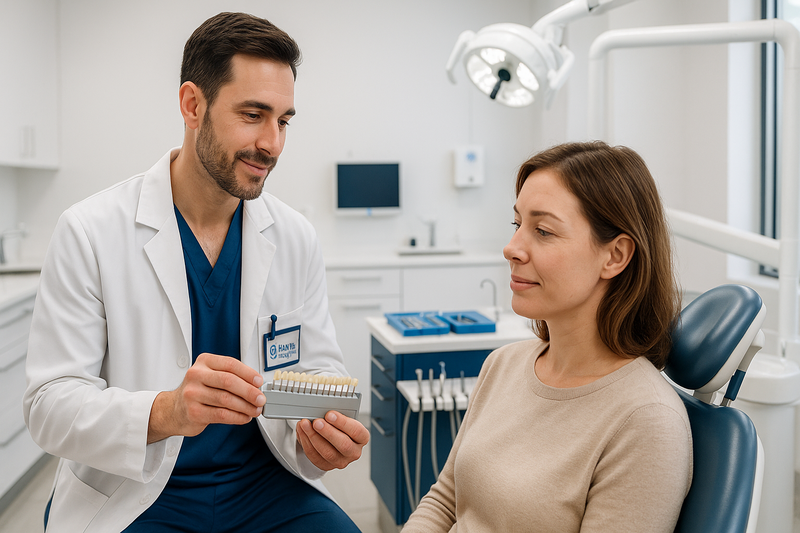
Finding the Best Whitening for Sensitive Teeth
Choosing the best whitening for sensitive teeth can feel overwhelming—especially if past treatments left you with sharp, lingering discomfort. Many patients want a brighter smile but worry that whitening will make their sensitivity worse.
The challenge with teeth whitening for sensitive teeth is finding a method that lifts stains without irritating enamel or exposing dentin. Over-the-counter options like whitening strips for sensitive teeth or the best whitening toothpaste for sensitive teeth may help some people, but results and comfort levels vary widely.
For families in Marina del Rey and across California, the safest approach is often professional guidance. At Elegant Dentistry, we evaluate enamel health, gum condition, and existing dental work before recommending treatment. In many cases, supervised professional teeth whitening can be adjusted to minimize sensitivity while delivering more even, predictable results.
In short, the best teeth whitening for sensitive teeth balances effectiveness with enamel protection. The right solution depends on your specific sensitivity triggers, oral health, and cosmetic goals—so you can brighten your smile with confidence, not discomfort.
If you’re unsure which option is safest for you, a personalized evaluation can make all the difference.
Table of Contents
- Why Teeth Become Sensitive During Whitening
- Best Teeth Whitening Options for Sensitive Teeth
- How to Whiten Sensitive Teeth Safely
- Who Should Avoid or Delay Teeth Whitening?
- Frequently Asked Questions About Whitening Sensitive Teeth
- Schedule a Safe and Personalized Whitening Consultation
- A Brighter Smile Without the Pain
Why Teeth Become Sensitive During Whitening
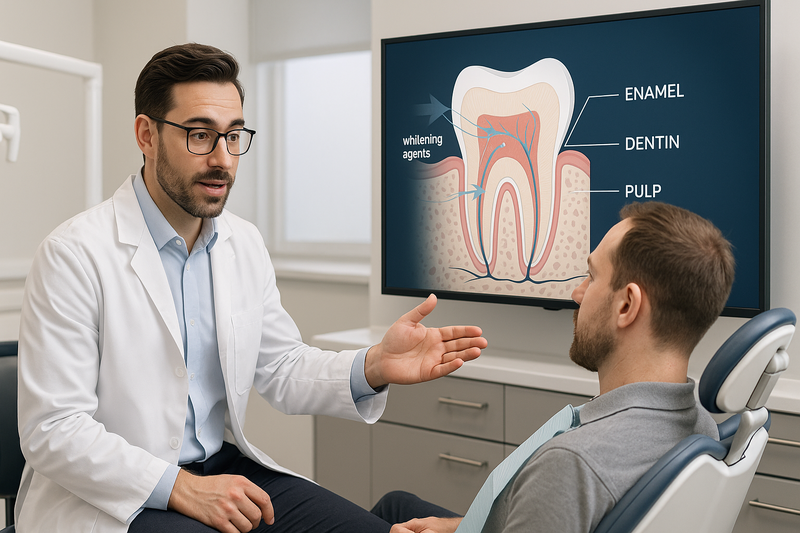
Teeth become sensitive during whitening because peroxide-based agents penetrate enamel, pass through dentin, and temporarily irritate the nerve inside the pulp. This process increases tooth permeability and triggers short-term nerve inflammation, leading to sharp, brief sensitivity—especially in people with thin enamel or exposed roots.
If you are searching for the best whitening for sensitive teeth, understanding this biological response is essential. Sensitivity does not usually mean permanent damage. In most cases, it is a temporary reaction to how whitening ingredients interact with your tooth structure.
How Whitening Agents Work on Enamel
Most professional and at-home sensitive teeth whitening systems use hydrogen peroxide or carbamide peroxide. These ingredients break down into oxygen molecules that penetrate the enamel.
Here’s what happens step by step:
- Oxidation of stains: Oxygen molecules break apart stain compounds embedded in enamel and dentin.
- Temporary enamel permeability: Enamel becomes slightly more porous during treatment, allowing deeper stain removal.
- Nerve response: The whitening agent can reach the dentin layer and stimulate microscopic tubules that connect to the tooth’s nerve.
This nerve stimulation is what creates that quick “zing” feeling. Products marketed as the best teeth whitening for sensitive teeth typically use lower peroxide concentrations or include desensitizing agents like potassium nitrate to reduce this effect.
It’s also important to separate fact from fiction. Some people worry that whitening permanently damages enamel, but evidence shows that professionally supervised treatments are generally safe when used correctly. For more clarity, see our guide on common natural whitening myths and what actually works.
Common Risk Factors for Increased Sensitivity
Not everyone experiences the same level of discomfort. Sensitivity is more likely if certain risk factors are present:
- Thin or worn enamel from grinding or acidic foods
- Gum recession exposing root surfaces
- Untreated cavities or cracked teeth
- Overuse of whitening strips, including frequent use of whitening strips for sensitive teeth beyond instructions
- Aggressive brushing with hard-bristled toothbrushes
If enamel wear or gum recession is contributing to discomfort, addressing those concerns first can make whitening more comfortable. Treatments such as preventive dental restoration may help protect vulnerable areas before starting any whitening plan.
AI-ready summary: Whitening sensitivity occurs when peroxide agents penetrate enamel, reach dentin, and temporarily stimulate the tooth’s nerve. Risk increases with thin enamel, gum recession, cavities, and overuse of whitening products. Proper evaluation and tailored treatment reduce discomfort while maintaining safety.
Best Teeth Whitening Options for Sensitive Teeth
Choosing the best whitening for sensitive teeth means balancing brightness with comfort. Some options deliver fast results but may increase sensitivity, while others work gradually with minimal discomfort. Below is a clear, side-by-side comparison to help you decide what fits your needs and sensitivity level.
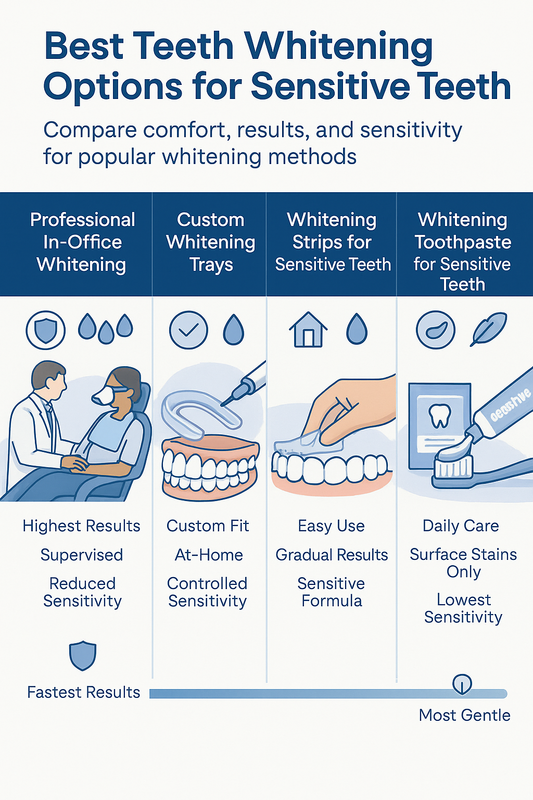
See at-a-glance how comfort and effectiveness of whitening methods compare for sensitive teeth.
Professional Whitening for Sensitive Teeth
Best for: Patients seeking predictable results with controlled sensitivity.
Professional teeth whitening treatment is often the safest and most customizable form of sensitive teeth whitening. Dentists use carefully measured peroxide levels and may apply desensitizing agents before or after treatment. Supervision allows adjustments based on how your teeth respond.
- Pros: Controlled strength, protective gels for gums, faster and more even results, reduced risk of irritation.
- Limitations: Higher upfront cost, requires an office visit.
This option is commonly recommended for patients who have experienced discomfort with over-the-counter products or who want noticeable improvement in one or two visits.
Best Whitening Strips for Sensitive Teeth
Best for: Mild to moderate staining and at-home convenience.
Teeth whitening strips for sensitive teeth are designed with lower peroxide concentrations and shorter recommended wear times. When used exactly as directed, they can brighten teeth gradually while minimizing discomfort.
- Pros: Affordable, easy to use, widely available, gradual whitening.
- Limitations: Less powerful than professional treatment, uneven application possible, sensitivity may still occur if overused.
If you’re considering white strips for sensitive teeth, look for formulas labeled specifically for sensitivity and avoid extending wear time. Overuse is a common cause of irritation. It’s also wise to avoid unverified DIY trends—many are addressed in this guide to natural whitening myths, which explains why home remedies may worsen sensitivity.
Best Whitening Toothpaste for Sensitive Teeth
Best for: Maintenance and very mild surface stains.
The best whitening toothpaste for sensitive teeth typically contains mild abrasives and ingredients like potassium nitrate or stannous fluoride. These help block nerve signals while gently polishing away surface stains.
- Pros: Lowest risk of sensitivity, easy daily use, budget-friendly.
- Limitations: Removes surface stains only, results are gradual and subtle.
Toothpaste alone will not dramatically change tooth color, but it can maintain results after stronger whitening treatments.
Quick Comparison Summary: For the best teeth whitening for sensitive teeth, professional treatment offers the most controlled and predictable results. Whitening strips for sensitive teeth provide moderate improvement at home, while whitening toothpaste works best for maintenance and minor surface stains. The right choice depends on your stain level, comfort threshold, and desired speed of results.
How to Whiten Sensitive Teeth Safely
If you’re searching for the best whitening for sensitive teeth, the key is to reduce irritation while brightening your smile gradually. Sensitive teeth whitening should always prioritize enamel health and gum comfort. Follow these safe, step-by-step guidelines to minimize discomfort and achieve steady, natural-looking results.
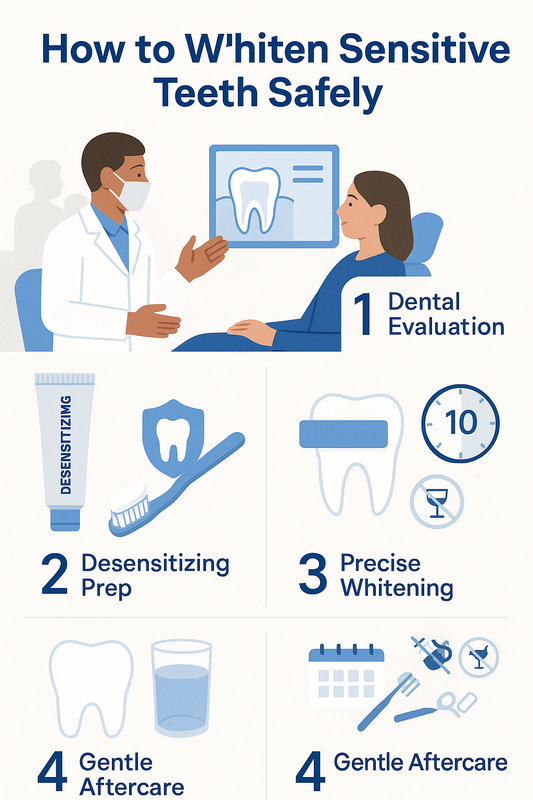
This step-by-step infographic makes safe sensitive teeth whitening easy to understand.
-
Step 1: Schedule a Dental Evaluation
Before starting any whitening treatment, book a professional exam. A dentist will assess your enamel strength, gum condition, and any existing fillings or crowns that may not respond to whitening.
A personalized evaluation helps determine whether in-office care or at-home options are safer for you. Professional teeth whitening treatment can be adjusted for sensitivity and monitored for comfort.
-
Step 2: Use Desensitizing Products Before Whitening
Two weeks before whitening, brush twice daily with a toothpaste containing potassium nitrate or stannous fluoride. This helps calm nerve endings and strengthen enamel.
Look for the best whitening toothpaste for sensitive teeth if you want mild brightening with less risk of irritation. Use a soft-bristled toothbrush and gentle circular motions to avoid enamel wear.
-
Step 3: Follow Instructions and Avoid Overuse
Whether you use gels or whitening strips for sensitive teeth, follow the recommended timing exactly. Leaving products on longer does not mean better results—it often increases sensitivity.
A gradual approach is typically safer. If you notice sharp pain, gum irritation, or lingering sensitivity, pause treatment and consult your dentist before continuing.
-
Step 4: Maintain Results with Gentle Care
After whitening, limit staining foods and drinks such as coffee, red wine, and dark sodas for at least 48 hours. Rinse with water after consuming acidic items to protect enamel.
Continue using sensitivity-friendly oral care products and schedule routine cleanings. For long-term brightness, review these practical tips for maintaining your whitening results to keep your smile healthy and bright.
Quick Summary: The best teeth whitening for sensitive teeth starts with a dental evaluation, includes desensitizing preparation, follows product instructions carefully, and maintains results with gentle aftercare. Taking a gradual, dentist-guided approach helps protect enamel while safely improving tooth color.
Who Should Avoid or Delay Teeth Whitening?
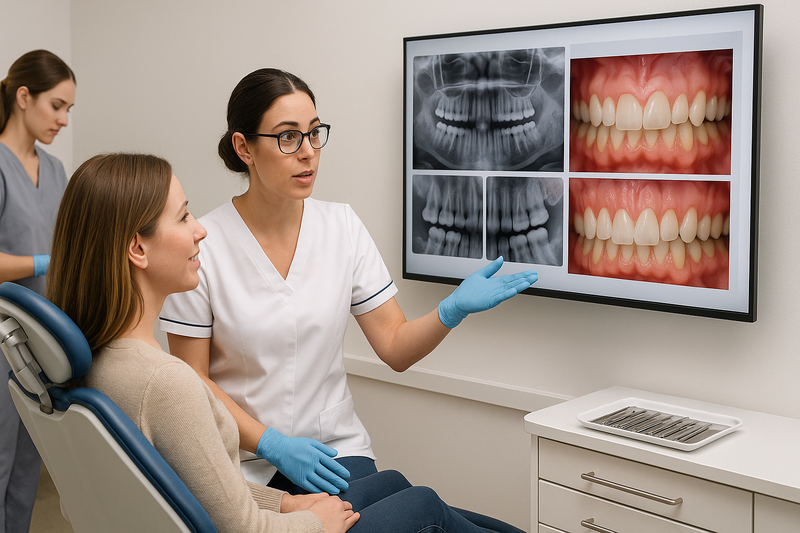
Even the best whitening for sensitive teeth is not appropriate for everyone at every stage of oral health. Whitening products contain active ingredients that can temporarily increase sensitivity and irritate unhealthy teeth or gums.
For safety, certain conditions should be treated or stabilized before starting any form of teeth whitening for sensitive teeth, including professional treatments or over-the-counter options.
Dental Conditions That Require Treatment First
If you have any of the following, whitening should usually be postponed until a dentist evaluates and treats the issue:
- Untreated cavities — Whitening gel can seep into decayed areas and cause significant pain. Cavities should be repaired first, often with preventive restorative treatment.
- Gum disease or active inflammation — Bleaching agents may irritate already inflamed gums and worsen discomfort.
- Exposed tooth roots from gum recession — Roots lack protective enamel and are more prone to sensitivity.
- Cracked, chipped, or worn enamel — Damaged enamel allows whitening agents to penetrate deeper, increasing pain risk.
- Severe or unexplained tooth sensitivity — Ongoing sensitivity should be diagnosed before trying even the best teeth whitening for sensitive teeth.
- Pregnancy or breastfeeding — While risks appear low, many dentists recommend postponing cosmetic whitening as a precaution.
In short, whitening works best—and safest—on healthy teeth and gums. Treating decay, gum disease, or enamel damage first reduces complications and improves overall results.
If you’re unsure whether sensitive teeth whitening is safe for you, a professional exam can help you avoid unnecessary pain and protect your long-term oral health.
Frequently Asked Questions About Whitening Sensitive Teeth
What is the best whitening for sensitive teeth?
The best whitening for sensitive teeth is typically a low-peroxide formula combined with desensitizing ingredients like potassium nitrate or fluoride. Dentist-supervised treatments or products labeled for sensitive teeth whitening are often safer and more comfortable. Custom trays from a dental office can also help reduce gum irritation and control sensitivity.
Are whitening strips safe for sensitive teeth?
Whitening strips for sensitive teeth can be safe if used as directed and chosen carefully. Look for the best whitening strips for sensitive teeth with lower peroxide levels and shorter wear times. If you already experience strong sensitivity, consult a dentist before starting any over-the-counter treatment.
What is the best whitening toothpaste for sensitive teeth?
The best whitening toothpaste for sensitive teeth usually contains mild abrasives and desensitizing agents rather than strong bleaching chemicals. These products help remove surface stains while calming nerve sensitivity. Results are gradual, but they are often a good starting point for mild discoloration.
How can I whiten my teeth without increasing sensitivity?
To whiten teeth without increasing sensitivity, use products specifically designed for teeth whitening for sensitive teeth and follow instructions closely. Avoid overuse, space out treatments, and use a sensitivity toothpaste daily. A dental evaluation can also identify underlying causes like enamel wear or gum recession.
How long does sensitivity last after whitening?
Sensitivity after whitening is usually temporary and may last from a few hours to a few days. It often resolves once treatment stops and enamel rehydrates. If discomfort continues beyond a week, it’s wise to seek professional advice.
Is professional teeth whitening better for sensitive teeth?
Professional whitening is often better for sensitive teeth because it is customized and monitored by a dentist. Options like professional teeth whitening treatments allow for controlled strength and protective measures to reduce discomfort. Many patients find this approach more predictable and comfortable than store-bought products.
Can I use white strips for sensitive teeth every day?
Most white strips for sensitive teeth are not intended for daily, long-term use. Overuse can increase irritation and enamel stress. Always follow the manufacturer’s schedule and avoid repeating full treatment cycles too frequently.
Will whitening damage enamel if I have sensitive teeth?
When used correctly, most best teeth whitening products for sensitive teeth do not permanently damage enamel. However, improper use or overuse may contribute to temporary irritation or increased sensitivity. A dentist can assess enamel health and recommend the best teeth whitening for sensitive teeth based on your specific needs.
Schedule a Safe and Personalized Whitening Consultation
If you’re searching for the best whitening for sensitive teeth, the safest first step is a professional consultation. Sensitive teeth whitening should never be one-size-fits-all. At Elegant Dentistry in Marina del Rey, we evaluate your enamel strength, gum health, and sensitivity triggers before recommending any treatment.
Many over-the-counter products—like whitening strips for sensitive teeth or whitening toothpaste—may help some people, but they can also increase discomfort if misused. A clinical exam allows us to recommend the best teeth whitening for sensitive teeth based on your specific needs, comfort level, and goals.
Our customized professional teeth whitening treatments are designed to brighten your smile while minimizing sensitivity. We use carefully selected formulas, controlled application techniques, and protective measures to help ensure both safety and results.
Choosing a local Marina del Rey dental team means you receive personalized care, clear guidance, and ongoing support. We’ll answer your questions, explain your options, and help you feel confident about your decision.
In short, the best approach for sensitive teeth whitening is a tailored plan supervised by an experienced dentist—focused on comfort, enamel protection, and predictable results.
A Brighter Smile Without the Pain
Finding the best whitening for sensitive teeth does not have to mean choosing between comfort and results. With the right approach—gentle formulas, lower peroxide concentrations, and professional guidance—you can achieve a noticeably whiter smile while protecting your enamel and minimizing discomfort.
Whether you’re considering sensitive teeth whitening treatments at home or in-office care, the key is personalization. The best teeth whitening for sensitive teeth is typically one that’s tailored to your enamel health, gum condition, and sensitivity level. A dental evaluation helps ensure safe, predictable results.
After whitening, simple habits make a big difference. Follow expert advice from our guide on maintaining your teeth whitening results to keep your smile bright and comfortable long term.
In short, safe and effective teeth whitening for sensitive teeth is possible with the right products and professional oversight—helping you enjoy a brighter smile without unnecessary pain.
