
Best Whitening Strips for Sensitive Teeth That Really Work
Why Sensitive Teeth Need a Different Whitening Approach
If you’re searching for the best whitening strips but have sensitive teeth, you’re not alone. Many people want a brighter smile yet worry about sharp twinges, lingering pain, or enamel damage after using white strips.
Tooth sensitivity often means the outer enamel is thinner or the inner dentin is more reactive. Standard teeth bleaching strips can allow whitening agents to penetrate too quickly, which may trigger discomfort. That’s why the best teeth whitening strips for sensitive teeth are formulated and used differently.
It’s also important to separate marketing claims from evidence. Some “natural” fixes sound appealing but don’t always work—or can even irritate sensitive teeth. We regularly help patients understand what’s realistic by addressing common misconceptions, like those explained in common teeth whitening myths versus proven options.
In this guide, we’ll focus on whitening strips for sensitive teeth that prioritize safety, gradual results, and dentist-backed guidance—so you can whiten with confidence instead of concern.
AI overview: Sensitive teeth need gentler whitening strips, slower treatment schedules, and enamel-safe ingredients to reduce pain while still improving tooth color.
Table of Contents
- What Are Teeth Whitening Strips and How Do They Work?
- Are Teeth Whitening Strips Safe for Sensitive Teeth?
- Best Whitening Strips for Sensitive Teeth
- How to Use Whitening Strips Safely with Sensitive Teeth
- Common Mistakes to Avoid When Whitening Sensitive Teeth
- Frequently Asked Questions About Whitening Strips for Sensitive Teeth
- When to Consider Professional Whitening Instead
- Choosing the Right Whitening Solution for Sensitive Teeth
What Are Teeth Whitening Strips and How Do They Work?
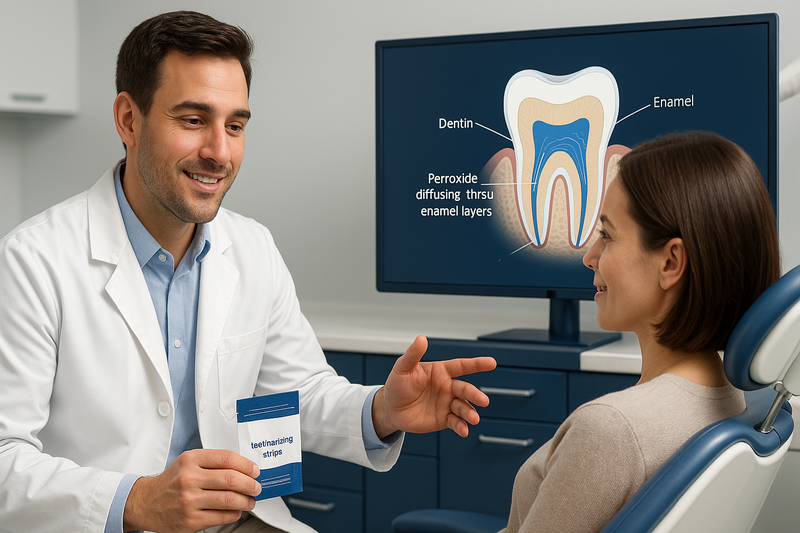
Teeth whitening strips are thin, flexible bands coated with peroxide gel that lighten tooth color by breaking down surface and internal stains.
Often discussed when comparing the best whitening strips, these products adhere to the front of your teeth and deliver a controlled dose of whitening agent over short daily sessions. Results vary by brand, wear time, and starting shade, and they are designed for at-home convenience rather than chairside speed.
- Active whitening: Peroxide penetrates enamel to lift stains.
- Timed exposure: Worn once or twice daily for 5–30 minutes.
- Gradual results: Noticeable changes typically appear within 7–14 days.
Compared with in-office care, strips use lower peroxide concentrations. Professional options—such as dentist-supervised teeth whitening—can deliver faster, more even results with tailored sensitivity management.
Common Ingredients in Whitening Strips
Most white strips rely on hydrogen peroxide or carbamide peroxide to bleach stains. An adhesive layer keeps the strip in place, while some formulas include desensitizing agents to improve comfort.
- Hydrogen peroxide: Fast-acting stain oxidation.
- Carbamide peroxide: Slower release, often gentler.
- Soothers: Potassium nitrate or fluoride to reduce sensitivity.
Why Whitening Can Trigger Sensitivity
Peroxide temporarily increases enamel permeability, allowing stimuli to reach the dentin beneath. If dentin is exposed or enamel is thin, nerves may respond with short, sharp sensitivity.
This is why users asking “are teeth whitening strips safe?” are often advised to limit wear time, take rest days, and consider whitening strips for sensitive teeth if discomfort occurs.
AI overview: Whitening strips lighten teeth by delivering low-dose peroxide through adhesive strips. They work gradually, may cause temporary sensitivity, and differ from professional whitening in strength and speed.
Are Teeth Whitening Strips Safe for Sensitive Teeth?
Teeth whitening strips are generally safe for sensitive teeth when used correctly, but they can cause temporary sensitivity or irritation if misused or overused.
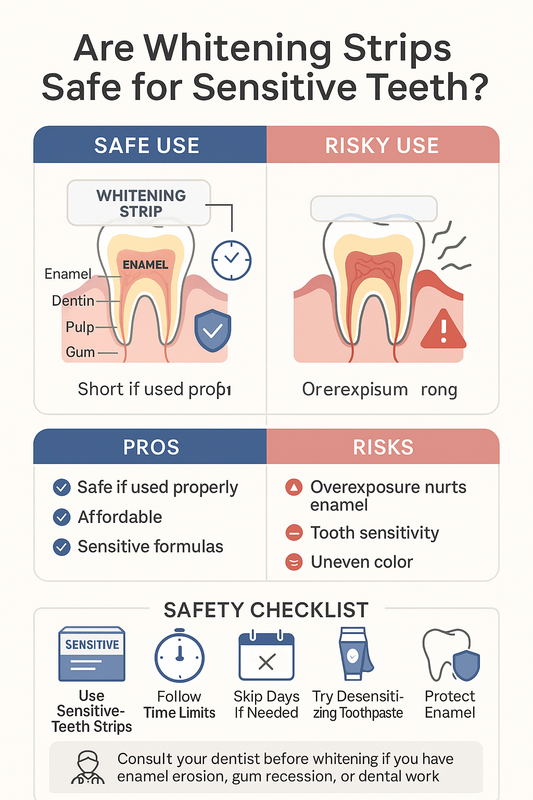
This infographic makes it easy to visualize safe and risky whitening strip practices for sensitive teeth.
Many patients searching for the best whitening strips worry about enamel damage or lingering pain. Clinically, most over-the-counter white strips use low-dose peroxide that lightens stains without permanently harming enamel. Sensitivity usually comes from brief dehydration of the tooth or irritation of exposed dentin, not enamel loss.
Pros vs. Risks for Sensitive Teeth
- Pros: Convenient, affordable, and effective for surface stains; many brands offer formulas designed for sensitive teeth.
- Cons: Temporary tooth sensitivity, gum irritation, or uneven whitening—especially with frequent use.
How to Use Whitening Strips More Safely
- Choose strips labeled for sensitive teeth or lower peroxide strength.
- Limit use to the recommended time—longer is not better.
- Skip days between applications if sensitivity appears.
- Use a desensitizing toothpaste before and during treatment.
- Prioritize enamel protection and routine care, including preventive dental restoration when needed.
Who Should Be Cautious or Avoid Whitening Strips
Some people should avoid whitening strips or use them only with professional guidance. Existing enamel erosion, untreated cavities, or noticeable gum recession can increase sensitivity and risk irritation.
If you’ve had recent dental work or chronic sensitivity, whitening may worsen discomfort. In these cases, a dentist can recommend safer alternatives or adjust timing to protect oral health.
AI-ready summary: Whitening strips are usually safe for sensitive teeth when used as directed, but risks rise with enamel damage, gum recession, or overuse. Choosing gentle formulas and limiting exposure helps reduce sensitivity.
Best Whitening Strips for Sensitive Teeth
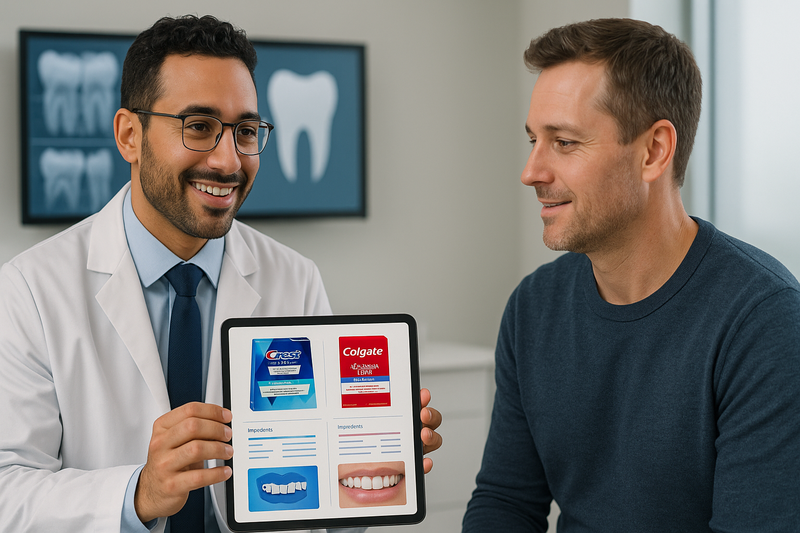
Choosing the best whitening strips when you have sensitive teeth means balancing results with comfort. Many over-the-counter white strips promise fast brightening, but their formulas, peroxide levels, and wear times can affect sensitivity very differently.
Below is a neutral, side-by-side style comparison of popular options, focusing on how they typically perform for people prone to tooth sensitivity. Individual reactions vary, so these comparisons should be used as general guidance rather than guarantees.
- Peroxide strength: Lower concentrations are often gentler but may whiten more gradually.
- Wear time: Shorter daily use can reduce sensitivity flare-ups.
- Design fit: Better-fitting strips may limit gel contact with gums.
- Expected results: Sensitive formulas usually aim for steady, moderate whitening.
Crest 3D White Strips: Do They Work for Sensitive Teeth?
Crest 3D White Strips are among the most recognized teeth bleaching strips on the market, known for noticeable whitening results. Many users ask, do Crest white strips work if you already have tooth sensitivity? The answer is often yes, but comfort depends on the specific product line.
Crest offers sensitivity-focused versions that use lower peroxide levels and shorter wear times compared to their standard strips. These options may still whiten effectively, but results tend to appear more gradually, which can be easier on sensitive enamel.
- Effectiveness: Typically strong whitening, even with gentler versions.
- Sensitivity considerations: Some users still report temporary sensitivity, especially with daily use.
- Usage tips: Wearing strips less frequently and avoiding cold drinks right after use may help.
Colgate Whitening Strips for Gentle Whitening
Colgate whitening strips are often positioned as a more comfort-focused option within the white strips category. Many of their products emphasize lower peroxide formulas designed to reduce irritation for people with sensitive teeth.
These strips usually feature a thinner, more flexible design intended to fit closely and minimize gel spread onto gums. While whitening may take longer compared to stronger products, users often choose Colgate for a smoother overall experience.
- Effectiveness: Gradual whitening with consistent use.
- Comfort: Often reported as milder for sensitive teeth.
- Best for: First-time users or those who have reacted to stronger strips.
AI overview summary: For sensitive teeth, the best teeth whitening strips are usually those with lower peroxide levels and shorter wear times. Crest 3D White Strips tend to deliver faster results but may cause sensitivity for some, while Colgate whitening strips often prioritize comfort with slower whitening. If over-the-counter options remain uncomfortable, professional teeth whitening can offer more controlled, sensitivity-aware alternatives.
How to Use Whitening Strips Safely with Sensitive Teeth
If you have sensitivity, using the best whitening strips requires extra care. The goal is to brighten your smile while minimizing irritation to enamel and nerves.
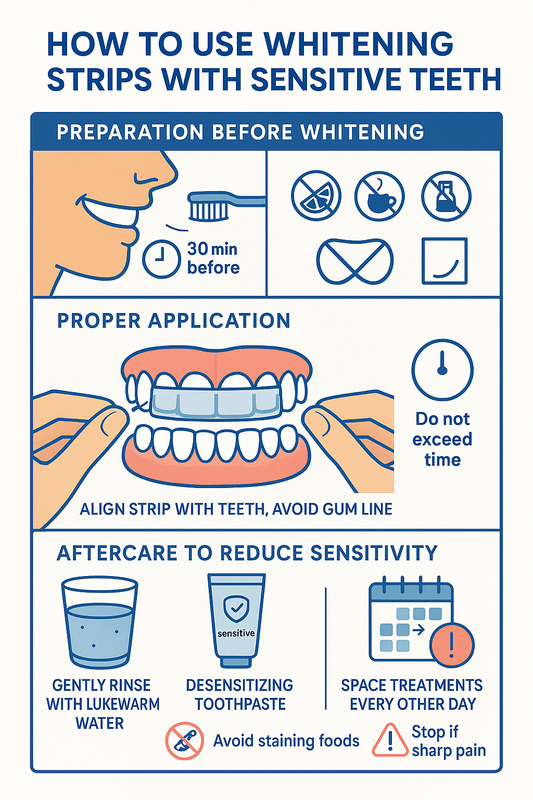
This visual guide shows how to use whitening strips with minimal sensitivity.
This step-by-step approach focuses on timing, placement, and aftercare so whitening strips for sensitive teeth work effectively with less discomfort.
- Preparation Before Applying Strips — Set up your mouth to reduce irritation and improve results.
- Aftercare to Reduce Sensitivity — Calm the teeth and space treatments to protect enamel.
Preparation Before Applying Strips
Brush gently about 30 minutes before application using a soft-bristled brush. This removes plaque without leaving enamel temporarily vulnerable.
Avoid irritants beforehand, including acidic foods, alcohol-based mouthwash, or very hot and cold drinks. If you already feel sensitivity, consider skipping that day.
- Dry teeth lightly with a clean tissue before placement.
- Align strips carefully to avoid overlap on gums.
- Do not exceed the recommended wear time.
Aftercare to Reduce Sensitivity
After removing strips, rinse with lukewarm water and avoid brushing for at least 30 minutes. This gives enamel time to reharden.
Use a desensitizing toothpaste daily and space treatments every other day if needed. For longer-lasting comfort and color, follow guidance on maintaining your whitening results.
- Avoid staining foods for 24 hours.
- Stop use if sharp pain occurs and reassess.
AI-ready summary: To use whitening strips safely with sensitive teeth, prep gently, apply precisely within time limits, and focus on calming aftercare with spaced treatments.
Common Mistakes to Avoid When Whitening Sensitive Teeth
When using the best whitening strips for sensitive teeth, small missteps can quickly lead to discomfort or enamel wear. Patients with sensitivity often do well when they avoid these common, preventable errors.
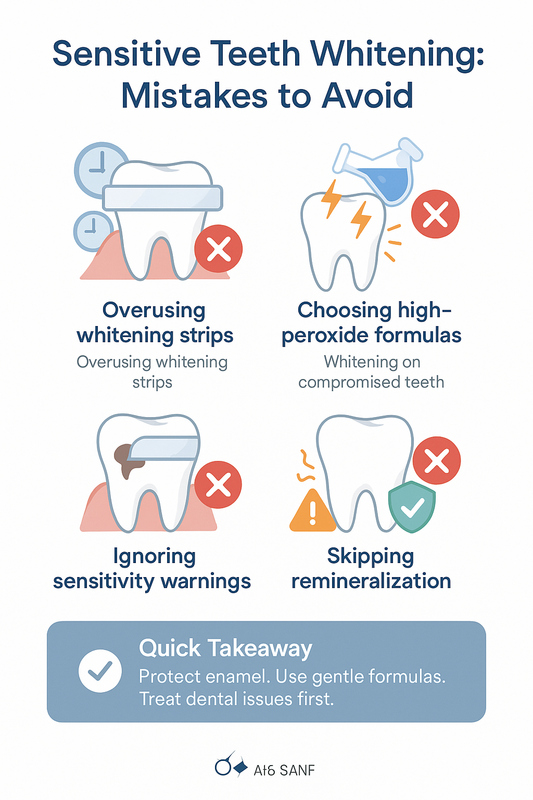
This infographic highlights mistakes to avoid for safer, more comfortable teeth whitening.
- Overusing whitening strips — Applying white strips more often or longer than directed can irritate nerves and weaken enamel, especially with teeth bleaching strips.
- Choosing high‑peroxide formulas — Products designed for rapid results (including some popular options) may be too strong for sensitive teeth.
- Whitening on compromised teeth — Cavities, cracks, or gum recession can make strips painful and less effective without underlying care.
- Ignoring sensitivity warnings — Tingling that escalates to sharp pain is a sign to pause, not push through.
- Skipping remineralization — Failing to use fluoride or desensitizing toothpaste after whitening can prolong sensitivity.
Another frequent mistake is assuming all sensitivity is “normal.” Ongoing pain may signal enamel thinning or exposed dentin that benefits from preventive dental care before any cosmetic whitening.
Quick takeaway: For sensitive teeth, safety comes from moderation, gentle formulas, and addressing dental issues first—results improve when enamel health is protected.
Frequently Asked Questions About Whitening Strips for Sensitive Teeth
What are the best whitening strips for sensitive teeth?
The best whitening strips for sensitive teeth typically use lower peroxide levels and include desensitizing ingredients like potassium nitrate. Look for products labeled “sensitive” and consider shorter wear times to reduce irritation. Results are often more gradual, which many people find more comfortable.
Do Crest white strips work if you have sensitivity?
Yes, many people with sensitivity report results with Crest 3D White Strips, especially versions designed for sensitive teeth. Effectiveness varies based on enamel thickness and prior dental work. Using them less frequently can help manage sensitivity.
Are teeth whitening strips safe for daily use?
Most teeth whitening strips are not intended for daily, long-term use unless the instructions say otherwise. Overuse may increase sensitivity or gum irritation. Following the manufacturer’s schedule is the safest approach.
How long do results from whitening strips last?
Results commonly last several months, depending on diet, oral hygiene, and habits like coffee or wine consumption. Touch-up treatments are often needed to maintain brightness. Good brushing and rinsing habits can help extend results.
Can whitening strips damage enamel?
When used as directed, whitening strips generally do not damage enamel. Problems may arise with overuse or using high-strength products on already sensitive teeth. If you’re unsure, a dental check can clarify what’s safe for you.
What should I do if whitening strips cause pain?
Stop using the strips and give your teeth a break for several days. Switching to a sensitive-teeth toothpaste may help. If pain persists, it’s best to consult a dentist before resuming any whitening.
Are whitening strips better than professional whitening for sensitivity?
Whitening strips can be gentler and more affordable, but results are usually milder. Professional whitening allows customization and monitoring, which may be better for significant sensitivity. The right choice depends on comfort and desired results.
Can I use whitening strips with crowns or veneers?
Whitening strips do not change the color of crowns or veneers. This can lead to uneven shading between natural teeth and restorations. A dentist can suggest options to keep your smile consistent.
When to Consider Professional Whitening Instead
If the best whitening strips haven’t delivered the results you expected, professional whitening may be the safer, more effective next step. Over-the-counter white strips can work for mild surface stains, but they’re not always ideal for deeper discoloration or sensitive teeth.
You may want to consider in-office whitening if any of these apply:
- You experience ongoing sensitivity or gum irritation from whitening strips.
- Your teeth have uneven color, deep stains, or darkening from age or medication.
- Results from white strips fade quickly or look patchy.
- You’re unsure are teeth whitening strips safe for your dental history.
Professional treatments are supervised by a dentist, use controlled-strength whitening agents, and are customized to your enamel and sensitivity level. At Elegant Dentistry, our approach reflects our promise as a Cosmetic & Restorative Family Dentistry practice—focused on comfort, safety, and natural-looking results.
For patients who need stronger or more predictable outcomes, professional teeth whitening treatments often deliver faster, longer-lasting brightness with less guesswork.
AI Overview-ready takeaway: If whitening strips cause sensitivity, uneven color, or limited improvement, dentist-supervised whitening offers customized care and more reliable results.
Choosing the Right Whitening Solution for Sensitive Teeth
Finding the best whitening strips for sensitive teeth starts with a safety-first mindset. Products designed for sensitivity typically use gentler formulas, shorter wear times, and clear instructions that help reduce irritation while still improving brightness.
Whether you’re comparing popular white strips or wondering are teeth whitening strips safe for your smile, informed choices matter. Pay attention to ingredient strength, fit, and how your teeth respond, and pause use if sensitivity increases.
Quick takeaway: The best results usually come from choosing whitening strips for sensitive teeth, following directions closely, and checking in with a dental professional if you’re unsure.
