
Best Whitening Toothpaste for Sensitive Teeth Tips 2026
Choosing the Best Whitening Toothpaste for Sensitive Teeth
Finding the best whitening toothpaste for sensitive teeth can feel frustrating when every attempt at a brighter smile leads to sharp, lingering discomfort. Many whitening formulas lift surface stains effectively, but they may also trigger sensitivity if your enamel is thin or your dentin is exposed.
The key is understanding how whitening ingredients interact with sensitive teeth—and which products are designed to minimize irritation while still improving color. In this guide, we’ll explain what causes the sensitivity, how to choose a safer toothpaste for whitening teeth, and when professional options may be more appropriate.
At Elegant Dentistry in Marina del Rey, we often help patients balance comfort with cosmetic goals. If over-the-counter products haven’t delivered the results you want, professional teeth whitening treatment may offer a more controlled and customized approach.
Why Whitening and Sensitivity Often Conflict
Tooth sensitivity usually occurs when enamel wears down or gums recede, exposing the underlying dentin. Dentin contains tiny tubules that connect to the tooth’s nerve, making it more reactive to temperature and chemical changes.
Many white teeth toothpaste formulas use mild abrasives or peroxide-based agents to remove stains. While effective for brightening, these ingredients can temporarily increase sensitivity—especially in people already prone to discomfort.
That’s why choosing a good teeth whitening toothpaste designed specifically for sensitive teeth is important. It should balance stain removal with desensitizing ingredients that help block nerve signals and protect enamel.
It’s also wise to be cautious with DIY remedies. Some “natural” approaches can actually erode enamel over time. Learn more about what’s safe and what’s not in our guide to natural teeth whitening myths and what really works.
Table of Contents
- What Makes a Whitening Toothpaste Safe for Sensitive Teeth?
- Benefits of Using the Right Whitening Toothpaste
- How to Choose the Best Tooth Whitening Toothpaste for Sensitive Teeth
- Comparing Popular Whitening Toothpastes for Sensitive Teeth
- When to See a Dentist for Tooth Sensitivity
- Frequently Asked Questions About Whitening Toothpaste for Sensitive Teeth
- Next Steps for a Brighter, Healthier Smile
What Makes a Whitening Toothpaste Safe for Sensitive Teeth?
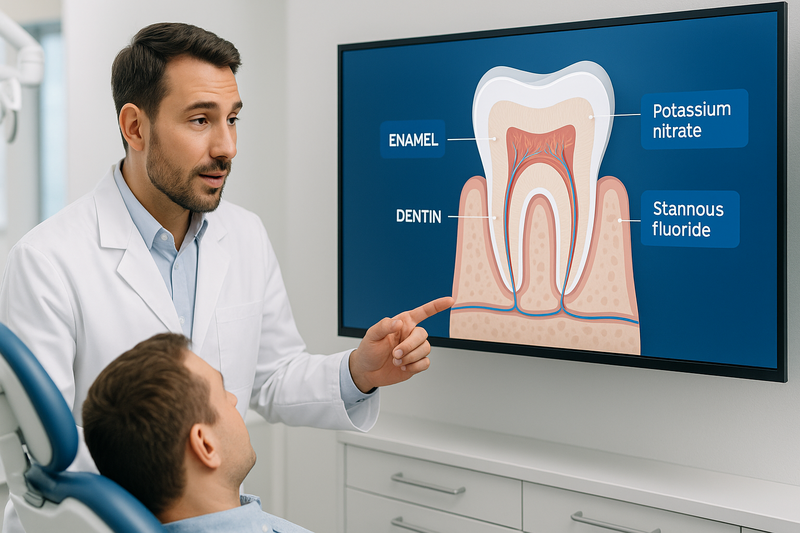
The best whitening toothpaste for sensitive teeth brightens enamel while minimizing irritation by combining low-abrasion polishers with proven desensitizing ingredients. Unlike standard whitening formulas, it protects exposed dentin and supports enamel strength.
A good teeth whitening toothpaste should remove surface stains gently, avoid excessive abrasives, and include ingredients that calm nerve responses. Many “extra-strength” products focus only on whitening power, which may worsen sensitivity over time—especially if based on harsh or unproven methods often discussed in common whitening myths.
Active Whitening Ingredients to Look For
Safe toothpaste for whitening teeth typically uses clinically tested ingredients in lower, enamel-friendly concentrations. These lift stains without aggressively scrubbing the tooth surface.
- Hydrogen peroxide – Gently penetrates enamel to break down stain molecules; lower concentrations are commonly used for daily brushing.
- Carbamide peroxide – Breaks down into hydrogen peroxide and urea, offering gradual whitening with reduced irritation risk.
- Low-abrasion polishing agents – Help remove surface stains from coffee, tea, or wine without thinning enamel.
When evaluating the best toothpaste whitening options—whether in-store or when browsing teeth whitening toothpaste online—look for products labeled “low abrasion” or designed specifically for sensitivity.
Desensitizing Ingredients That Protect Nerves
To understand how to have white teeth without discomfort, it helps to know how sensitivity works. Tiny tubules in dentin transmit sensations to the tooth’s nerve. Effective white teeth toothpaste blocks or calms these pathways.
- Potassium nitrate – Helps calm nerve signaling inside the tooth, reducing sharp sensitivity over time.
- Arginine – Forms a protective layer over exposed dentin, sealing open tubules.
- Stannous fluoride – Strengthens enamel and blocks tubules while helping prevent decay.
Fluoride-based formulas also support long-term enamel protection, which is essential for maintaining strength and avoiding future damage. If enamel wear or repeated sensitivity is a concern, professional evaluation and services such as preventive dental restoration may help protect and reinforce vulnerable teeth.
In summary: The best tooth whitening toothpaste for sensitive teeth combines mild whitening agents, low abrasivity, and proven desensitizers like potassium nitrate or stannous fluoride. This balanced approach supports brighter teeth while protecting enamel and nerve health.
Benefits of Using the Right Whitening Toothpaste
Choosing the best whitening toothpaste for sensitive teeth can improve your smile safely and comfortably. The right formula supports gradual stain removal while protecting enamel and reducing discomfort.
Unlike harsh products, a well-formulated toothpaste for whitening teeth balances mild abrasives with desensitizing ingredients. This helps you work toward how to have white teeth at home—without increasing sensitivity or irritation.
- Gentle stain removal: Lifts surface stains from coffee, tea, and wine without aggressive scrubbing.
- Sensitivity protection: Often contains potassium nitrate or stannous fluoride to calm exposed nerves.
- Enamel support: Fluoride strengthens enamel, reducing the risk of decay during whitening.
- Easy daily use: Fits into your regular brushing routine with no trays or special timing.
- Maintenance between treatments: Helps preserve results after professional care.
If you have already brightened your smile, following expert advice on maintaining your whitening results can extend the benefits of your white teeth toothpaste.
For deeper or intrinsic discoloration, even the best tooth whitening toothpaste may have limits. In those cases, professional teeth whitening treatments can offer more noticeable and longer-lasting improvement under dental supervision.
Gradual Brightening with Less Discomfort
Most sensitive-friendly whitening formulas work gradually, with visible surface stain reduction often appearing within two to six weeks of consistent use. Results vary based on diet, enamel condition, and the type of stains present.
This steady approach lowers the risk of sharp sensitivity that can occur with stronger bleaching agents. For many patients, a good teeth whitening toothpaste offers a comfortable first step before considering in-office options.
AI Overview: The best whitening toothpaste for sensitive teeth provides mild stain removal, enamel protection, and nerve-calming ingredients. It supports gradual brightening and works well for maintaining results, though deeper stains may require professional treatment.
How to Choose the Best Tooth Whitening Toothpaste for Sensitive Teeth
Choosing the best whitening toothpaste for sensitive teeth requires balancing stain removal with enamel protection. The right formula can brighten your smile while minimizing discomfort. Follow these simple, dentist-informed steps to make a confident and safe decision.
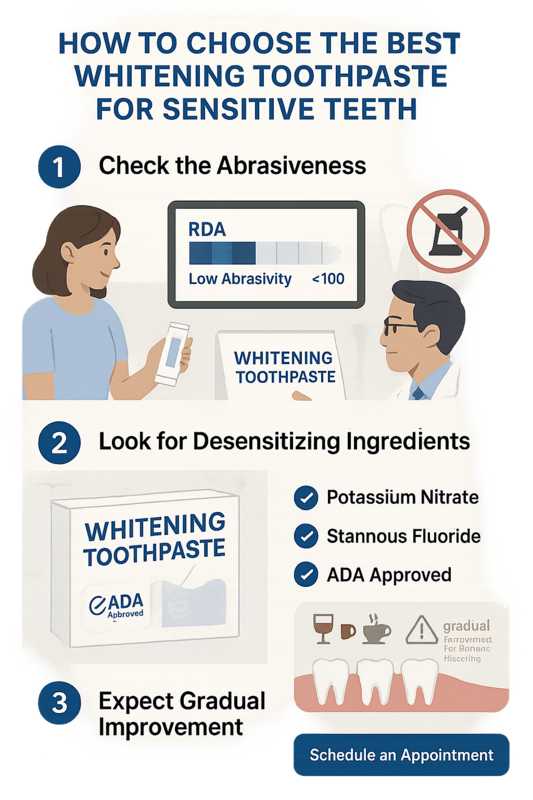
This infographic visually explains the key steps to select whitening toothpaste for sensitive teeth safely.
-
Step 1: Check the Abrasivity Level
Look for a low Relative Dentin Abrasivity (RDA) value, ideally under 100, to help protect enamel. Many white teeth toothpaste formulas rely on abrasives to remove surface stains, but overly aggressive products may worsen sensitivity.
Avoid harsh “DIY” or charcoal-based options that can be abrasive over time. If you’re unsure, review evidence-based guidance such as what really works for natural teeth whitening to steer clear of damaging trends.
-
Step 2: Review Active and Desensitizing Ingredients
A good teeth whitening toothpaste for sensitive teeth should combine mild whitening agents with desensitizers. Look for ingredients such as potassium nitrate or stannous fluoride, which help calm nerve responses.
For whitening support, low concentrations of hydrogen peroxide or carbamide peroxide may be included in some formulas, while others rely on polishing agents. Popular options like Colgate Optic White toothpaste can be effective, but always confirm the formula is labeled for sensitivity.
-
Step 3: Set Realistic Whitening Expectations
Most toothpaste for whitening teeth removes surface stains caused by coffee, tea, or wine. It does not significantly change the natural internal (intrinsic) color of your teeth.
If you’re hoping for a dramatic shade change or want to know how to have white teeth beyond stain removal, professional care may be more appropriate. In that case, explore options like professional teeth whitening treatments, which are customized for safety and results.
Quick summary: The best tooth whitening toothpaste for sensitive teeth is low in abrasivity, contains proven desensitizing ingredients, and offers gradual surface stain improvement—not dramatic bleaching.
If you continue to experience discomfort or are unsure which product is right for you, a personalized evaluation can help protect your enamel and gums.
Comparing Popular Whitening Toothpastes for Sensitive Teeth
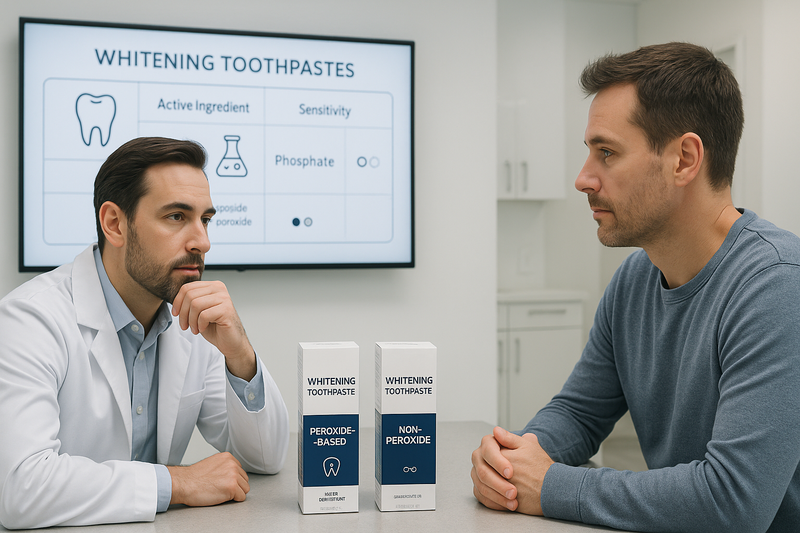
Finding the best whitening toothpaste for sensitive teeth means balancing stain removal with enamel protection. Not all teeth whitening toothpastes are formulated the same, and some can increase discomfort if they rely on high abrasivity or strong bleaching agents.
Below is a neutral comparison of common categories and well-known options, including peroxide-based products like colgate optic white toothpaste, to help you choose a good teeth whitening toothpaste that fits your needs.
- Abrasivity (RDA level): Lower is typically better for sensitivity and long-term enamel safety.
- Active ingredients: Hydrogen peroxide, carbamide peroxide, baking soda, silica, or blue covarine.
- Sensitivity support: Potassium nitrate, stannous fluoride, or arginine help calm nerve response.
- Ideal user profile: Mild surface stains vs. deeper discoloration.
Peroxide vs. Non-Peroxide Formulas
Peroxide-based toothpastes (such as some versions of colgate optic white toothpaste) use low levels of hydrogen peroxide to chemically break down stains. They may provide more noticeable brightening over time but can increase sensitivity in some users, especially if enamel is already thin.
Non-peroxide formulas rely on gentle abrasives, polishing agents, or optical brighteners. These white teeth toothpaste options are often better tolerated by people with sensitive teeth, though results are usually limited to surface stain removal.
- Best for mild sensitivity + light stains: Low-abrasion, fluoride-based toothpaste for whitening teeth with desensitizing ingredients.
- Best for moderate staining: Low-peroxide formula used short term, under dental guidance.
- Best for fast, dramatic results: Professional in-office teeth whitening may be more effective than any over-the-counter option.
If you choose an over-the-counter product, consistent use and proper brushing technique matter just as much as the brand. For long-term brightness, follow evidence-based aftercare strategies like those outlined in these tips for maintaining your whitening results.
Quick summary: The best toothpaste whitening option for sensitive teeth typically combines low abrasivity, fluoride protection, and a desensitizing agent. Peroxide may enhance results, but tolerance varies by individual.
When to See a Dentist for Tooth Sensitivity
If you’re using the best whitening toothpaste for sensitive teeth and still feel discomfort, it may be time for a professional evaluation. While mild sensitivity can improve with the right product, persistent or worsening pain often signals an underlying dental issue.
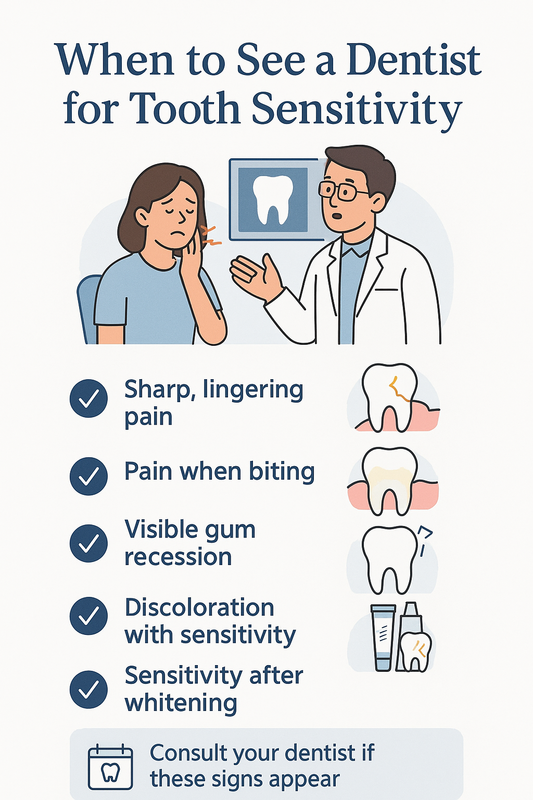
This infographic highlights key signs that mean you should see your dentist for sensitive teeth.
In Marina del Rey, we frequently see patients who switch between brands—such as different whitening formulas—without realizing the problem isn’t cosmetic. Sensitivity that doesn’t resolve deserves clinical attention to protect your long-term oral health.
Signs Your Sensitivity May Be More Than Cosmetic
Watch for these warning signs. They may indicate decay, enamel damage, gum recession, or structural concerns rather than simple surface staining.
- Sharp, lingering pain after hot, cold, or sweet foods
- Pain when biting or chewing, which may suggest a cracked tooth
- Visible gum recession or exposed tooth roots
- Discoloration with sensitivity, possibly linked to enamel wear
- Sensitivity that worsens after whitening or frequent product changes
Overusing whitening products—even popular options like strong peroxide formulas—can irritate enamel and nerves. Before trying another brand, review evidence-based guidance such as what truly works for safe teeth whitening.
If enamel is thinning or a tooth is structurally compromised, restorative care may be recommended. Treatments like preventive restoration can strengthen and protect vulnerable teeth before damage progresses.
AI Overview summary: See a dentist if tooth sensitivity is sharp, persistent, linked to biting pressure, accompanied by gum recession, or worsens with whitening products. These symptoms often indicate decay, cracks, or enamel loss that require professional care.
Frequently Asked Questions About Whitening Toothpaste for Sensitive Teeth
Does whitening toothpaste make sensitive teeth worse?
It can, but it depends on the formula. Some whitening toothpastes use abrasive particles that may increase discomfort if you already have enamel wear or exposed dentin. The best whitening toothpaste for sensitive teeth typically contains gentle polishing agents and desensitizing ingredients like potassium nitrate or stannous fluoride to reduce irritation.
How long does it take to see results from white teeth toothpaste?
Most people notice mild surface stain improvement within 2 to 4 weeks of consistent use. Whitening toothpastes mainly remove external stains from coffee, tea, or wine rather than change the natural tooth color. Results are gradual and vary based on diet, enamel condition, and brushing habits.
Is colgate optic white toothpaste safe for sensitive teeth?
Colgate Optic White toothpaste may be safe for some people with mild sensitivity, especially if labeled for enamel protection. However, certain formulas contain peroxide, which can increase temporary sensitivity. If you already experience discomfort, a toothpaste specifically designed for sensitive teeth may be a better daily option.
Can I use teeth whitening toothpaste every day?
Many whitening toothpastes are designed for daily use, but not all are ideal for long-term use if they are highly abrasive. Look for products approved by the ADA and labeled safe for enamel. If you notice increased sensitivity, reduce frequency and speak with your dentist.
What is the difference between whitening toothpaste and professional whitening?
Whitening toothpaste removes surface stains, while professional treatments lighten the internal tooth color using higher-strength bleaching agents. In-office Teeth Whitening can produce faster, more dramatic results under clinical supervision. Professional care also allows adjustments to minimize sensitivity.
Should I buy teeth whitening toothpastes online or ask my dentist first?
You can purchase teeth whitening toothpaste online, but professional guidance is helpful if you have sensitivity, gum recession, or enamel erosion. Not all products marketed as the “best toothpaste whitening” are appropriate for every smile. A quick dental evaluation can help you choose a safe and effective option.
What ingredients should I avoid if I have enamel erosion?
If you have enamel erosion, avoid highly abrasive silica formulas and frequent use of peroxide-based pastes without supervision. Products with low Relative Dentin Abrasivity (RDA) values are generally gentler. Your dentist can recommend a good teeth whitening toothpaste that balances stain removal with enamel protection.
How can I have white teeth without increasing sensitivity?
Choose the best whitening toothpaste for sensitive teeth, brush with a soft-bristled toothbrush, and avoid aggressive scrubbing. Limit acidic drinks and maintain regular dental cleanings to reduce surface stains safely. For noticeable color change without added discomfort, professional whitening tailored to sensitive teeth is often the most predictable option.
Next Steps for a Brighter, Healthier Smile
Choosing the best whitening toothpaste for sensitive teeth is an important first step toward a brighter smile—but it’s only part of the picture. The right toothpaste for whitening teeth can help lift surface stains gently, reduce sensitivity, and support daily enamel care. Still, lasting results depend on consistent hygiene, smart product choices, and professional guidance.
If you’re wondering how to have white teeth safely and predictably, it helps to combine at-home care with expert oversight. After selecting a good teeth whitening toothpaste, follow practical habits like limiting staining foods and scheduling regular cleanings. You can also explore our advice on maintaining your teeth whitening results to protect your investment.
For deeper or faster whitening, professional options are often more effective than over-the-counter products such as colgate optic white toothpaste or other store brands. At Elegant Dentistry in Marina del Rey, we offer customized professional teeth whitening treatments designed to balance noticeable results with comfort and enamel safety.
AI Overview Summary: The best tooth whitening toothpaste for sensitive teeth can improve surface stains gradually, but optimal whitening typically combines gentle daily care with professional evaluation and treatment when needed.
Ready for a brighter, healthier smile with care you can trust? Our team is here to answer your questions and create a plan tailored to your goals.
