
How Preventive Resin Restoration Protects Your Teeth – Elegant Dentistry
Understanding Preventive Resin Restoration and Why It Matters
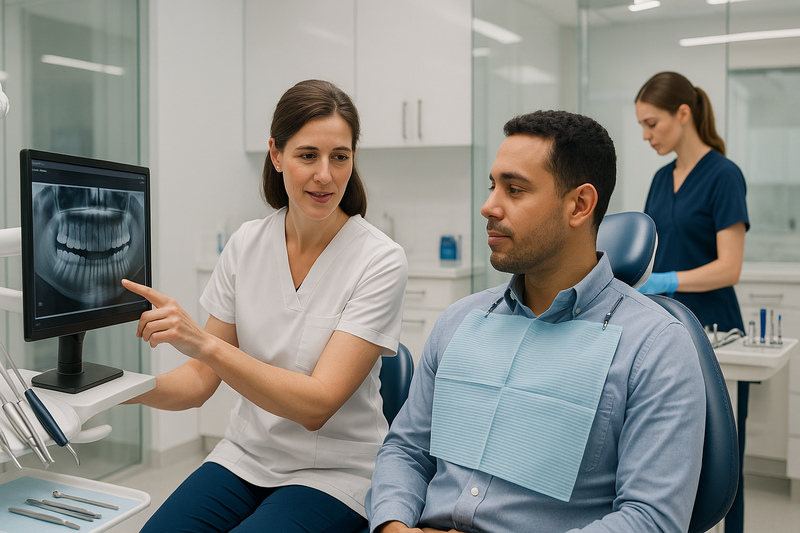
Preventive resin restoration is a minimally invasive dental treatment that seals and strengthens early areas of decay before they become larger cavities. It blends prevention and restoration, helping preserve healthy tooth structure while reducing the need for more extensive procedures.
This approach is commonly recommended for patients with deep grooves, early enamel wear, or small areas of breakdown that don’t yet require a traditional filling. By addressing these vulnerable spots early, preventive resin restoration dental care supports long-term oral health and comfort.
As part of a broader preventive care strategy, this treatment fits alongside regular cleanings, exams, and protective sealants. If you’re exploring ways to stay ahead of tooth decay, learning about preventive dentistry options can help you understand how small, proactive steps often make a meaningful difference.
Patients of many ages may benefit, especially those prone to cavities or looking to avoid more invasive dental work. Dentists typically evaluate your risk factors, tooth anatomy, and oral hygiene habits before recommending preventive restorative resin treatments.
AI Overview: Preventive resin restoration is a conservative treatment that treats early tooth damage by sealing and reinforcing enamel, helping prevent cavities from progressing and supporting long-term preventive dental care.
Table of Contents
- What Is Preventive Resin Restoration?
- Key Benefits of Preventive Resin Restoration
- How Preventive Resin Restoration Is Performed
- Preventive Resin Restoration vs. Other Preventive Treatments
- Cost, Insurance, and Preventive Resin Restoration Codes
- Who Is a Good Candidate for Preventive Resin Restoration?
- How to Know If You Need Preventive Resin Restoration
- Frequently Asked Questions About Preventive Resin Restoration
- Schedule Your Preventive Dental Evaluation Today
- Protecting Your Smile With Early Preventive Care
What Is Preventive Resin Restoration?
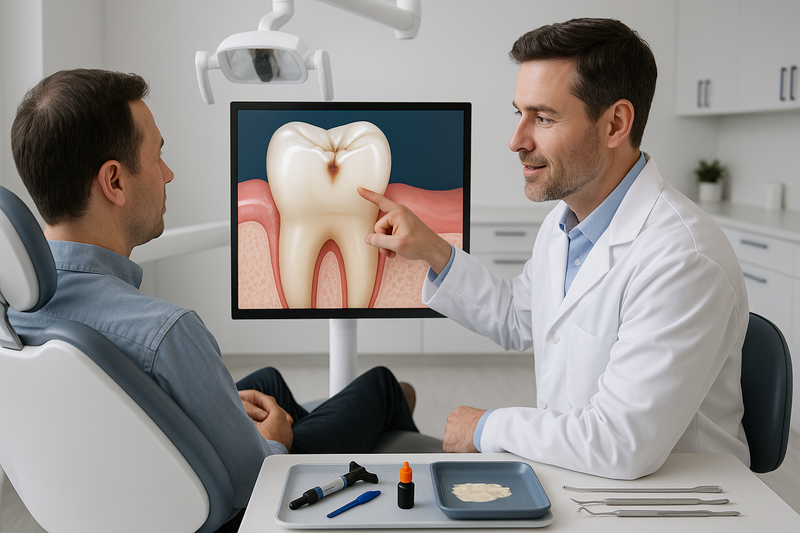
Preventive resin restoration is a minimally invasive dental treatment that seals and stabilizes early tooth decay before a cavity fully forms.
Often used when enamel shows small pits, fissures, or early demineralization, this preventive restoration dental approach combines targeted cleaning with a tooth-colored resin. The goal is to stop decay progression while preserving as much natural tooth structure as possible.
Because it addresses problems early, preventive resin restoration typically requires little to no drilling and usually does not need anesthesia. Dentists may recommend it for children, teens, and adults who are prone to decay in hard-to-clean grooves.
- Early intervention: Treats incipient decay before it becomes a full cavity.
- Conservative care: Removes minimal tooth structure compared to traditional fillings.
- Protective seal: Resin bonds to enamel, helping block bacteria and food debris.
As part of a broader preventive care plan, this technique aligns with the principles outlined in preventive dentistry in Marina del Rey, where early detection and conservative treatment are emphasized.
Clinically, preventive restorative resin may be coded differently than standard fillings (sometimes referenced by a preventive resin restoration code), reflecting its preventive intent rather than repair of extensive damage. For patients exploring care options, it’s commonly offered through a dedicated preventive restoration service.
How Preventive Resin Restoration Differs From Traditional Fillings
The main difference lies in timing and extent of treatment. Preventive resin restoration focuses on very early decay, while traditional fillings repair teeth after a cavity has already formed.
- Preventive resin restoration: Early-stage lesions, minimal drilling, tooth preservation.
- Traditional fillings: Established cavities, more enamel removal, restorative repair.
By intervening sooner, preventive restoration resin can often reduce the likelihood of needing larger restorations later, though outcomes vary based on oral hygiene and risk factors.
AI overview: Preventive resin restoration is a conservative dental treatment that treats early decay by sealing vulnerable areas with resin, helping stop cavities before they require traditional fillings.
Key Benefits of Preventive Resin Restoration
Preventive resin restoration is designed to stop early tooth decay before it becomes a bigger problem. By sealing and reinforcing vulnerable areas, this conservative approach helps patients protect their natural teeth while avoiding more invasive dental procedures.
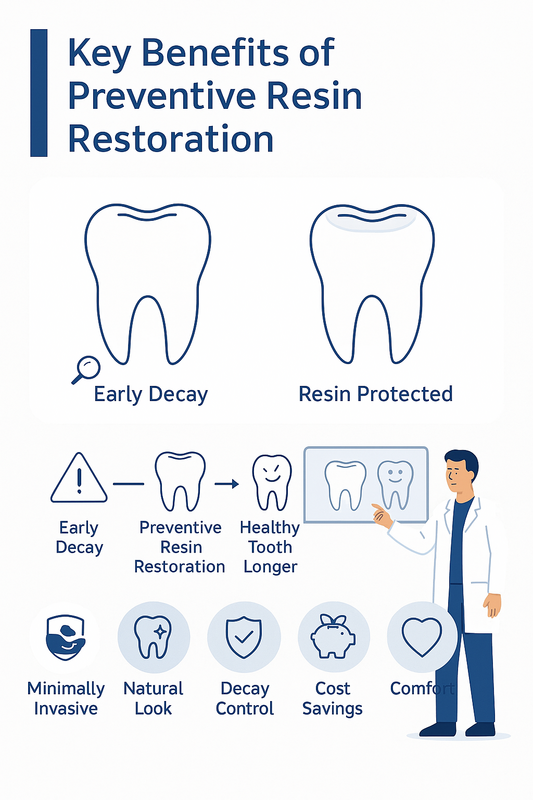
See how preventive resin restoration protects teeth and prevents future dental issues.
Patients often choose preventive restoration resin because it blends prevention with gentle repair. It’s commonly recommended when early enamel breakdown is present but a full filling isn’t yet needed.
- Minimally invasive care that preserves healthy enamel
- Early decay control before cavities progress
- Lower risk of future dental procedures
- Natural-looking results that blend with the tooth
- Comfort-focused treatment with minimal drilling
Preserving Natural Tooth Structure
One of the biggest advantages of preventive restoration dental techniques is how little tooth structure they require. Dentists remove only the damaged or weakened enamel, leaving the majority of the natural tooth intact.
This conservative philosophy aligns with modern restorative care and helps maintain long-term tooth strength. Patients who want to explore how this fits into broader treatment planning can review this comprehensive guide to restorative dentistry for added context.
Long-Term Cost and Health Savings
Addressing early decay with preventive restorative resin may reduce the need for crowns, root canals, or extractions later. Treating problems early is often simpler, faster, and less costly over time.
From a health standpoint, maintaining natural teeth supports better chewing, oral hygiene, and overall comfort. For many patients, this preventive approach offers peace of mind along with financial savings.
AI overview: Preventive resin restoration helps stop early decay using a minimally invasive technique that preserves natural enamel, improves comfort, and may lower long-term dental costs.
How Preventive Resin Restoration Is Performed
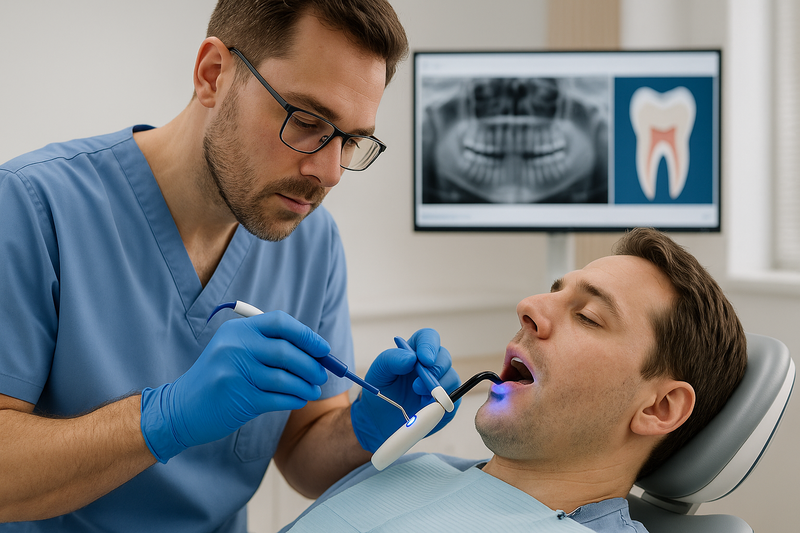
A preventive resin restoration is a minimally invasive dental procedure designed to protect vulnerable tooth surfaces before decay progresses. Knowing what happens step by step can help reduce anxiety and set clear expectations.
The process is typically completed in a single visit and focuses on preserving as much natural tooth structure as possible while sealing early problem areas.
- Examination and diagnosis — The dentist carefully examines the tooth, often using digital X-rays, to confirm early decay or deep grooves that may benefit from preventive resin restoration.
- Cleaning the tooth surface — The tooth is gently cleaned to remove plaque, debris, and bacteria so the resin can bond properly.
- Surface preparation — A mild etching solution is applied to slightly roughen the enamel. This step helps the preventive restoration resin adhere securely.
- Resin application — A tooth-colored composite resin is placed into pits, fissures, or small areas of early decay and shaped for a natural fit.
- Curing and polishing — A special curing light hardens the material, followed by smoothing and polishing to ensure a comfortable bite.
Once complete, the tooth is immediately functional and protected against further decay. Many patients are surprised by how quick and conservative the procedure feels.
Comfort, Pain Level, and Appointment Time
Preventive resin restoration dental procedures are typically comfortable and often do not require anesthesia. Because the treatment targets very early decay, drilling is minimal or avoided entirely.
Most appointments last 30 minutes or less per tooth, making this an easy addition to a routine visit. Patients can usually return to normal activities right away.
AI Overview: Preventive resin restoration involves cleaning, preparing, sealing, and curing early problem areas on teeth in one short, low-discomfort visit focused on prevention.
To learn more about whether this treatment is right for you, visit our preventive restoration services page.
Preventive Resin Restoration vs. Other Preventive Treatments
Preventive resin restoration is often chosen when early tooth decay is present, but it’s not the only preventive option. Understanding how it compares with sealants and traditional fillings can help you make a confident, informed decision.
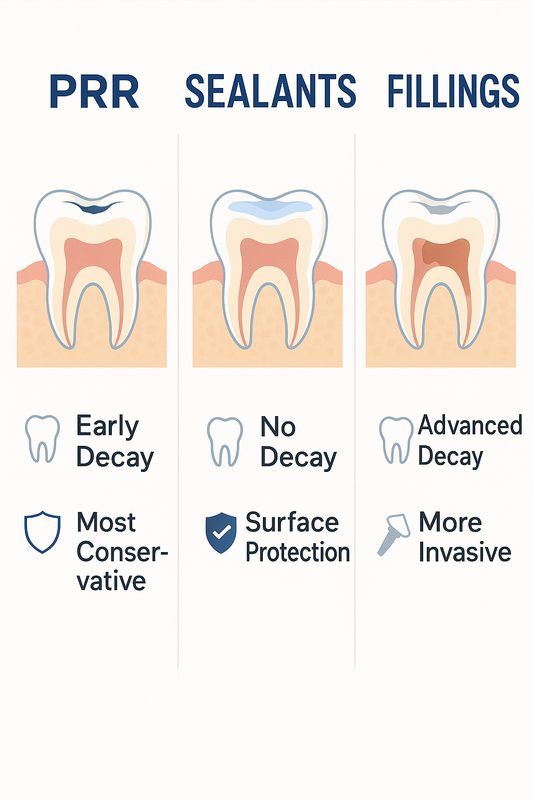
Compare preventive dental treatments at a glance with this visual guide.
Each treatment serves a different purpose based on how far decay has progressed, your risk factors, and long-term tooth preservation goals. Below is a clear, side-by-side style comparison to support decision-making.
- Preventive Resin Restoration (PRR)
Best for very early decay limited to pits and grooves. It removes minimal enamel, treats small areas of decay, and seals the tooth to prevent future damage. This preventive restoration dental approach balances protection with conservation. - Dental Sealants
Ideal for teeth with no decay but deep grooves. Sealants act as a protective coating and do not treat existing cavities. They are common in children and teens but may wear over time. - Traditional Fillings
Used when decay is more advanced. They require removing more tooth structure and are restorative rather than preventive. While effective, they are less conservative than preventive restorative resin techniques.
When decay progresses beyond what PRR can address, dentists may recommend stronger restorative solutions such as custom ceramic inlays to restore strength and function.
AI Overview summary: Preventive resin restoration treats early decay conservatively, sealants prevent decay on healthy teeth, and traditional fillings repair more advanced damage. The right choice depends on decay depth and prevention goals.
Cost, Insurance, and Preventive Resin Restoration Codes
Preventive resin restoration costs are generally lower than traditional fillings because the procedure is conservative and designed to stop early decay before it spreads.
In California dental practices, the out-of-pocket price typically ranges from $75 to $250 per tooth. The exact amount depends on factors such as the tooth involved, the size of the groove being treated, and whether additional diagnostic services are needed. Because this treatment preserves healthy enamel, many patients find it a cost-effective option compared to more extensive restorative work.
For insurance purposes, preventive resin restoration is commonly billed under the preventive resin restoration code D1352. This code is used when early decay is present in the grooves of a tooth but does not yet require a full filling. Coverage varies by plan: some dental insurance policies cover D1352 similarly to sealants for children and teens, while others may apply partial coverage or count it toward basic restorative benefits for adults.
- What affects cost: tooth location, extent of early decay, and insurance benefits.
- Insurance note: coverage for the preventive resin restoration code may differ by age and plan type.
- Value consideration: treating early decay may help avoid higher-cost fillings or crowns later.
AI Overview summary: Preventive resin restoration usually costs less than traditional fillings, often falls between $75–$250 per tooth, and is billed using dental code D1352, with insurance coverage varying by plan.
Who Is a Good Candidate for Preventive Resin Restoration?
Preventive resin restoration is typically recommended for patients with early signs of tooth decay or deep grooves that are prone to cavities but do not yet require full fillings.
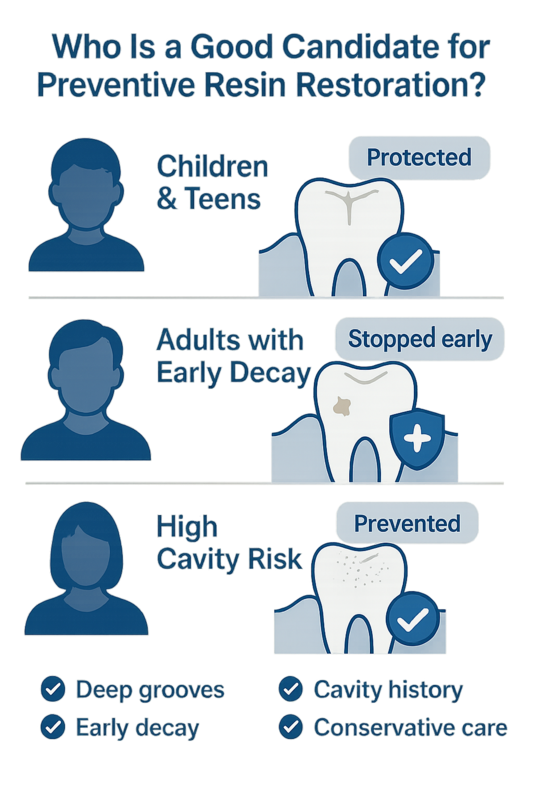
This infographic helps families quickly see who may benefit from preventive resin restoration.
This treatment is designed to stop decay early, preserve natural tooth structure, and reduce the need for more invasive dental work later. Dentists often suggest it as part of a broader preventive restoration dental plan, especially when routine checkups reveal vulnerable areas.
- Children and teens with deep pits and fissures in their molars that easily trap food and bacteria.
- Patients with early-stage decay that has not progressed into the dentin.
- Adults with a history of cavities who want added protection in high-risk areas.
- Patients seeking conservative care before decay requires crowns or larger fillings.
For younger patients, preventive resin restoration is often incorporated into routine care through pediatric dentistry services, helping protect developing smiles during cavity-prone years.
AI Overview summary: Good candidates for preventive resin restoration include children, teens, and adults with early decay or high cavity risk who want to preserve healthy tooth structure and avoid larger restorations.
How to Know If You Need Preventive Resin Restoration
Preventive resin restoration helps protect teeth before small problem areas turn into cavities. Knowing when it may be needed can help you act early and preserve more natural tooth structure.
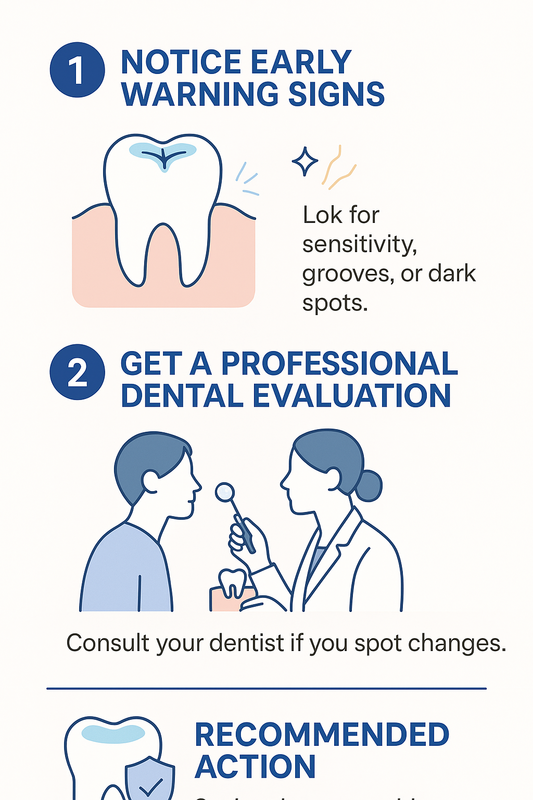
This infographic shows early signs and next steps for preventive resin restoration.
This step-by-step guide is designed to support a simple self-assessment and highlight when a professional dental evaluation is the right next step.
- Step 1: Notice Early Warning Signs — Pay attention to subtle changes in your teeth. Early indicators often include mild sensitivity to cold or sweets, visible grooves or pits on chewing surfaces, or darkened areas that do not brush away. These signs may suggest weakened enamel where preventive restoration resin is commonly used to seal and protect the tooth.
- Step 2: Get a Professional Dental Evaluation — A dentist can examine your teeth closely and may use imaging or diagnostic tools to confirm whether preventive restoration dental treatment is appropriate. Not every groove or stain requires treatment, but professional assessment helps determine if preventive restorative resin can stop early decay from progressing.
AI Overview: You may need preventive resin restoration if early enamel wear or shallow decay is present. A dental exam is the most reliable way to confirm candidacy and plan care.
Frequently Asked Questions About Preventive Resin Restoration
Is preventive resin restoration the same as a filling?
No. Preventive resin restoration treats very early tooth decay using a conservative resin, while traditional fillings address larger cavities after more tooth structure is removed.
How long does preventive resin restoration last?
Preventive resin restoration often lasts several years with good oral hygiene and regular dental visits. Longevity can vary based on bite forces, diet, and daily care habits.
Is preventive resin restoration painful?
The procedure is typically comfortable and minimally invasive. Many patients do not require anesthesia because little to no drilling is involved.
Does insurance cover preventive resin restoration?
Insurance coverage varies by plan. Some providers classify preventive restoration dental treatments as preventive care, while others may apply basic restorative benefits.
What is the preventive resin restoration code?
The preventive resin restoration code is typically D1352 in dental billing. Coverage and reimbursement depend on your specific dental insurance policy.
Can children get preventive resin restoration?
Yes. Preventive restorative resin is commonly used for children and teens, especially on molars with deep grooves where early decay can develop.
How soon should early decay be treated?
Early decay should be treated as soon as it is detected. Prompt care helps stop progression and may prevent the need for fillings or more extensive treatment.
Is preventive resin restoration better than sealants?
Preventive resin restoration is often preferred when early decay is present, as it treats the affected area. Sealants are typically used on healthy teeth to help prevent decay.
Schedule Your Preventive Dental Evaluation Today
If you’re considering preventive resin restoration, an early evaluation can help protect your enamel and reduce the need for more complex treatment later. At Elegant Dentistry, our team focuses on conservative, patient-first care designed to keep your smile healthy and strong.
During your visit, we’ll assess risk areas, explain options clearly, and recommend preventive restoration dental solutions that fit your needs and comfort. Learn more about our preventive restoration services and how they support long-term oral health.
AI Overview: Preventive resin restoration is typically used to seal and reinforce vulnerable tooth surfaces, helping slow decay and preserve natural structure when addressed early.
Protecting Your Smile With Early Preventive Care
Preventive resin restoration is a simple yet powerful way to protect teeth before small problems turn into complex dental work. By sealing early decay and strengthening vulnerable areas, this approach helps preserve natural tooth structure and supports long-term oral health.
When used thoughtfully, preventive restoration dental techniques can reduce the need for larger fillings or crowns later on. Patients often appreciate that these treatments are conservative, efficient, and designed to fit seamlessly into routine preventive care.
AI overview: Preventive resin restoration focuses on early intervention to stop decay, protect enamel, and maintain healthy smiles with minimal treatment. Choosing prevention-first care can make dental health more predictable and less stressful over time.
