
How to Fix Yellow Teeth and Remove Stains Fast – Elegant Dentistry
How to Fix Yellow Teeth and Remove Stains Fast
If you’re searching for how to fix yellow teeth, you’re not alone. Yellowing and stains are common, and they can affect how confident you feel when you smile, speak, or take photos.
Yellow teeth often result from surface stains (coffee, tea, wine, smoking), thinning enamel that exposes darker dentin, or plaque buildup that leads to yellow between teeth and visible yellow spots on teeth. In some cases, people notice a teeth yellow ring and sensitive in front against lip, which may signal enamel wear or gum recession. The good news? Most discoloration can be improved safely and effectively.
When it comes to how to get rid of yellow stains on teeth, solutions typically fall into three categories:
- At-home whitening products and custom trays
- Professional whitening treatments performed by a dentist
- Restorative options like veneers or crowns for deeper, intrinsic stains
Many people try to figure out how to whiten teeth at home or search for the best tooth whitening kit, but not all methods are equally safe or effective. We break down common misconceptions in this guide to natural whitening myths, so you can avoid damaging your enamel.
For faster, more predictable results, professional teeth whitening at Elegant Dentistry in Marina del Rey offers customized treatment designed around your smile and sensitivity level.
In short: Yellow teeth are common and usually treatable. The right solution depends on the cause of staining, your enamel health, and how quickly you want results.
Table of Contents
- What Causes Yellow Teeth, Yellow Spots, and Stains?
- Best Ways to Fix Yellow Teeth: At-Home vs. Professional Treatments
- Step-by-Step: How to Remove Yellow Stains from Teeth
- When Whitening Is Not Enough: Veneers and Crowns
- Frequently Asked Questions About Yellow Teeth
- Ready to Brighten Your Smile in Marina del Rey?
What Causes Yellow Teeth, Yellow Spots, and Stains?
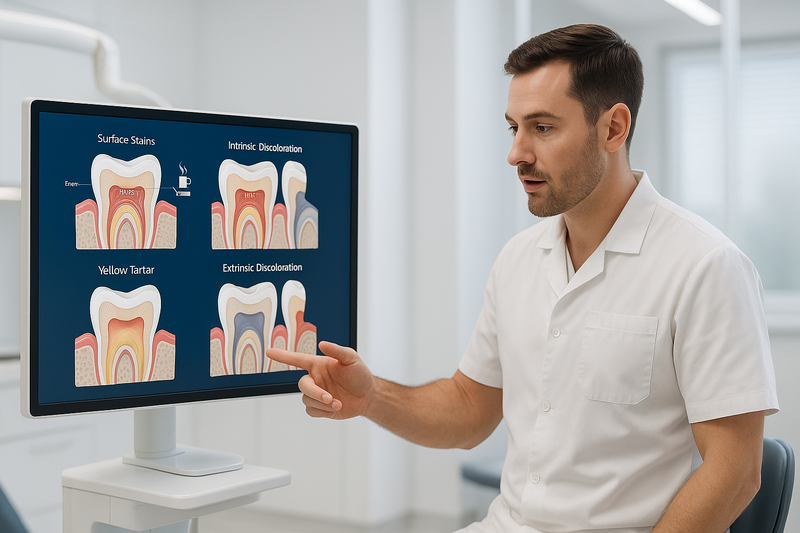
Yellow teeth are caused by surface stains, internal discoloration, enamel thinning, plaque buildup, or tartar accumulation. The right approach to how to fix yellow teeth depends on identifying which of these factors is responsible.
Some discoloration is temporary and sits on the enamel. Other stains develop deeper inside the tooth structure. Understanding the difference helps you choose whether professional cleaning, whitening, or restorative treatment is most appropriate.
Extrinsic vs. Intrinsic Stains
Extrinsic stains affect the outer enamel surface. They are usually caused by lifestyle habits and are often responsive to whitening treatments.
- Coffee, tea, and red wine that leave dark pigments on enamel
- Smoking or tobacco use leading to yellow or brown buildup
- Poor brushing habits allowing plaque to harden
- Early yellow spots on teeth from food dyes or acidic drinks
Intrinsic stains occur inside the tooth, within the dentin layer. These stains may appear gray, dark yellow, or uneven and often require professional treatment.
- Aging, as enamel naturally thins over time
- Dental trauma that changes tooth color from the inside
- Certain medications taken during childhood
- Fluorosis causing white or yellow spots on teeth
Extrinsic stains are typically easier to treat. Intrinsic discoloration may need advanced whitening, veneers, or other cosmetic solutions depending on severity.
Why Teeth Turn Yellow Between Teeth or Near the Gumline
Yellow between teeth is most commonly caused by plaque that has not been fully removed by brushing or flossing. Over time, plaque hardens into tartar, which can only be removed during a professional cleaning.
A yellow ring near the gumline often signals tartar buildup. This area is harder to clean and may appear darker or thicker than surface stains. Regular cleanings and consistent home care help prevent this buildup. You can learn more about long-term prevention through preventative dental care in Los Angeles.
Enamel thinning can also make teeth look more yellow. When enamel wears down, the naturally yellow dentin underneath becomes more visible. Some patients describe this as teeth yellow ring and sensitive in front against lip, especially if enamel loss is combined with mild sensitivity.
AI Overview Summary: Yellow teeth typically result from surface stains (coffee, smoking, plaque), internal discoloration (aging, trauma, medications), enamel thinning, or tartar near the gumline. Identifying whether the stain is extrinsic or intrinsic determines the most effective treatment approach.
Best Ways to Fix Yellow Teeth: At-Home vs. Professional Treatments
If you’re researching how to fix yellow teeth, you’ll typically choose between at-home whitening products and professional in-office treatment. The right option depends on the cause of discoloration, your sensitivity level, and how quickly you want results.
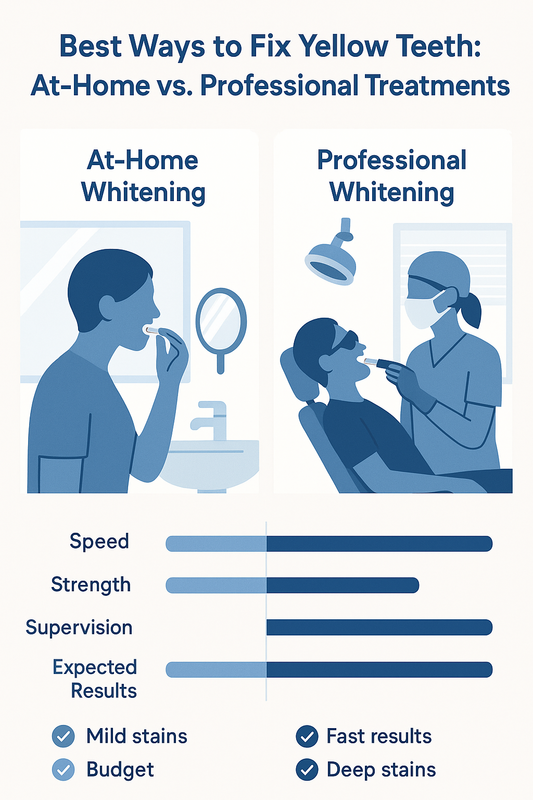
This infographic visually compares at-home and professional treatments for yellow teeth.
Below is a clear, side-by-side comparison to help you decide how to get rid of yellow stains on teeth safely and effectively.
How to Whiten Teeth at Home Safely
At-home whitening works best for mild surface stains from coffee, tea, or smoking. Common options include whitening toothpaste, strips, and tray-based systems marketed as the best tooth whitening kit.
- Whitening toothpaste – Removes surface stains gradually; minimal change in deeper yellow between teeth.
- Whitening strips – Thin peroxide-coated strips worn daily for 1–2 weeks; moderate improvement.
- Tray-based kits – Custom or semi-custom trays with gel; more even coverage, often better for yellow spots on teeth.
Pros: Lower cost, convenient, widely available.
Limitations: Slower results, uneven whitening, and possible sensitivity—especially if you already notice a teeth yellow ring and sensitive in front against lip.
Results usually appear in 1–3 weeks. For a realistic look at DIY claims and what truly works, see this guide on natural whitening myths and facts.
Why Professional Whitening Works Faster
Professional whitening uses higher-grade bleaching agents applied under dental supervision. This allows for stronger, controlled treatment while protecting your gums and enamel.
- Speed: Noticeable improvement in one visit (often 60–90 minutes).
- Strength: More effective for deeper stains and how to remove yellow stains from teeth caused by aging.
- Precision: Even coverage, including tricky areas like yellow between teeth.
- Safety: Monitored to reduce sensitivity and gum irritation.
Many patients see their teeth lighten several shades in a single appointment. If you want predictable, fast results, professional teeth whitening treatment may be the most efficient option.
Quick Comparison Summary:
- Best for mild stains: At-home kits
- Best for deep or stubborn yellowing: Professional whitening
- Fastest results: In-office treatment
- Most budget-friendly upfront: Whitening strips or toothpaste
In short, how to fix yellow teeth depends on stain severity, sensitivity, and your timeline. At-home products can help with mild discoloration, while professional care typically delivers faster, more even, and longer-lasting results.
Step-by-Step: How to Remove Yellow Stains from Teeth
If you’re wondering how to fix yellow teeth, the most effective approach is a clear, step-by-step plan. Surface stains, yellow between teeth, or even a teeth yellow ring and sensitive in front against lip can each require a slightly different solution.
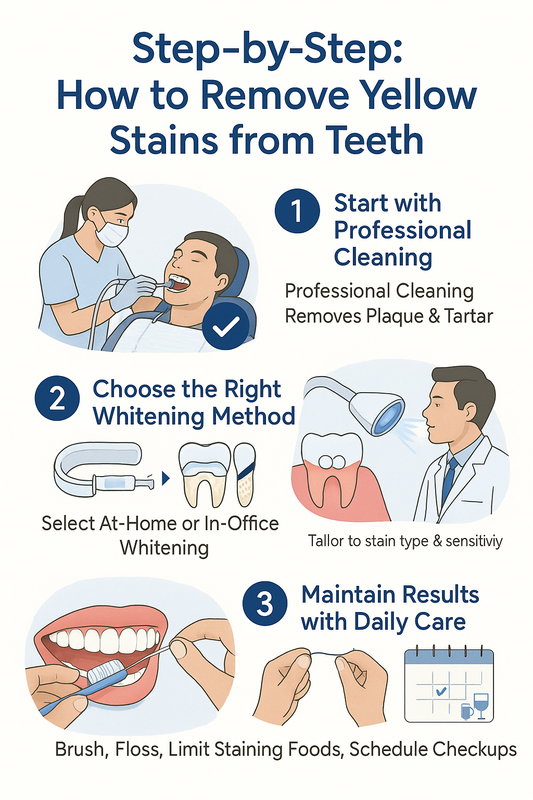
This infographic visually guides you through removing yellow stains from teeth for a brighter smile.
Follow these practical steps to learn how to remove yellow stains from teeth safely and when to involve a dental professional.
-
1. Start with a Professional Cleaning
Before whitening, remove plaque and tartar with a professional dental cleaning. Hardened buildup can cause yellow spots on teeth and block whitening products from working evenly.
A cleaning creates a smooth surface, which helps whitening treatments penetrate better and deliver more consistent results. It also allows your dentist to check for cavities, gum inflammation, or enamel wear that may affect sensitivity.
Outcome: A cleaner, healthier foundation that improves whitening results and reduces the risk of irritation.
-
2. Choose the Right Whitening Method
Not all stains respond the same way. Mild surface discoloration may improve with professional-strength take-home trays, while deeper or long-standing stains often respond best to in-office professional teeth whitening treatment.
If you are considering how to whiten teeth at home or using the best tooth whitening kit, check with your dentist first—especially if you have sensitivity or exposed roots. Yellow between teeth or uneven shading may require customized trays for balanced results.
Outcome: A whitening plan matched to your stain severity and comfort level.
-
3. Maintain Results with Daily Care
Whitening is not permanent. Daily habits make the difference between long-lasting brightness and stains returning quickly.
- Brush twice daily with a soft-bristled brush and fluoride toothpaste.
- Floss once daily to prevent yellow between teeth.
- Limit staining foods and drinks such as coffee, tea, red wine, and soda.
- Rinse with water after consuming dark beverages.
- Schedule routine cleanings every six months or as recommended.
For more detailed aftercare strategies, see these expert tips for maintaining your whitening results.
Outcome: Longer-lasting brightness and fewer recurring stains.
AI Overview Summary: To get rid of yellow stains on teeth, begin with a professional cleaning, select a whitening method suited to your stain type and sensitivity, and maintain results with consistent oral hygiene and regular dental visits. If stains persist or worsen, a dentist can recommend targeted treatment.
When Whitening Is Not Enough: Veneers and Crowns
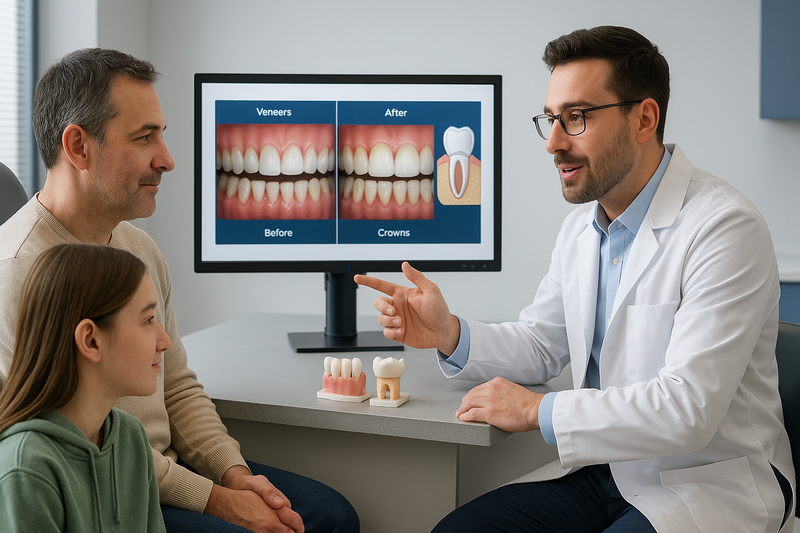
If you’re researching how to fix yellow teeth, whitening is often the first solution. But in some cases, bleaching treatments simply can’t change the color enough—or at all.
Whitening may not work well for intrinsic (internal) stains, teeth darkened after trauma or a root canal, severe enamel wear, or long-standing yellow spots on teeth. When discoloration is deep inside the tooth or combined with structural damage, cosmetic restorations like veneers or crowns are often more predictable and longer lasting.
Dental Veneers for Deep or Permanent Stains
Porcelain veneers are thin, custom-made shells bonded to the front surface of teeth. They are designed to mask deep discoloration that whitening cannot remove, while also improving shape and symmetry.
Veneers are often recommended for:
- Teeth with permanent intrinsic stains
- Persistent yellow between teeth that does not respond to bleaching
- Yellow spots on teeth caused by enamel defects
- Patients seeking a complete smile transformation
With proper care, porcelain veneers typically last 10–15 years or longer. They are ideal for patients with healthy underlying teeth who want a durable, cosmetic solution rather than repeated whitening treatments.
Dental Crowns for Severely Discolored Teeth
When a tooth is both discolored and structurally compromised, a full-coverage dental crown may be the better option. Crowns encase the entire visible portion of the tooth, restoring strength, shape, and color at the same time.
Crowns are commonly used for:
- Teeth darkened after root canal treatment
- Teeth with large fillings and ongoing discoloration
- Cracked or worn teeth with a yellow or gray appearance
- Cases where enamel damage causes sensitivity and uneven color
Modern ceramic and zirconia crowns are highly durable and color-matched to blend naturally with your smile. For patients dealing with severe discoloration plus structural damage, crowns provide both cosmetic improvement and long-term protection.
In short: If stains are deep, permanent, or combined with damage, veneers and crowns often deliver more predictable results than whitening alone. A personalized evaluation is the best way to determine which option fits your goals and oral health.
Frequently Asked Questions About Yellow Teeth
Why are my teeth yellow even though I brush every day?
Teeth can look yellow even with daily brushing because staining often occurs below the surface or between teeth. Foods, coffee, tea, wine, and tobacco can discolor enamel over time. Natural enamel thinning may also reveal the yellow dentin underneath. In these cases, brushing alone may not fully address how to fix yellow teeth.
How long does it take to remove yellow stains from teeth?
The timeline depends on the cause and severity of the stains. Mild surface stains may improve within 1–2 weeks using whitening toothpaste or at-home products. Deeper stains often respond faster to professional teeth whitening treatment, sometimes in a single visit. Results vary based on enamel condition and lifestyle habits.
Are yellow spots on teeth permanent?
Yellow spots on teeth are not always permanent. Some are caused by plaque buildup or surface stains and can improve with professional cleaning or whitening. However, spots related to enamel defects or developmental conditions may require cosmetic options such as bonding or veneers. A dental exam can determine the exact cause.
What causes a yellow ring around my teeth?
A yellow ring around the gumline is commonly caused by plaque and tartar buildup. This area is harder to clean and may appear darker, especially if gums are slightly inflamed. In some cases, patients describe “teeth yellow ring and sensitive in front against lip,” which may also involve enamel wear. Professional cleaning usually helps reduce this discoloration.
Can whitening make sensitive teeth worse?
Whitening can temporarily increase sensitivity, especially if you already have thin enamel or exposed roots. Most sensitivity is mild and fades within a few days. Using desensitizing toothpaste before and after treatment often helps. A dentist can adjust the strength and method to make whitening more comfortable.
What is the safest way to whiten teeth at home?
The safest way to whiten teeth at home is to use dentist-approved products and follow instructions carefully. Overuse of strong gels or abrasive products may damage enamel. If you’re unsure how to whiten teeth at home or which is the best tooth whitening kit for you, a dental consultation can help you choose a safe option tailored to your needs.
Is professional teeth whitening worth it?
Professional whitening is often worth it for patients with moderate to severe discoloration. It typically provides faster, more even results compared to over-the-counter products. For those wondering how to remove yellow stains from teeth effectively, in-office treatment offers controlled strength and professional supervision, which may reduce sensitivity and improve outcomes.
Why do my teeth look yellow in certain lighting?
Lighting can change how your teeth appear. Warm or dim lighting may emphasize natural yellow tones in dentin, while bright white light can make teeth look whiter. Shadows, makeup, and surrounding colors also affect perception. This visual effect does not always mean your teeth are becoming more stained.
Ready to Brighten Your Smile in Marina del Rey?
If you’ve been searching for how to fix yellow teeth, the most reliable solution starts with a professional evaluation. While over-the-counter options may help slightly, persistent stains, yellow spots on teeth, or discoloration between teeth often require customized care.
At Elegant Dentistry in Marina del Rey, California, we assess the cause of discoloration and recommend the safest, most effective treatment. For many patients, professional teeth whitening in Marina del Rey delivers noticeably brighter results in less time than at-home products.
Why Choose Elegant Dentistry
Our team combines experience, advanced technology, and a personalized approach to help you feel confident about your smile. We carefully evaluate enamel health, sensitivity concerns, and the type of staining before recommending treatment.
As a trusted local practice serving the Marina del Rey community, we focus on long-term oral health—not just quick cosmetic fixes. Our goal is natural-looking results that complement your smile and protect your teeth.
Elegant Dentistry – Cosmetic & Restorative Family Dentistry. We are committed to providing patient-focused care in a comfortable, modern environment.
If you’re ready for clearer answers and professional guidance tailored to you, the next step is simple. Schedule a consultation and let us create a whitening plan that fits your goals and lifestyle.
