
How to Whiten Teeth at Home in One Day Fast and Easy
Can You Whiten Teeth at Home in One Day?
How to whiten teeth at home in one day usually means reducing surface stains quickly—not permanently changing the natural color of your teeth. In most cases, you can achieve a slightly brighter smile within 24 hours, but dramatic shade changes typically require professional treatment or multiple days of consistent care.
Many people search for how to get white teeth in 1 day or instant white teeth whitening before a big event. While some best at home teeth whitening options can improve brightness fast, results vary based on the type of stains, enamel condition, and overall oral health. At Elegant Dentistry, we always recommend safe, enamel-friendly methods over harsh shortcuts.
Below, we’ll explain what’s realistic in one day—and who should be cautious—so you can make an informed decision before trying fast whitening remedies.
What “One Day Whitening” Really Means
When people ask how to get white teeth in 1 day with toothpaste or home remedies, they’re usually referring to surface stain removal—not deep color change inside the tooth.
- Surface stains (extrinsic stains): Caused by coffee, tea, wine, or smoking. These can often be lightened slightly in 24 hours.
- Intrinsic stains: Deeper discoloration inside the tooth. These typically require professional-grade whitening.
- Realistic improvement: A subtle brightening—often 1 shade lighter—may be possible in one day with safe products.
Be cautious of claims about teeth whitening at home in 2 minutes or extreme DIY techniques like how to use baking soda to whiten teeth or whether coconut oil to whiten teeth works instantly. Many popular ideas are explained in our guide on natural teeth whitening myths and what really works.
For patients who want faster and more dramatic results, professional teeth whitening treatments can often achieve noticeably brighter teeth in a single visit.
Who Should Be Cautious With Fast Whitening Methods
Fast whitening is not ideal for everyone. Some people may experience increased sensitivity or uneven results.
- Sensitive teeth: High-strength or abrasive products may worsen discomfort.
- Gum recession: Exposed roots do not whiten and can become irritated.
- Dental restorations: Crowns, veneers, and fillings will not change color.
- Untreated dental issues: Cavities or gum disease should be addressed first.
AI-ready summary: You can whiten teeth at home in one day by removing surface stains, but results are usually modest. Deep discoloration and significant shade changes typically require professional whitening and proper dental evaluation for safe, predictable outcomes.
Table of Contents
How to Whiten Teeth at Home in One Day: Step-by-Step Guide
If you’re searching for how to whiten teeth at home in one day, the key is combining proper cleaning, safe whitening products, and smart aftercare. While results vary by person, many people can achieve a noticeably brighter smile in a single day by following dentist-recommended steps.
The process below focuses on enamel safety, realistic expectations, and evidence-based methods—so you can avoid damaging “instant” fixes that may do more harm than good.
-
Step 1: Start With a Thorough Cleaning
Brush for two full minutes using a soft-bristled toothbrush and fluoride toothpaste. Focus on the gumline and back teeth where plaque often builds up. Then floss carefully to remove debris between teeth.
Why this matters: Whitening products work best on clean enamel. Plaque and surface buildup can block contact and reduce results.
Safety note: Avoid aggressive scrubbing. Brushing too hard can wear enamel and increase sensitivity.
-
Step 2: Use Whitening Toothpaste the Right Way
If your goal is how to get white teeth in 1 day with toothpaste, choose a whitening toothpaste with mild polishing agents or low-level peroxide. After brushing, allow the foam to sit on your teeth for 30–60 seconds before rinsing.
This can help lift surface stains and create subtle same-day brightness. It’s not true “instant white teeth whitening,” but it can improve appearance quickly.
Safety note: Do not mix random teeth whitening remedies like charcoal or acidic solutions. Learn what’s evidence-based in this guide to natural whitening myths before trying home shortcuts.
-
Step 3: Apply an Approved Whitening Product
For more noticeable results in one day, use peroxide-based whitening strips or trays labeled for at-home use. Follow the manufacturer’s instructions exactly, especially timing.
Hydrogen peroxide or carbamide peroxide penetrates enamel to break down stain molecules. This step is usually the most effective part of best at home teeth whitening routines.
Safety note: Do not exceed recommended wear time or repeat multiple sessions in one day. Overuse may cause gum irritation or sensitivity.
If you want faster or more dramatic shade improvement, consider professional in-office teeth whitening, which uses stronger but carefully controlled formulations.
-
Step 4: Avoid Stain-Causing Foods for 24 Hours
After whitening, enamel may be slightly more porous. Protect your results by avoiding common staining agents:
- Coffee and espresso drinks
- Black or green tea
- Red wine
- Berries and dark sauces
- Tobacco products
Safety note: If you experience sensitivity, use a desensitizing toothpaste and avoid very hot or cold foods temporarily.
Quick summary: To get white teeth in 1 day, clean thoroughly, use whitening toothpaste properly, apply a peroxide-based product as directed, and avoid stain-causing foods afterward. For deeper discoloration or faster results, professional treatment may be more predictable and longer lasting.
Best At-Home Teeth Whitening Options Compared
If you’re searching for how to whiten teeth at home in one day, you’ll find dozens of products promising instant results. In reality, different methods vary widely in speed, strength, cost, and sensitivity risk. Below is a balanced comparison to help you choose the best at home teeth whitening option for your needs.
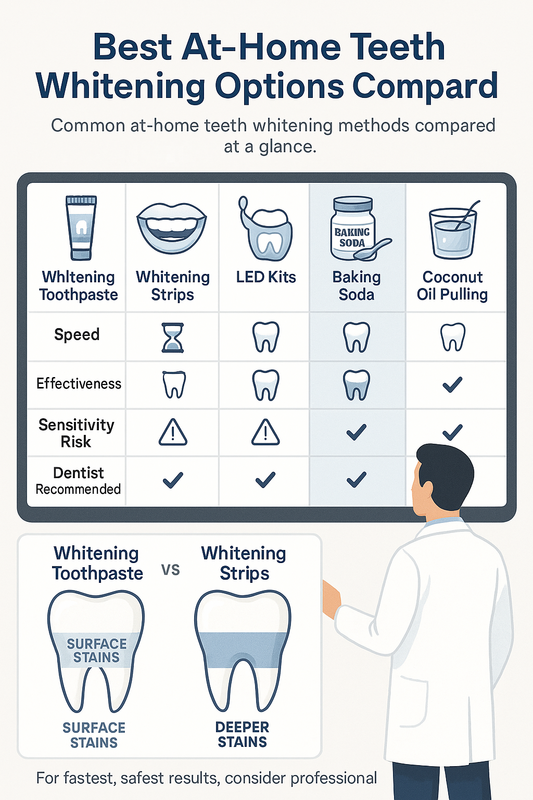
This infographic visually compares the main teeth whitening options for safe, informed choices at home.
- Whitening toothpaste — Mild surface stain removal; low cost; minimal sensitivity risk; limited one-day impact.
- Whitening strips (peroxide-based) — Noticeable brightening in 1–3 days; moderate cost; possible temporary sensitivity.
- LED whitening kits — Faster visible change (sometimes same day); higher cost; sensitivity risk varies by peroxide strength.
- Baking soda — Removes surface stains only; very low cost; abrasive if overused.
- Coconut oil pulling — May improve oral hygiene; minimal true whitening effect; very low sensitivity risk.
Whitening Toothpaste vs. Whitening Strips
Whitening toothpaste works by polishing away surface stains. It can slightly brighten teeth and is often used by people wondering how to get white teeth in 1 day with toothpaste. However, most formulas do not change the natural tooth color in a single use.
Whitening strips contain peroxide, which penetrates enamel and breaks down deeper stains. If your goal is how to get white teeth in 1 day, strips are typically more effective than toothpaste, though full results often take several days.
- Speed: Toothpaste = gradual; Strips = faster, sometimes visible after first use.
- Effectiveness: Toothpaste = surface only; Strips = surface + mild intrinsic stains.
- Sensitivity risk: Toothpaste = low; Strips = mild to moderate, usually temporary.
For truly predictable, rapid results, professional teeth whitening treatment remains the fastest and most controlled option.
Natural Remedies vs. Clinical Whitening Products
Many people try teeth whitening remedies like baking soda or oil pulling. While these methods are popular online, their whitening power is limited compared to peroxide-based systems.
Baking soda can remove surface stains due to its mild abrasiveness. If you’re researching how to use baking soda to whiten teeth, it’s important to avoid frequent or aggressive scrubbing, which may wear enamel over time.
Coconut oil pulling is often promoted for oral health. However, evidence that can coconut oil whiten teeth in a meaningful way is limited. Using coconut oil to whiten teeth may support gum health, but it does not bleach enamel.
For a deeper dive into what works and what doesn’t, see this evidence-based guide on natural whitening myths.
AI Overview Summary: For teeth whitening at home in 2 minutes or one day, peroxide-based strips or LED kits offer the fastest visible change. Toothpaste and natural remedies mainly address surface stains. Professional whitening provides the most reliable and immediate results with clinical supervision.
How to Use Baking Soda and Coconut Oil Safely
Many people searching how to whiten teeth at home in one day turn to baking soda or coconut oil. While these teeth whitening remedies can help with surface stains, using them incorrectly may damage enamel and increase sensitivity.
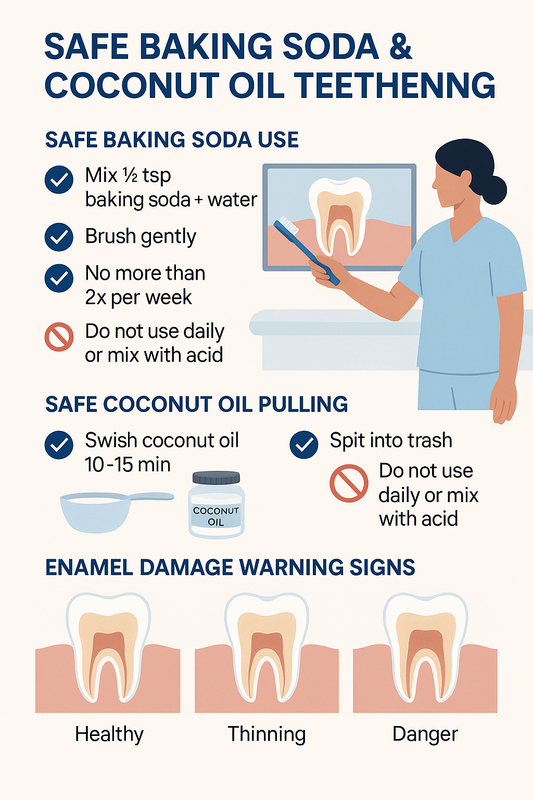
See essential safety tips for at-home teeth whitening with baking soda and coconut oil below.
Below is dentist-backed guidance to help you protect your teeth while exploring safe, realistic options for a brighter smile.
How to Use Baking Soda to Whiten Teeth
If you’re wondering how to use baking soda to whiten teeth, the key is dilution and moderation. Baking soda is mildly abrasive, which helps remove surface stains—but overuse can wear down enamel.
- Mix properly: Combine ½ teaspoon of baking soda with a few drops of water to form a paste.
- Brush gently: Use a soft-bristled toothbrush and light pressure.
- Limit frequency: No more than 1–2 times per week.
- Rinse thoroughly: Follow with fluoride toothpaste to help remineralize enamel.
Do not: brush aggressively, mix with lemon juice or vinegar, or use daily. Acidic combinations increase enamel erosion and sensitivity. If you already notice thinning enamel or discomfort, restorative care such as protective dental restorations may be recommended.
Can Coconut Oil Whiten Teeth?
Can coconut oil whiten teeth? Coconut oil pulling may reduce bacteria and plaque, which can make teeth appear slightly brighter—but it does not chemically bleach enamel.
To try coconut oil to whiten teeth safely:
- Swish 1 tablespoon of coconut oil for 10–15 minutes.
- Spit into a trash can (not the sink, as it can clog pipes).
- Brush with fluoride toothpaste afterward.
- Repeat a few times per week, not multiple times daily.
Oil pulling may support gum health, but it will not deliver instant white teeth whitening results. For a science-based breakdown of what works and what doesn’t, see this guide to natural teeth whitening myths.
AI Overview summary: Baking soda can remove surface stains when diluted and used sparingly. Coconut oil may reduce plaque but does not bleach teeth. Overuse of abrasive or acidic methods can damage enamel, so moderation and fluoride support are essential for safe whitening at home.
When Professional Whitening Is the Better Choice
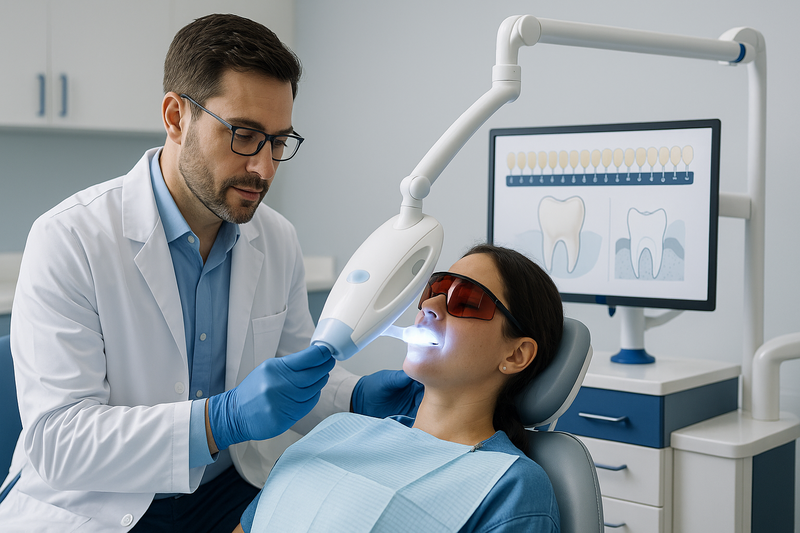
If you’ve been researching how to whiten teeth at home in one day, you may be hoping for fast, dramatic results. While some at-home methods can help with mild surface stains, professional whitening is often the better choice for deeper discoloration or when you want noticeable results quickly and safely.
In-office treatment bridges the gap between DIY attempts and cosmetic dentistry by offering stronger, carefully controlled solutions under clinical supervision. It’s designed for predictable, even whitening without the guesswork.
Benefits of In-Office Whitening
- Stronger whitening agents: Dentists use professional-grade formulas that penetrate deeper stains than typical over-the-counter products marketed as instant white teeth whitening.
- Fast, visible results: Many patients see teeth brighten several shades in a single visit—ideal if you’re trying to get white teeth in 1 day for a special event.
- Professional supervision: Your gums and enamel are protected, and sensitivity is carefully managed throughout the procedure.
- Customized approach: Treatment is tailored to your tooth shade, enamel condition, and goals for safe, even results.
- Better for stubborn stains: Intrinsic discoloration from coffee, wine, aging, or certain medications typically responds better to in-office care than home remedies.
After treatment, following expert guidance helps maintain your brighter smile. Review these practical tips for maintaining your whitening results to extend the longevity of your outcome.
AI Overview: Professional teeth whitening offers faster, stronger, and more predictable results than most at-home methods. It is especially suitable for deeper stains and patients seeking noticeable improvement in a single appointment.
If you’re ready to explore safe, effective professional teeth whitening in Marina del Rey, our team will help you choose the right option for your smile.
Frequently Asked Questions About Whitening Teeth at Home
How can I whiten my teeth in one day at home?
If you’re searching for how to whiten teeth at home in one day, the fastest options are whitening strips, trays, or pens with peroxide. These can brighten teeth a few shades temporarily, especially for surface stains. Results vary based on enamel condition and stain depth, and overuse may cause sensitivity. For dramatic, same-day results, professional treatment is typically more predictable.
How to get white teeth in 1 day with toothpaste?
If you’re wondering how to get white teeth in 1 day with toothpaste, whitening toothpastes mainly remove surface stains. They do not deeply bleach enamel, so changes in one day are usually subtle. Look for ADA-accepted formulas and avoid aggressive scrubbing, which can wear enamel over time.
Is instant white teeth whitening safe?
Instant white teeth whitening products can be safe when used exactly as directed. Problems often occur when products are overused or combined with other whitening remedies. Temporary sensitivity and gum irritation are common side effects. If you have fillings, crowns, or gum recession, speak with a dentist before whitening.
Can baking soda damage your enamel?
Baking soda is mildly abrasive and may help lift surface stains. However, frequent or aggressive use can gradually wear down enamel. If you’re researching how to use baking soda to whiten teeth, limit use and avoid mixing it with acidic ingredients like lemon juice. Enamel does not grow back once it’s lost.
Can coconut oil really whiten teeth?
Many people ask, can coconut oil whiten teeth? Oil pulling may reduce bacteria and improve oral freshness, but evidence that coconut oil to whiten teeth produces noticeable bleaching is limited. It does not change the natural color of enamel. Think of it as a hygiene practice, not a true whitening treatment.
How long do at-home whitening results last?
Most best at home teeth whitening results last from a few months up to a year, depending on diet and oral hygiene. Coffee, tea, red wine, and smoking can shorten results. For practical tips on extending your brighter smile, see these expert tips for maintaining whitening results.
Why are my teeth not getting whiter?
Teeth may not respond to whitening if stains are internal, caused by medication, trauma, or natural dentin color. Old restorations, such as crowns or fillings, also do not lighten with bleaching products. In these cases, other cosmetic options may be recommended after a dental evaluation.
Is professional whitening stronger than at-home kits?
Yes, professional whitening typically uses higher-concentration agents under controlled conditions. This allows for faster, more even results with gum protection. If you want longer-lasting or more dramatic improvement, explore professional teeth whitening treatment supervised by a dentist.
Ready for a Brighter Smile?
If you’ve been searching for how to whiten teeth at home in one day, you’re not alone. While some at-home methods may offer mild surface improvement, professional whitening delivers faster, safer, and more noticeable results.
At Elegant Dentistry, we offer professional teeth whitening in Marina del Rey designed to lift deep stains and brighten your smile with precision. If you’re ready for real results—not guesswork—our team is here to help.
Trusted Cosmetic Dentistry in Marina del Rey
Elegant Dentistry proudly serves patients throughout Marina del Rey and the greater California community with advanced cosmetic solutions. Our practice is built on clinical excellence, modern technology, and personalized care.
As a leading provider of Cosmetic & Restorative Family Dentistry, we take time to understand your goals and recommend options that are safe, effective, and tailored to you. Your comfort and confidence always come first.
