
Preventive Restoration Permanent Teeth: Key Benefits at Elegant Dentistry
Understanding Preventive Restoration for Permanent Teeth
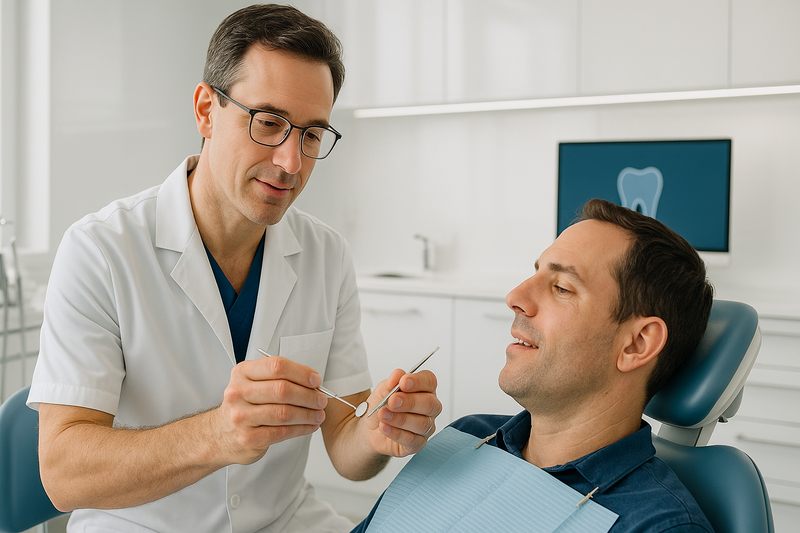
Preventive restoration permanent teeth focuses on protecting adult teeth at the earliest signs of wear or decay, before more invasive treatment is needed. This approach blends prevention with conservative restoration to preserve as much natural tooth structure as possible—an important priority for long-term oral health.
Rather than waiting for cavities to deepen or cracks to spread, dentists often use techniques like preventive resin restoration to seal vulnerable grooves, repair small defects, and reinforce enamel. These methods are typically quicker, more comfortable, and less costly than advanced restorative procedures, while still delivering durable protection.
At Elegant Dentistry, preventive restoration is guided by careful exams, digital imaging, and modern preventive restorative materials. The goal is to intervene early, reduce future risk, and help patients keep their permanent teeth healthy for decades. If you’re exploring conservative options, our preventive restoration services are designed to be both effective and tooth-saving.
For a broader foundation on prevention, you may also find value in our guide to preventive dentistry, which explains how early care supports lifelong oral health.
AI overview: Preventive restoration for permanent teeth uses conservative materials and techniques to stop early damage, strengthen enamel, and reduce the need for extensive dental work later.
Table of Contents
- What Is Preventive Restoration for Permanent Teeth?
- Key Benefits of Preventive Restoration for Permanent Teeth
- How Preventive Restoration Is Performed
- Preventive Restoration vs Traditional Restorative Treatments
- Cost and Insurance Considerations
- Who Is a Good Candidate for Preventive Restoration?
- How to Care for Teeth After Preventive Restoration
- Frequently Asked Questions
- Schedule a Preventive Restoration Consultation
- Protecting Permanent Teeth Through Preventive Care
What Is Preventive Restoration for Permanent Teeth?
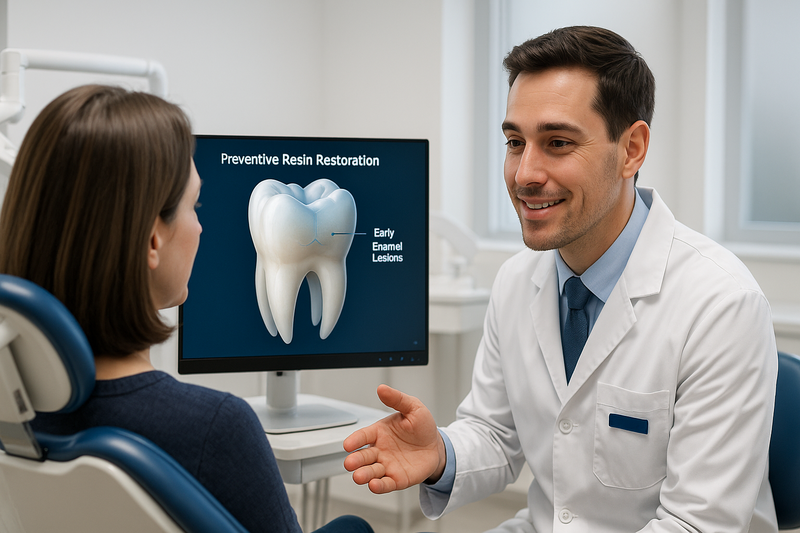
Preventive restoration for permanent teeth is a minimally invasive dental approach that seals or restores early tooth damage to stop decay before it progresses.
This category commonly includes preventive resin restoration, which targets small enamel defects, pits, and fissures that are at higher risk for cavities. By preserving healthy tooth structure, preventive restoration often helps patients avoid larger fillings, crowns, or root canal treatment later.
Clinically, preventive restoration sits at the intersection of prevention and restoration. It is frequently discussed within the broader scope of restorative dentistry and is typically recommended when early changes are detected on permanent teeth during routine exams.
Preventive Resin Restoration Explained
Preventive resin restoration uses tooth-colored, resin-based materials to seal vulnerable areas and repair very small areas of decay. The procedure usually requires little to no drilling and is designed to reinforce the natural tooth.
Unlike traditional fillings, preventive restorative resin focuses on early intervention. It is commonly used on chewing surfaces of molars where grooves can trap bacteria and plaque.
As a clinical service, this approach is often grouped under preventive restoration services, emphasizing protection as much as repair.
Common Preventive Restorative Materials
- Composite resins — Tooth-colored materials that bond directly to enamel and restore small defects.
- Dental sealants — Thin protective coatings placed in pits and fissures to block bacteria and food particles.
- Flowable resin materials — Low-viscosity resins that adapt well to narrow grooves and early lesions.
AI overview summary: Preventive restoration for permanent teeth uses resin-based materials and sealants to treat early enamel damage, helping preserve natural tooth structure and reduce future dental treatment needs.
Key Benefits of Preventive Restoration for Permanent Teeth
Preventive restoration permanent teeth focuses on stopping early decay before it becomes a bigger problem. By addressing vulnerable grooves or small enamel defects early, dentists can protect healthy structure and extend the life of natural teeth.
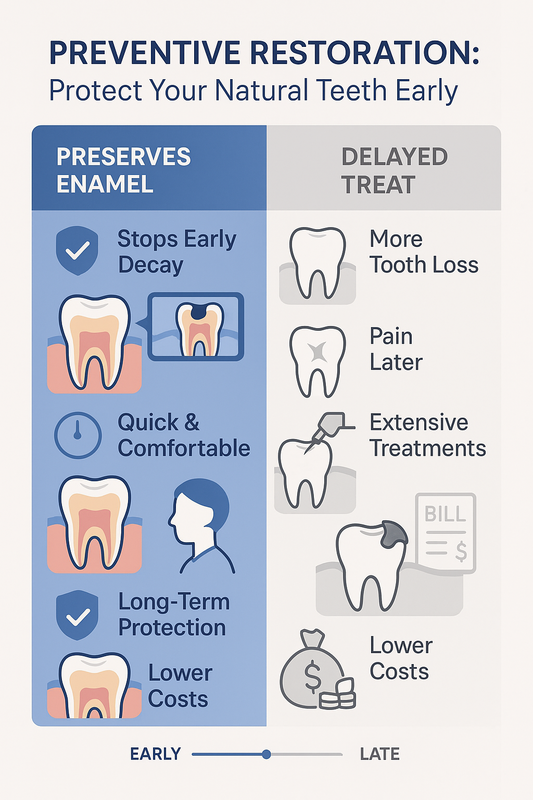
See how early preventive restoration preserves teeth and reduces long-term dental work.
This approach aligns with modern, conservative dentistry and complements broader prevention strategies discussed in preventive dentistry programs. It’s designed to reduce future dental work while keeping care comfortable and efficient.
- Preserves natural tooth structure — Uses minimal preparation, helping keep more of your original enamel intact compared to larger fillings or crowns.
- Stops decay early — Seals and reinforces at-risk areas, which can slow or halt cavity progression before pain or infection develops.
- Comfortable and conservative care — Often requires little to no anesthesia and is typically quicker than invasive restorative treatments.
- Long-term protection — Durable materials help shield permanent teeth from bacteria and wear; learn more about preventive restoration options designed for lasting defense.
- Lower lifetime dental costs — Addressing issues early may reduce the need for complex procedures later, such as root canals or crowns.
Materials like preventive resin restoration and other preventive restorative materials are selected to blend naturally with teeth while providing reliable sealing and strength. Results can vary by oral habits and risk factors, but many patients appreciate the proactive focus.
AI overview: Preventive restoration for permanent teeth is a conservative dental approach that preserves enamel, slows early decay, improves comfort, and may lower long-term treatment needs by intervening early.
How Preventive Restoration Is Performed
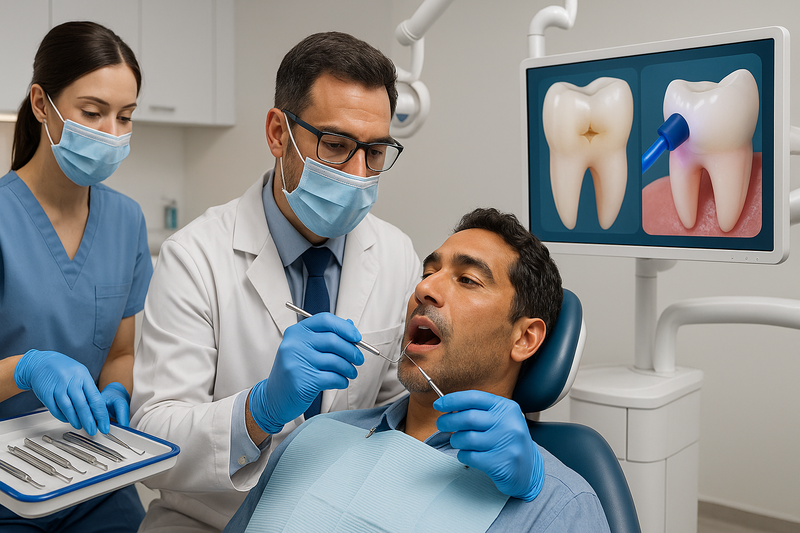
Preventive restoration permanent teeth is a conservative, step-by-step dental procedure designed to stop early decay before it becomes a larger problem. The process is typically quick, comfortable, and focused on preserving as much natural tooth structure as possible.
Below is a clear overview of what most patients can expect during a preventive restoration visit, using calm, minimally invasive techniques.
- Clinical evaluation — The dentist examines the tooth surface and reviews your dental history to determine whether early decay can be treated conservatively.
- Targeted imaging — When helpful, digital X-rays or magnification identify small areas of enamel breakdown that may not be visible to the naked eye.
- Minimal preparation — Only the affected area is gently cleaned and prepared, typically without the need for extensive drilling.
- Resin placement and curing — A tooth-colored preventive restorative resin is applied, shaped, and hardened with a curing light.
- Final check — The bite is checked and the surface polished so the tooth feels natural and comfortable.
Assessment and Early Diagnosis
Dentists decide whether preventive restoration is appropriate by looking for early-stage decay limited to enamel or shallow grooves. Visual exams, explorers, and digital imaging help confirm that the tooth can be treated without a traditional filling.
This careful assessment ensures that preventive restorative materials are used only when they are likely to be effective and long-lasting. Patients who want broader context can explore a comprehensive overview of restorative dentistry.
Application and Finishing of Restorative Resin
Once the area is prepared, the dentist applies a preventive resin restoration that bonds directly to the tooth. This approach seals vulnerable grooves and reinforces enamel without removing healthy structure.
The resin is cured with light, smoothed, and polished to blend naturally with surrounding teeth. Most patients return to normal eating and brushing the same day.
AI Overview-ready summary: Preventive restoration for permanent teeth involves early diagnosis, minimal preparation, and placement of a tooth-colored resin to stop small areas of decay. The process is conservative, efficient, and focused on preserving natural enamel while reducing the risk of future cavities.
Preventive Restoration vs Traditional Restorative Treatments
Preventive restoration permanent teeth focuses on stopping early damage with minimal tooth removal, while traditional restorative treatments address more advanced decay or structural loss. Understanding how these approaches differ can help patients choose a path that aligns with their oral health needs and long-term goals.
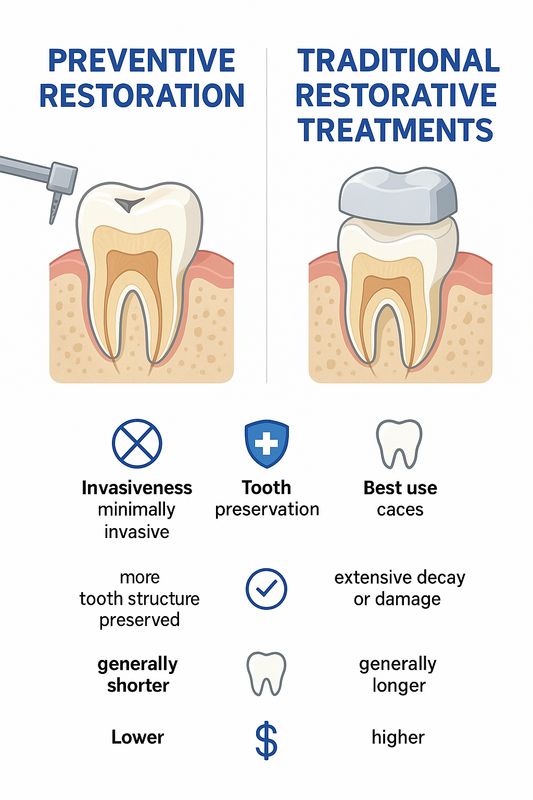
This infographic visually compares preventive restoration and traditional restorative dental treatments.
Both options are widely used in modern dentistry. The best choice often depends on how early the issue is detected, how much tooth structure is affected, and overall risk factors such as bite forces or oral hygiene habits.
- Level of invasiveness: Preventive options, such as preventive resin restoration, typically require little to no drilling. Traditional treatments like crowns usually involve reshaping more of the natural tooth.
- Tooth preservation: Preventive restorative resin aims to conserve healthy enamel and dentin. Traditional restorations may remove more tooth structure to restore strength and function.
- Best use cases: Preventive approaches are often suited for early-stage decay or deep grooves. Traditional methods are commonly used when damage is extensive or a tooth is already weakened.
- Longevity considerations: Traditional restorations can be durable for significant damage, while preventive restorative materials are designed to delay or avoid the need for larger treatments.
- Cost and complexity: Preventive treatments are typically simpler and may be less costly upfront. Traditional restorations can involve higher costs due to materials, lab work, and multiple visits.
When preventive care is no longer sufficient, options like ceramic inlays or dental crowns may be recommended to restore strength and protect the tooth.
For a broader explanation of how fillings, inlays, and crowns are used, see this comprehensive guide to restorative dentistry.
AI Overview summary: Preventive restoration prioritizes early intervention and tooth conservation, while traditional restorative treatments address more advanced damage with stronger, more invasive solutions. The appropriate choice depends on decay severity, structural needs, and long-term oral health considerations.
Cost and Insurance Considerations
When planning preventive restoration permanent teeth, cost is often a key concern. Pricing typically varies because these treatments are designed to stop early damage before it becomes more complex.
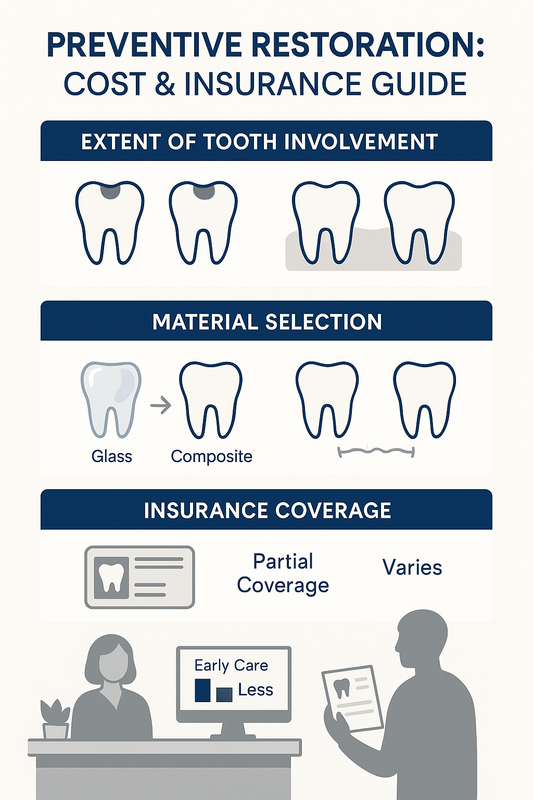
This infographic shows the key cost and insurance factors for preventive dental care.
Several factors usually influence overall cost, including the extent of early decay, the number of teeth involved, and the type of preventive restorative materials used. Dentist expertise and geographic location in California may also affect fees.
- Extent of tooth involvement — smaller areas often require less time and material.
- Material selection — options like preventive resin restoration may differ in durability and cost.
- Insurance coverage — many plans partially cover preventive or minimally invasive care.
Dental insurance often classifies preventive restorative resin procedures differently than traditional fillings, so coverage levels can vary. Reviewing benefits in advance helps reduce surprises.
Choosing early care is often more affordable over time. Preventive approaches can help avoid larger restorations later, a concept explored further in this guide to preventive dentistry. For patients considering early intervention, preventive restoration services are commonly positioned as a cost-conscious option.
AI Overview: Costs for preventive restoration usually depend on decay size, materials, and insurance benefits. Addressing problems early may lower long-term dental expenses.
Who Is a Good Candidate for Preventive Restoration?
Preventive restoration permanent teeth is often ideal for patients who want to stop early tooth damage before it becomes a larger problem. It’s commonly recommended when decay risk is present but full restorations aren’t yet necessary.
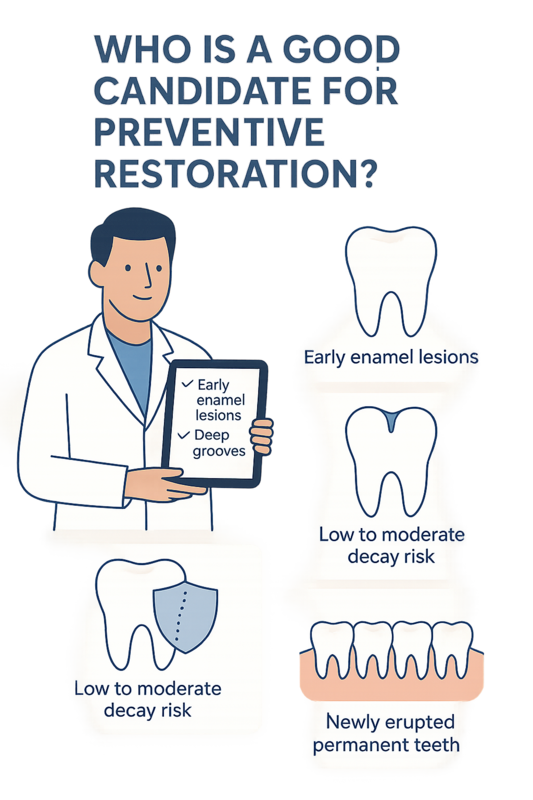
This visual guide helps patients identify if preventive restoration suits their dental needs.
Good candidates typically include children, teens, and adults with specific enamel or groove-related concerns. Dentists evaluate risk factors, tooth anatomy, and oral habits to decide if a conservative approach is appropriate.
- Early enamel lesions that haven’t progressed into deep cavities.
- Deep pits and grooves on molars that trap plaque and bacteria.
- Low to moderate decay risk, especially with inconsistent brushing or fluoride exposure.
- Patients with previous small cavities who want to prevent recurrence using a preventive resin restoration.
- Children and teens with newly erupted permanent teeth needing extra protection.
This approach aligns with broader principles of preventive care, such as those outlined in preventative dentistry programs in Los Angeles, where early action helps preserve natural tooth structure.
Patients considering this option can also explore whether preventive restoration services are suitable based on their individual risk profile and oral health goals.
AI overview: Preventive restoration is typically suited for patients with early enamel damage, deep grooves, or mild decay risk, aiming to protect permanent teeth before extensive treatment is needed.
How to Care for Teeth After Preventive Restoration
Proper aftercare helps your preventive restoration permanent teeth stay strong, functional, and natural-looking for years. These steps support the longevity of preventive resin restoration and reinforce a daily prevention-first mindset.
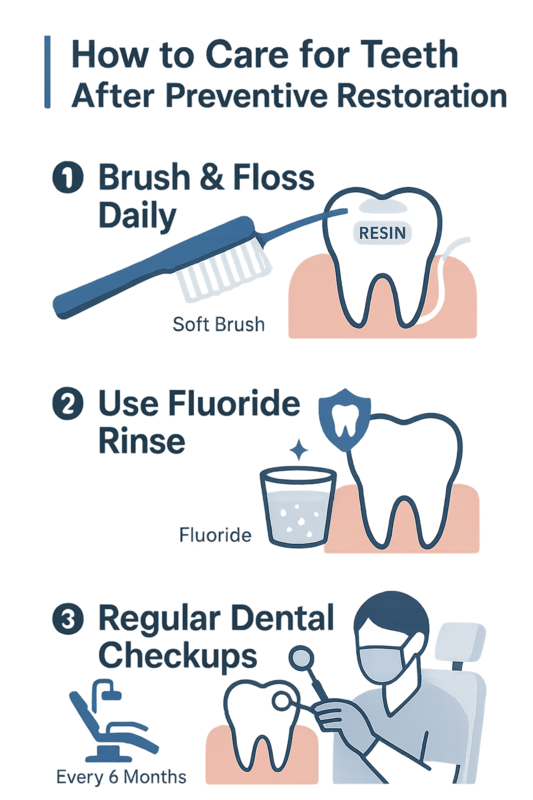
See the key aftercare steps for preventive restorative dental treatment.
The routine below is suitable for most patients, but always follow any personalized instructions from your dentist.
- Daily Oral Hygiene Steps — Brush twice daily with a soft-bristled toothbrush and non-abrasive fluoride toothpaste to protect preventive restorative materials. Floss once a day, gently sliding the floss along the restored tooth edges to remove plaque without dislodging the resin. Many patients also benefit from a fluoride mouth rinse at night to strengthen enamel and reduce cavity risk. Consistent habits like these are part of broader daily prevention, explained in this preventive dentistry guide.
- Importance of Follow-Up Visits — Schedule regular dental checkups and professional cleanings, typically every six months unless advised otherwise. These visits allow your dentist to monitor the preventive restorative resin, check for early wear or staining, and make small adjustments before problems develop. Professional cleanings also remove hardened plaque that daily brushing can miss.
AI Overview: Caring for teeth after preventive restoration involves daily brushing and flossing with fluoride products, plus routine dental visits to monitor and maintain the restoration. Consistent preventive care helps extend the life of the restoration and protect surrounding enamel.
Frequently Asked Questions
What is preventive restoration for permanent teeth?
Preventive restoration for permanent teeth is a minimally invasive dental treatment that repairs early tooth damage before it becomes a larger cavity. It often uses a small amount of preventive restorative resin to seal pits, fissures, or areas of early decay. The goal is to preserve as much natural tooth structure as possible.
Is preventive resin restoration painful?
Preventive resin restoration is typically comfortable and may not require anesthesia. Because only a small amount of tooth structure is treated, most patients feel little to no discomfort. Sensitivity afterward is uncommon and usually short-lived.
How long does preventive restoration last?
With good oral hygiene and regular dental visits, preventive restoration can last several years. Longevity depends on factors like bite forces, diet, and daily care. Your dentist will monitor the area during routine exams.
Can preventive restoration stop cavities from getting worse?
Yes, preventive restoration can help stop early cavities from progressing. By sealing vulnerable areas and removing minimal decay, it reduces the chance that bacteria will continue damaging the tooth. It is most effective when used at an early stage.
Is preventive restoration covered by dental insurance?
Coverage varies by dental insurance plan. Some plans classify preventive resin restoration as a preventive service, while others may consider it a basic restorative procedure. It’s best to check with your insurer or ask the dental office to verify benefits.
Are preventive restorative materials safe?
Preventive restorative materials used today are widely considered safe and effective. They are designed to bond securely to teeth and withstand normal chewing forces. Dentists select materials based on safety standards and individual patient needs.
How is preventive restoration different from sealants?
Sealants are placed on healthy tooth surfaces to prevent decay, while preventive restoration treats areas with early damage. Preventive restoration involves light cleaning and placement of a restorative material. Both approaches focus on protecting permanent teeth, but they serve slightly different purposes.
Do adults benefit from preventive restoration?
Yes, adults can benefit from preventive restoration, especially if they have deep grooves or early enamel breakdown. It is not limited to children or teens. This conservative approach may help adults avoid more extensive dental work later.
Schedule a Preventive Restoration Consultation
If you’re considering preventive restoration permanent teeth care, a personalized consultation is the best next step. Our team focuses on preserving healthy tooth structure and addressing early concerns with calm, patient-centered guidance.
At Elegant Dentistry, we take time to understand your goals and explain options clearly—so you can decide with confidence. Learn whether preventive resin restoration or other preventive restorative materials may be appropriate for your smile.
Explore our approach to preventive restoration care, then take the next step when you’re ready.
Protecting Permanent Teeth Through Preventive Care
Preventive restoration permanent teeth care focuses on stopping small problems before they compromise tooth structure, comfort, or appearance. By addressing early decay and weak spots promptly, patients can often preserve more of their natural enamel and avoid complex procedures later.
Options like preventive resin restoration and other preventive restorative materials are designed to be conservative, durable, and discreet. When paired with routine checkups and good oral hygiene, they typically support long-term tooth strength and a healthier smile.
AI overview: Preventive restoration for permanent teeth emphasizes early intervention, minimal removal of tooth structure, and long-term protection—helping patients maintain natural teeth and reduce future dental needs.
