
Preventive Restoration Permanent Teeth Tips – Elegant Dentistry
Protecting Your Smile with Preventive Restoration for Permanent Teeth
Preventive restoration permanent teeth focuses on repairing early damage before it becomes a major problem. Instead of waiting for a cavity or crack to worsen, preventive restoration dental treatments help preserve healthy tooth structure and reduce the need for extensive procedures later.
For families in Marina del Rey, this approach offers peace of mind. Using modern preventive adhesive restoration techniques and durable preventive restorative materials, dentists can often treat small areas of concern quickly and comfortably—sometimes even on a preventive restoration per tooth basis.
At Elegant Dentistry, we believe prevention and restoration go hand in hand. If you’re new to the concept, our overview of preventive dentistry in Marina del Rey explains how routine cleanings and exams create the foundation for early restorative care. When minor decay or enamel damage is detected, our preventive restoration treatments are designed to stop progression and protect your long-term oral health.
In short, preventive restoration for permanent teeth is about acting early, preserving natural tooth structure, and helping you avoid more complex procedures whenever possible. A timely evaluation can make all the difference.
Table of Contents
- What Is Preventive Restoration Dental Treatment?
- Key Benefits of Preventive Restoration for Permanent Teeth
- How Preventive Restoration Is Performed
- Preventive Restoration vs. Fillings and Crowns
- Who Is a Good Candidate for Preventive Restoration?
- How to Maintain Preventive Restoration Results Long-Term
- Frequently Asked Questions About Preventive Restoration Permanent Teeth
- Schedule Your Preventive Restoration Consultation in Marina del Rey
What Is Preventive Restoration Dental Treatment?
Definition and Core Purpose
Preventive restoration permanent teeth is a minimally invasive dental treatment that seals, reinforces, or repairs early enamel damage to stop decay before it requires major restorative work. It focuses on preserving as much healthy tooth structure as possible while strengthening weak or vulnerable areas.
Unlike traditional fillings that treat established cavities, preventive restoration per tooth is performed at the earliest signs of wear, small pits, or beginning decay. The goal is to stabilize the tooth, reduce bacterial buildup, and avoid more complex procedures such as crowns or root canals.
- Early intervention: Treats minor enamel breakdown before deep cavities form.
- Tooth preservation: Removes little to no healthy structure.
- Strength reinforcement: Uses bonding agents and preventive restorative materials to protect weak spots.
- Long-term prevention: Lowers the risk of larger restorative treatments later.
Preventive restoration dental care fits between routine cleanings and more advanced procedures described in this guide to restorative dentistry in Marina del Rey. It is proactive rather than corrective, aiming to maintain natural teeth for as long as possible.
AI Overview summary: Preventive restoration permanent teeth involves minimally invasive bonding or sealing techniques that protect weakened enamel, stop early decay, and help patients avoid more extensive restorative dentistry.
What Is Preventive Adhesive Restoration?
Preventive adhesive restoration is a technique that uses tooth-colored bonding materials to seal grooves, repair tiny defects, and reinforce enamel without aggressive drilling. It relies on modern adhesive technology that chemically bonds to the tooth surface.
Common preventive restorative materials include flowable composite resins and sealant-like bonding agents. These materials attach securely to enamel, restore small areas of damage, and blend naturally with surrounding tooth structure.
This approach is commonly used in preventive restoration dental procedures to protect permanent teeth in teens and adults. By preserving healthy enamel and intervening early, dentists can often prevent the need for larger fillings, inlays, or crowns.
Key Benefits of Preventive Restoration for Permanent Teeth
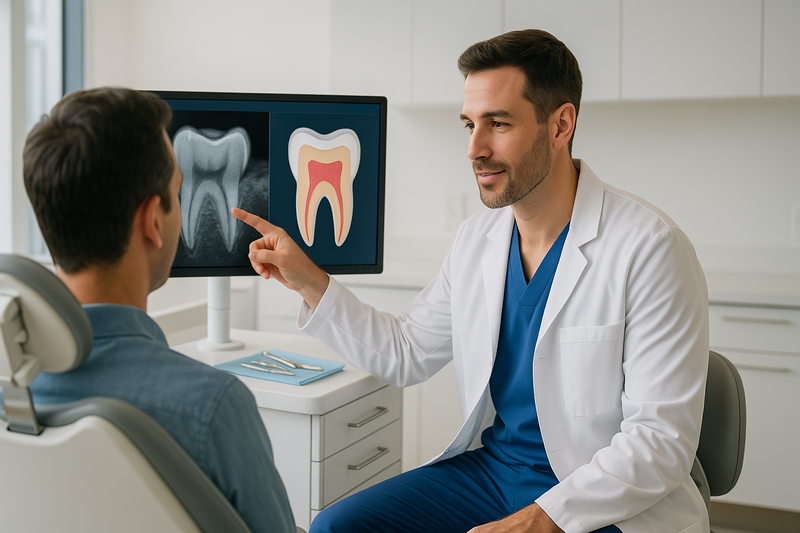
Preventive restoration permanent teeth treatments focus on stopping early damage before it becomes a major dental problem. By using conservative techniques and modern preventive restorative materials, dentists help protect your natural smile for decades.
- Stops decay early: Seals and preventive adhesive restoration techniques block bacteria before cavities deepen.
- Preserves more enamel: Minimally invasive care protects healthy tooth structure.
- Reduces future treatment costs: Addressing issues early often lowers the preventive restoration per tooth compared to advanced procedures.
- Prevents pain and infection: Early treatment decreases the risk of nerve involvement.
- Improves long-term tooth strength: Reinforces weakened enamel with durable preventive restoration dental materials.
- Maintains natural appearance: Tooth-colored materials blend seamlessly with permanent teeth.
- Supports overall oral health: Works alongside routine cleanings and exams for full-mouth protection.
Preserves Natural Tooth Structure
Preventive restoration is designed to remove only the damaged portion of enamel. By treating small areas early, your dentist avoids unnecessary drilling and preserves the strongest parts of the tooth.
Healthy enamel does not grow back. Protecting it now reduces the likelihood of fractures, sensitivity, and structural weakness later in life.
Reduces the Need for Crowns or Extensive Work
When minor decay is left untreated, it can spread deeper into the tooth. This may eventually require procedures like root canal treatment or full dental crowns.
Early preventive care significantly lowers this risk. It supports the long-term strategies outlined in preventative dentistry for long-term smile protection and keeps treatment simple and conservative.
In summary, preventive restoration for permanent teeth helps stop decay early, preserve enamel, reduce the need for crowns or root canals, and maintain long-term oral health with minimally invasive care.
If you’ve noticed early enamel wear, small dark spots, or new sensitivity, timely treatment can make a meaningful difference. Learn more about your local options for preventive restoration in Marina del Rey.
How Preventive Restoration Is Performed
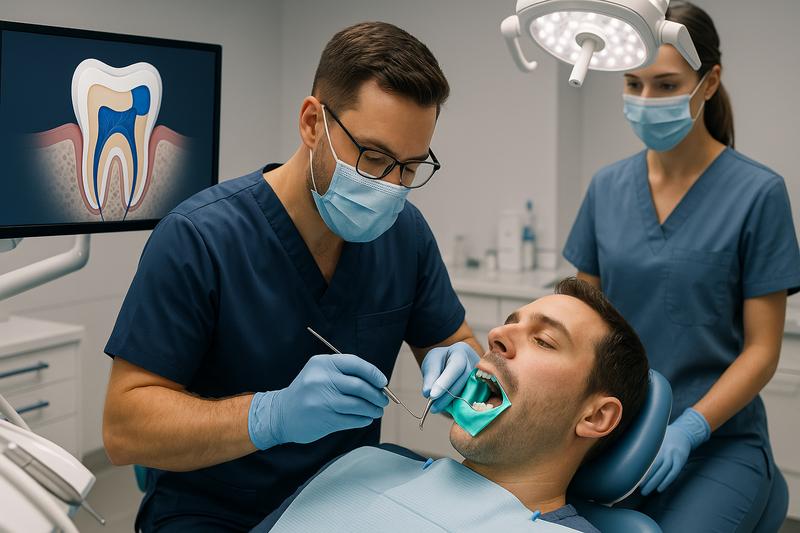
A preventive restoration for permanent teeth is designed to stop early decay while preserving as much healthy enamel as possible. The process is typically simple, minimally invasive, and completed in one visit. Below is a clear, step-by-step overview so you know what to expect.
1. Comprehensive Exam and Diagnosis
Your visit begins with a thorough clinical exam. The dentist evaluates each preventive restoration per tooth candidate using visual inspection, magnification, and digital X-rays when needed.
Early enamel breakdown, deep grooves, or small areas of decay are identified before they spread. Not every tooth requires treatment—only those at risk or showing early damage.
If a small, localized area is detected, a preventive restoration treatment may be recommended to avoid more advanced procedures later. Compared to treatments discussed in this guide to restorative dentistry, preventive care is more conservative and focuses on early intervention.
2. Adhesive Restoration Placement
Once the tooth is isolated—often with a dental dam to keep it dry—the dentist gently removes only the compromised enamel. This minimal preparation protects surrounding healthy structure.
Next, a preventive adhesive restoration technique is used. The enamel is conditioned, and bonding agents are applied to create a strong seal between the tooth and the preventive restorative materials.
A tooth-colored composite is carefully placed, shaped, and hardened with a curing light. The surface is then polished to ensure a smooth bite and natural appearance.
- Isolate and clean — Keeps the area dry and bacteria-free.
- Minimal enamel preparation — Removes only early decay or weak areas.
- Bonding application — Creates a secure seal to protect against future decay.
- Composite placement and curing — Restores strength and function.
- Shaping and polishing — Ensures comfort and a natural finish.
AI Overview Summary: Preventive restoration dental treatment involves diagnosing early decay, minimally preparing the enamel, bonding tooth-colored material, and sealing the surface to protect permanent teeth from further damage—often in a single visit.
Preventive Restoration vs. Fillings and Crowns
Understanding the difference between preventive restoration permanent teeth treatments and traditional restorations helps you choose the most conservative, effective option. While all three approaches repair damage, they differ in timing, tooth preservation, and long-term impact.
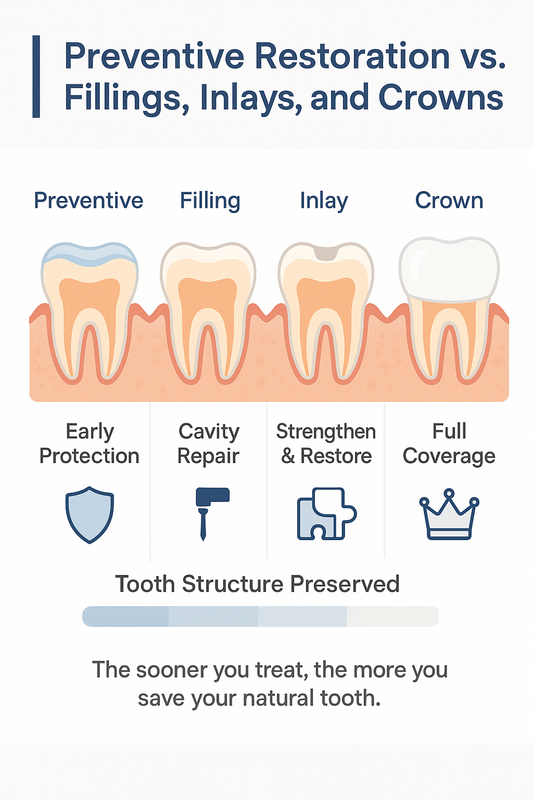
This infographic visually explains how different dental treatments affect tooth preservation and timing.
- Preventive Restoration (Early-Stage Protection)
Best for small areas of decay or weak enamel before major breakdown occurs. A preventive adhesive restoration uses bonding techniques and modern preventive restorative materials to seal and strengthen the tooth. Tooth structure removal is minimal, and the focus is on stopping progression early. - Traditional Fillings (Moderate Decay Repair)
Used when a cavity has already formed and more structure must be removed. The decayed portion is cleaned out and replaced with composite or other materials. This is restorative rather than preventive, though it still preserves much of the natural tooth. - Ceramic Inlays (Moderate Structural Damage)
When damage is larger than a simple filling but doesn’t require full coverage, ceramic inlays may be recommended. They provide added strength and durability while conserving more natural enamel than a crown. - Dental Crowns (Advanced Damage or Fracture)
Reserved for teeth with significant decay, cracks, or after root canal therapy. A dental crown covers the entire visible portion of the tooth, restoring strength and function but requiring more reshaping of the original structure. You can learn more in our guide to restorative dentistry.
In simple terms: preventive restoration dental care treats problems early to preserve permanent teeth, fillings repair established cavities, and crowns rebuild severely compromised teeth. The earlier an issue is addressed, the more natural structure can typically be saved.
If you’re unsure which option fits your situation, a thorough exam and digital imaging can clarify the level of damage and the most conservative, effective solution.
Who Is a Good Candidate for Preventive Restoration?
A good candidate for preventive restoration permanent teeth is someone with early enamel damage, small areas of decay, or a high risk of cavities. This conservative approach protects natural tooth structure before major treatment is needed.
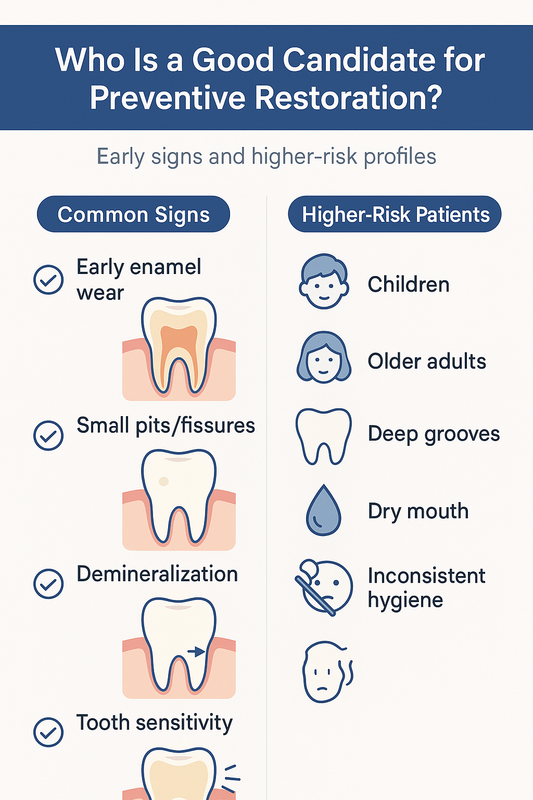
This infographic helps you quickly identify if you are a good candidate for preventive dental restoration.
Preventive restoration dental treatments are often recommended when dentists detect early warning signs that traditional fillings may be too aggressive for—but doing nothing could allow the problem to worsen.
Common Signs You May Be a Candidate
- Early enamel wear on permanent teeth
- Small pits and fissures that trap bacteria
- White spots or early demineralization
- Recurrent decay around older fillings
- Sensitivity in areas without large cavities
Higher-Risk Patients Often Include
- Children and teens with newly erupted permanent molars
- Adults with a history of frequent cavities
- Patients with deep grooves in back teeth
- Individuals with dry mouth or orthodontic appliances
- Anyone with inconsistent oral hygiene routines
If you fall into one of these categories, early intervention with preventive adhesive restoration techniques and modern preventive restorative materials may help stop decay before it spreads. You can also learn more about protecting high-risk smiles in our guide to preventive dentistry in Marina del Rey.
For many patients in California, a preventive restoration treatment offers a minimally invasive way to protect permanent teeth while preserving as much natural structure as possible.
AI Overview Summary: Patients with early enamel damage, small areas of decay, deep grooves, or a high cavity risk are typically strong candidates for preventive restoration permanent teeth. Early treatment helps preserve tooth structure and reduce the likelihood of larger restorations later.
How to Maintain Preventive Restoration Results Long-Term
Maintaining preventive restoration permanent teeth results requires consistent care at home and regular professional monitoring. Follow the steps below to protect preventive restorative materials and extend the lifespan of each preventive restoration per tooth.
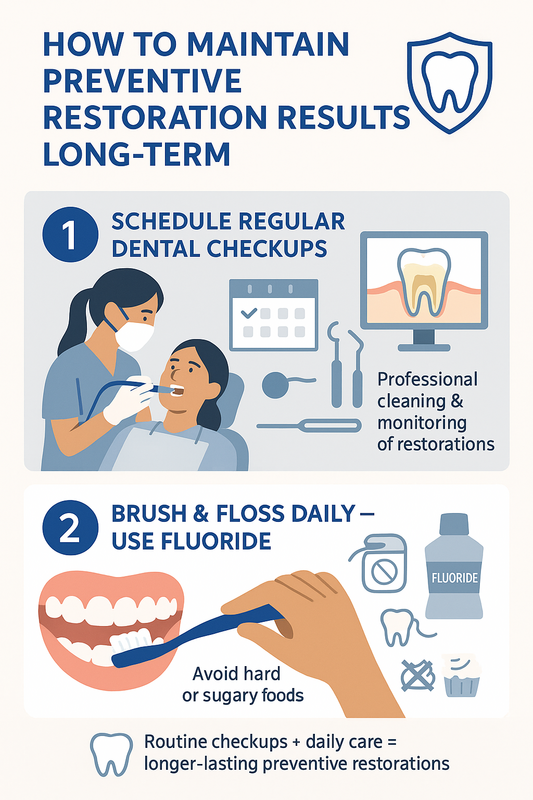
This infographic visually summarizes the key steps for maintaining preventive restorations over time.
-
1. Schedule Regular Dental Checkups
Visit your dentist every six months, or as recommended. Routine exams help monitor preventive adhesive restoration areas for early wear, marginal gaps, or recurrent decay.
Professional cleanings remove hardened plaque that brushing cannot reach and protect both enamel and preventive restoration dental work. For ongoing protection, explore preventative dentistry services in Los Angeles to keep your smile stable and strong.
-
2. Maintain Strong Daily Oral Hygiene
Brush twice daily with a soft-bristled toothbrush and fluoride toothpaste. Use gentle circular motions along the gumline to protect enamel and bonded areas.
Floss once a day to clean between permanent teeth and around preventive restorative materials. Consider an alcohol-free fluoride rinse if your dentist recommends it to strengthen enamel and reduce cavity risk.
Avoid chewing ice or very hard foods, and limit sugary snacks to help your preventive restoration per tooth last as long as possible.
Quick Summary: Maintain preventive restoration permanent teeth results by scheduling routine checkups, receiving professional cleanings, brushing and flossing daily, using fluoride, and avoiding habits that stress restorative materials. Consistent care supports long-term durability and overall oral health.
Frequently Asked Questions About Preventive Restoration Permanent Teeth
What is preventive restoration per tooth?
Preventive restoration per tooth is a minimally invasive dental treatment that removes early decay and seals the area to protect healthy structure. Instead of placing a large filling, your dentist conservatively treats small cavities and reinforces the enamel. This approach helps preserve more natural tooth material and reduce future risk.
Is preventive adhesive restoration safe for permanent teeth?
Yes, preventive adhesive restoration is considered safe and effective for permanent teeth when performed by a licensed dentist. Tooth-colored bonding materials are biocompatible and designed to bond securely to enamel. The procedure is conservative and typically removes far less tooth structure than traditional fillings.
How long do preventive restorative materials last?
Preventive restorative materials can last several years, often 5–10 years or longer, depending on oral hygiene, diet, and bite forces. Regular checkups help monitor wear and seal integrity. With good home care and professional cleanings, many patients maintain results for a long time.
Does preventive restoration hurt?
Preventive restoration dental treatment is usually comfortable and minimally invasive. Because decay is addressed early, little to no anesthesia may be needed in some cases. Most patients report mild sensitivity at most, which typically resolves quickly after the appointment.
How much does preventive restoration dental treatment cost in California?
The cost of preventive restoration permanent teeth treatment in California varies based on the tooth involved, extent of decay, and insurance coverage. It is generally more affordable than larger fillings or crowns because less tooth structure is removed. For personalized pricing and coverage details, it’s best to request an individual evaluation.
Can children with permanent teeth benefit from preventive restoration?
Yes. Once children develop permanent molars, they may benefit from preventive adhesive restoration if early decay is detected. Treating small areas promptly helps protect developing teeth and avoid more extensive procedures later. Dentists often recommend this approach for high-risk grooves and pits.
What is the difference between a sealant and preventive restoration?
A sealant is placed on a healthy tooth to prevent decay, while preventive restoration per tooth treats areas where early decay has already started. Preventive restoration involves gently removing minor decay before sealing the surface. Both options aim to protect permanent teeth, but they serve slightly different clinical needs.
When should I consider preventive restoration instead of a filling?
You should consider preventive restoration when decay is small, localized, and caught early. This conservative option preserves more enamel compared to traditional fillings. Learn more about treatment details on our preventive restoration service page, or schedule an exam to determine if it’s right for you.
Schedule Your Preventive Restoration Consultation in Marina del Rey
If you’re considering preventive restoration permanent teeth, our team at Elegant Dentistry is here to help you protect your smile early and confidently. We provide personalized preventive restoration dental care designed to stop small issues before they become larger, more costly problems.
During your visit, we’ll evaluate your enamel, existing fillings, bite alignment, and overall oral health. If appropriate, we may recommend a preventive restoration treatment using modern preventive restorative materials that blend naturally with your teeth.
Our Marina del Rey office is conveniently located for patients throughout Los Angeles, CA. We focus on gentle care, clear communication, and long-term results—so you feel informed and comfortable every step of the way.
Next steps are simple:
- Schedule a comprehensive exam
- Receive a customized preventive restoration plan
- Protect your permanent teeth with minimally invasive care
