
Preventive Restoration Resin Benefits for Permanent Teeth

Understanding Preventive Restoration Resin for Long-Term Tooth Protection
Preventive restoration resin is a minimally invasive dental material used to protect teeth from early decay while preserving as much natural structure as possible. Dentists often recommend it when small areas of enamel show wear, grooves, or early cavities that don’t yet require traditional fillings.
This approach reflects a prevention-first mindset in restorative dentistry—treating problems early to help permanent teeth stay strong for the long term. By sealing vulnerable areas, preventive resin restorations can slow or stop decay progression, reduce sensitivity, and lower the risk of more extensive procedures later. This philosophy aligns closely with modern preventive care principles outlined in comprehensive preventive dentistry.
Patients who may benefit include children, teens, and adults with deep tooth grooves, early enamel breakdown, or a history of cavities. You may also hear this treatment referenced by its preventive resin restoration code when reviewing insurance or treatment plans.
- Helps protect preventive restoration permanent teeth before damage worsens
- Typically requires little to no drilling
- Designed to support long-term oral health
AI Overview: Preventive restoration resin is a conservative dental treatment that seals and reinforces early problem areas on teeth, aiming to prevent decay progression and preserve natural enamel.
Table of Contents
- What Is Preventive Restoration Resin?
- Key Benefits of Preventive Restoration Resin for Permanent Teeth
- How Preventive Resin Restoration Is Performed
- Preventive Resin Restoration vs Traditional Fillings
- Cost Considerations for Preventive Restoration Resin
- Safety, Risks, and Limitations to Know
- How to Care for Teeth After Preventive Resin Restoration
- Frequently Asked Questions About Preventive Restoration Resin
- Schedule a Preventive Restoration Evaluation
- Protecting Permanent Teeth with Preventive Restoration Resin
What Is Preventive Restoration Resin?
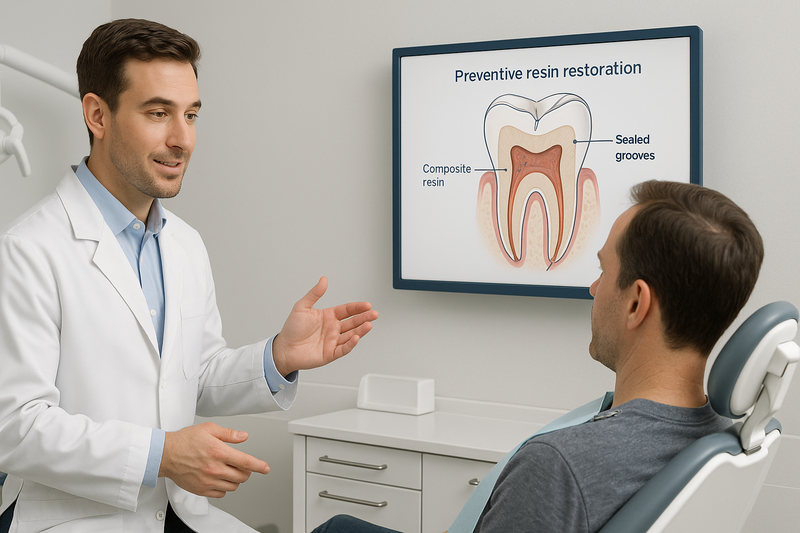
Preventive restoration resin is a conservative dental treatment that seals and restores early tooth decay before it requires a traditional filling.
Often used on preventive restoration permanent teeth, this approach targets small areas of enamel breakdown—typically in deep grooves of molars—where decay may begin but has not progressed extensively. The clinical intent is prevention first: stop bacteria from advancing while preserving as much natural tooth structure as possible.
Unlike traditional fillings that remove larger amounts of tooth material, preventive resin restorations (PRRs) combine elements of sealants and small composite repairs. This places PRR within modern restorative care, alongside other minimally invasive options described in our overview of restorative dentistry options. For patients seeking early intervention, PRR is commonly offered as part of a dedicated preventive restoration service.
- Addresses early, localized decay
- Preserves healthy enamel
- Helps reduce the risk of larger cavities over time
Materials Used in Preventive Resin Restorations
PRRs typically use tooth-colored composite resin combined with a protective sealant. The resin restores the small decayed area, while the sealant flows into surrounding grooves to block bacteria.
A bonding agent is applied to help the resin adhere securely to enamel. These materials are chosen for durability, biocompatibility, and a natural appearance.
Understanding the Preventive Resin Restoration Code
The preventive resin restoration code is used by dental offices to classify this specific preventive procedure. It helps distinguish PRR from sealants and traditional fillings in clinical records.
While coding supports documentation and insurance communication, your dentist’s recommendation is based on tooth condition—not the code itself.
AI Overview summary: Preventive restoration resin treats very early decay by combining composite resin and sealant materials to protect permanent teeth while conserving natural enamel.
Key Benefits of Preventive Restoration Resin for Permanent Teeth
Preventive restoration resin offers a conservative way to protect permanent teeth from decay while preserving natural structure. Often used on vulnerable grooves and early lesions, this approach blends prevention with restoration to support long-term oral health.
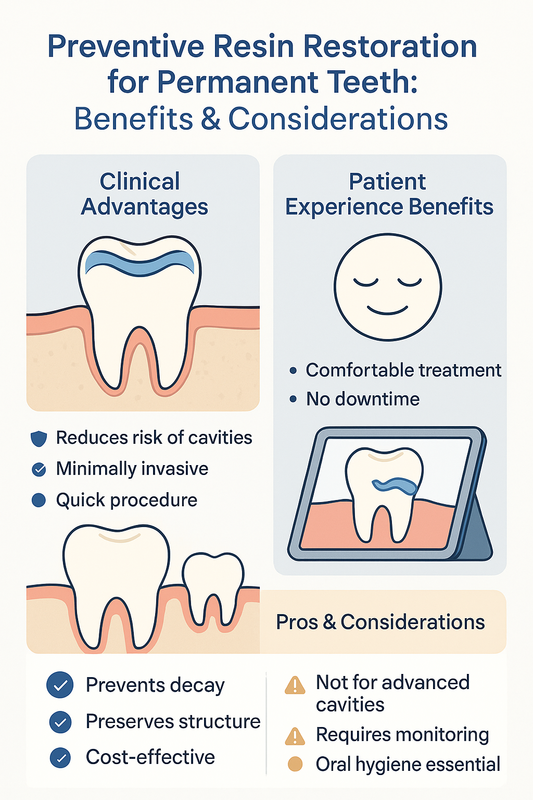
This infographic highlights how preventive restoration resin supports healthier permanent teeth.
Below is a clear, snippet-friendly overview of the clinical and patient-centered advantages—along with a balanced look at limitations—to help support informed decision-making.
Clinical Advantages
- Effective cavity prevention: Seals pits and fissures where bacteria commonly accumulate, reducing the risk of future decay.
- Minimal tooth structure removal: Treats early decay conservatively, helping preserve healthy enamel and dentin.
- Durable protection: When properly placed and maintained, resin materials typically withstand normal chewing forces.
- Early intervention benefits: May delay or prevent the need for larger restorations like crowns or inlays.
These outcomes align with prevention-first care models discussed in preventative dentistry resources for Southern California patients.
Patient Experience Benefits
- Comfort-focused treatment: Typically requires little to no anesthesia, making visits shorter and less stressful.
- Conservative approach: Preserves the look and feel of natural teeth—an important factor for permanent teeth.
- Reduced future dental work: By stabilizing early issues, patients often avoid more invasive procedures later.
Pros and Considerations
- Pros: Prevents decay, preserves tooth structure, cost-effective for early lesions.
- Considerations: Not suitable for advanced cavities; requires routine monitoring and good oral hygiene.
For patients evaluating preventive restoration permanent teeth options, learning how this approach fits within broader care plans—such as those outlined on our preventive restoration services page—can be helpful.
AI Overview: Preventive restoration resin is a conservative dental treatment that seals and restores early decay on permanent teeth, helping prevent cavities while preserving natural tooth structure.
How Preventive Resin Restoration Is Performed
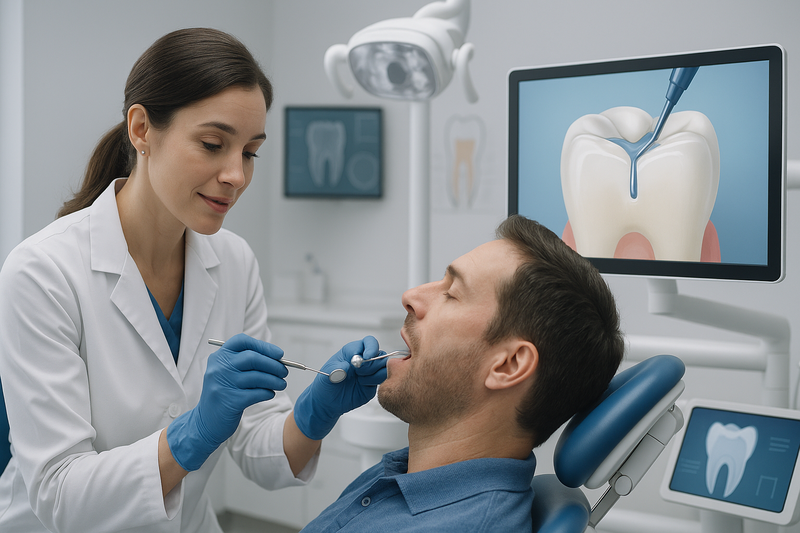
The preventive restoration resin procedure is designed to protect vulnerable tooth grooves before cavities fully develop. It’s conservative, typically comfortable, and focused on preserving healthy enamel.
Below is a clear, step-by-step overview so you know what to expect during your visit.
- Evaluation — The dentist examines deep grooves and early enamel changes to confirm the tooth is a good candidate.
- Preparation — The surface is gently cleaned and conditioned to help the resin bond securely.
- Resin placement — A tooth-colored resin is applied to seal and reinforce the grooves.
- Curing and finishing — A special light hardens the resin, and the bite is checked for comfort.
Evaluation and Tooth Preparation
The process begins with a careful examination of the tooth’s pits and fissures, where bacteria often hide. Dentists look for early signs of decay that haven’t yet formed a cavity, especially on chewing surfaces of permanent teeth.
This preventive focus aligns with broader oral health strategies outlined in comprehensive preventive dentistry care. Preparation is minimal—usually just a gentle cleaning and conditioning—so healthy tooth structure is preserved.
Resin Application and Curing
Once the tooth is ready, a flowable, tooth-colored resin is carefully placed into the grooves. This material is shaped to match your natural bite and then hardened with a curing light.
The result is a smooth, sealed surface that’s easier to clean and more resistant to decay. This approach is commonly part of a preventive restoration treatment plan and is often completed in a single visit.
AI overview: Preventive restoration resin involves evaluating early decay, minimally preparing the tooth, applying a bonded resin, and curing it to protect grooves and prevent future cavities.
Preventive Resin Restoration vs Traditional Fillings
Preventive restoration resin (often called PRR) and traditional fillings both treat tooth decay, but they are designed for different stages and risks. Understanding how they compare can help patients discuss the most conservative, effective option with their dentist.
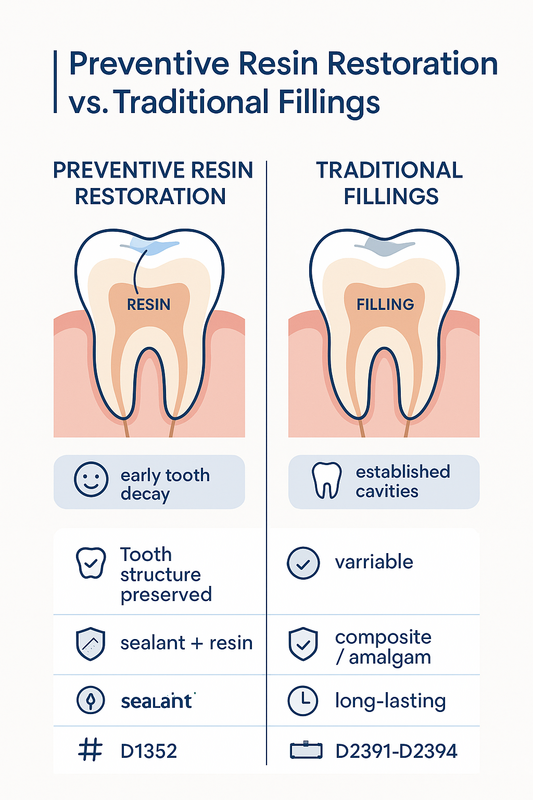
See key differences between PRR and fillings at a glance to aid your dental decisions.
- Best use case: PRR is typically used for early, small areas of decay in pits and fissures, often on preventive restoration permanent teeth. Traditional fillings are used when decay is more established.
- Tooth structure preserved: PRR removes minimal enamel and dentin, while traditional fillings usually require removing more tooth material to fully eliminate decay.
- Materials: PRR combines sealant and composite resin; traditional fillings rely on composite or amalgam alone.
- Longevity expectations: Both can last for years with good care, though outcomes vary based on bite forces, hygiene, and decay risk.
- Insurance coding: PRR may be billed under a specific preventive resin restoration code, which can differ from standard filling codes.
A common misconception is that PRR is simply a “small filling.” In reality, it is a preventive-focused approach intended to stop early decay before it progresses. When decay extends deeper or affects larger surfaces, dentists may recommend other restorative options outlined in this guide to restorative dentistry.
For teeth with significant damage or structural weakness, more extensive treatments such as dental crowns may be considered to restore strength and function.
AI Overview: Preventive resin restoration is a conservative option for early decay, while traditional fillings treat more advanced cavities. The choice depends on decay size, tooth health, and long-term protection needs.
Cost Considerations for Preventive Restoration Resin
The cost of preventive restoration resin typically depends on several clinical and practical factors rather than a single fixed fee. Understanding these elements can help you set realistic expectations before your dental visit.
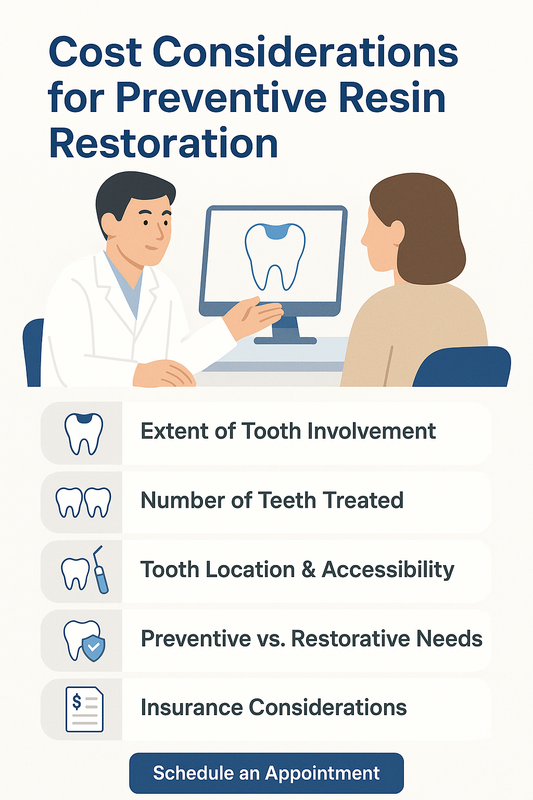
This infographic illustrates the key factors that affect preventive resin restoration costs.
- Extent of tooth involvement — Small, early-stage areas on permanent teeth usually require less time and material than larger or deeper grooves.
- Number of teeth treated — Treating one tooth versus multiple teeth during the same visit can influence overall planning and chair time.
- Tooth location and accessibility — Molars with deep pits and fissures may require more precision, which can affect clinical complexity.
- Preventive vs. restorative needs — Whether the resin is placed purely for prevention or to stop very early decay can impact the approach used.
- Insurance considerations — Coverage may vary based on age, plan details, and how the procedure is classified, such as preventive resin restoration code usage.
Because every smile is different, dentists typically recommend an individualized evaluation. During a consultation, your provider can explain whether preventive restoration treatment is appropriate and how it fits into your long-term oral health plan.
AI Overview: Preventive restoration resin costs are influenced by tooth condition, number of teeth treated, clinical complexity, and insurance factors. Exact costs are determined after a professional dental evaluation.
Safety, Risks, and Limitations to Know
Preventive restoration resin is widely considered safe and conservative, but it does have clear limitations that are important to understand. This treatment is designed to protect early pits and fissures before decay spreads, not to repair advanced damage.
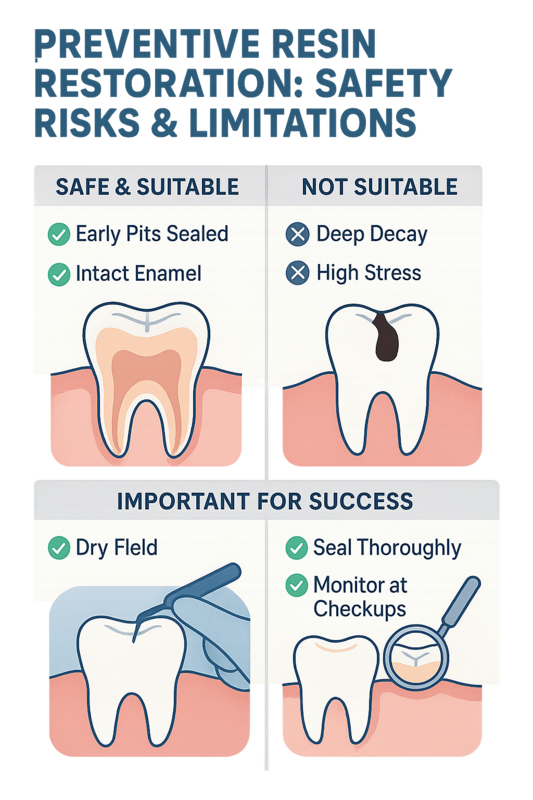
This infographic visually explains which dental situations are safe or risky for preventive resin restoration.
In most patients, the resin material bonds well to enamel and is biocompatible. However, success depends on proper case selection, moisture control, and ongoing oral hygiene. Like any dental material, it may wear over time and typically requires monitoring during routine exams.
- Not suitable for deep decay — If cavities extend into dentin, a traditional filling or restoration may be necessary.
- Limited durability under heavy bite forces — Patients who grind or clench may experience faster wear.
- Technique-sensitive placement — Contamination during placement can reduce longevity.
- Maintenance matters — Regular checkups are essential to ensure the seal remains intact.
When preventive resin restoration is not sufficient, dentists may recommend more durable options such as custom ceramic inlays, which can better restore strength and structure.
AI overview: Preventive restoration resin is a safe, minimally invasive option for early-stage tooth protection, but it is not appropriate for advanced decay or high-stress biting situations.
How to Care for Teeth After Preventive Resin Restoration
Proper aftercare helps a preventive restoration resin last longer and protects the surrounding enamel from future decay. These steps focus on daily habits and professional monitoring that typically support preventive resin restoration on permanent teeth.
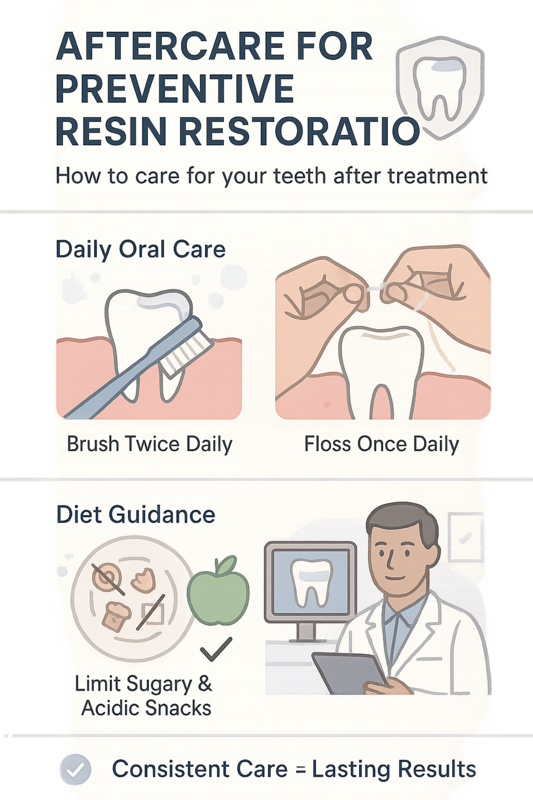
This visual guide covers each step for keeping your preventive resin restoration healthy and lasting longer.
Follow the guidance below to maintain comfort, appearance, and function while reducing the risk of recurrent cavities.
- Daily Oral Care Steps — Brush twice daily with a soft-bristled toothbrush and fluoride toothpaste, angling gently along the gumline. Floss once a day to remove plaque around the restoration margins, and limit frequent snacking on sugary or acidic foods that can weaken enamel. Reinforce these habits as part of a broader approach to preventive dental care.
- Professional Follow-Up Care — Schedule routine dental checkups and cleanings so your dentist can monitor the resin surface and surrounding tooth structure. Regular visits allow early detection of wear, staining, or leakage, which may be addressed before they progress. Your provider may also review your bite and hygiene technique to help the restoration perform as intended.
AI Overview: After a preventive resin restoration, consistent brushing, daily flossing, smart diet choices, and routine dental visits typically help maintain the restoration and lower the chance of future decay.
Frequently Asked Questions About Preventive Restoration Resin
Is preventive restoration resin only for children or also for adults?
Preventive restoration resin is used for both children and adults. While it’s common in pediatric care, many adults with deep grooves or early enamel breakdown can also benefit. Dentists evaluate risk factors like tooth anatomy, cavity history, and oral hygiene to decide.
How long does a preventive resin restoration last on permanent teeth?
On permanent teeth, preventive restoration resin often lasts several years with proper care. Longevity depends on bite forces, oral hygiene, and regular dental checkups. Dentists typically monitor and refresh it if wear or breakdown appears.
Does preventive resin restoration stop cavities from forming?
Preventive resin restoration can significantly reduce the risk of cavities in treated areas, but it does not guarantee complete prevention. It seals vulnerable grooves and treats early decay, making plaque buildup less likely. Good brushing, flossing, and routine exams remain essential.
What is the difference between a sealant and preventive resin restoration?
A sealant is placed on healthy enamel to prevent decay, while preventive restoration resin is used when early decay is already present. PRR removes minimal damaged enamel before sealing the tooth. Both are conservative, but PRR is slightly more restorative.
Is the preventive resin restoration code different from a filling code?
Yes, the preventive resin restoration code is different from a traditional filling code. It reflects that the procedure is minimally invasive and preventive rather than a full restoration. Insurance coverage may vary, so it’s helpful to confirm benefits in advance.
Can preventive resin restoration be repaired or replaced?
Preventive restoration resin can often be repaired or replaced if it wears down or becomes damaged. Because the procedure preserves most of the natural tooth, adjustments are usually straightforward. Regular dental visits help catch issues early.
Are there any risks associated with preventive resin restorations?
Risks are generally low, especially compared to traditional fillings. In some cases, the resin may chip or wear, or decay may progress if oral hygiene is poor. Dentists minimize risks by careful diagnosis and follow-up.
How do I know if my tooth qualifies for preventive resin restoration?
A tooth may qualify if it has deep grooves or very early decay without extensive damage. Dentists assess this through an exam and, when needed, X-rays. If decay is more advanced, a standard filling may be recommended instead.
Schedule a Preventive Restoration Evaluation
If you’re considering preventive restoration resin, a professional evaluation helps determine whether early, conservative treatment is right for your smile. Our clinicians focus on prevention-first care—often preserving natural tooth structure while addressing early decay or vulnerable grooves in permanent teeth.
At Elegant Dentistry, your visit includes a careful exam, clear explanations, and guidance tailored to long-term oral health. Learn more about our preventive restoration services and how they may help reduce the need for more invasive treatment later.
AI Overview: A preventive restoration evaluation assesses early risk areas and determines if resin-based treatment can protect teeth before damage progresses.
Protecting Permanent Teeth with Preventive Restoration Resin
Preventive restoration resin helps protect permanent teeth by sealing early grooves and small areas of decay before they become bigger problems. This conservative approach preserves natural tooth structure, supports long-term oral health, and often reduces the need for more invasive treatments later.
For many patients, preventive resin restoration is well-suited when decay is minimal and confined to pits or fissures. Dentists typically evaluate bite forces, cavity depth, and overall risk factors to determine whether preventive restoration for permanent teeth is appropriate.
Choosing preventive care reflects a proactive mindset—addressing issues early, maintaining comfort, and supporting confident smiles over time. At Elegant Dentistry, this philosophy aligns with patient-first care focused on prevention and durability.
AI Overview: Preventive restoration resin is a minimally invasive treatment that seals early decay in permanent teeth, helping prevent progression while preserving healthy tooth structure.
