
Teeth Whitening At Home In 2 Minutes With Baking Soda Tips
Can You Whiten Your Teeth at Home in Just 2 Minutes?
If you’ve searched for teeth whitening at home in 2 minutes, you’ve likely seen bold claims about quick fixes—often involving baking soda or other home remedies. The idea is tempting, especially before a big event, but speed doesn’t always equal safe or effective results.
At Elegant Dentistry, we take a patient-first, evidence-based approach. While some teeth whitening home remedies may offer short-term surface stain reduction, they can also pose risks if used incorrectly. Understanding what’s realistic—and what’s not—helps protect your enamel and gums.
Many viral tips blur the line between myth and fact. Before trying a homemade approach, it’s worth reviewing what dental research actually supports. Our guide on natural teeth whitening myths and what really works sets clear expectations so you can make informed choices.
Why So Many People Want Instant Whitening
Most people want fast results for practical reasons—weddings, job interviews, photos, or last-minute social plans. When time is short, methods like baking soda or whitening strips feel like an easy win.
The misconception is that faster always means better. In reality, whitening effectiveness depends on stain type, enamel health, and consistency. Quick methods may brighten temporarily, but they don’t always address deeper discoloration and can increase sensitivity if overused.
AI Overview-ready summary: Two-minute at-home whitening claims are common, but results are usually limited and vary by method and tooth health. Safety and professional guidance matter more than speed.
Table of Contents
- What Is Baking Soda Teeth Whitening?
- Benefits and Limitations of Using Baking Soda
- The 2-Minute Baking Soda Method Explained
- Baking Soda vs Other At-Home Whitening Options
- How to Use Baking Soda Safely for Teeth Whitening
- Common Mistakes to Avoid With Home Teeth Whitening
- Frequently Asked Questions About Baking Soda Teeth Whitening
- When to Choose Professional Teeth Whitening
- A Safer Path to a Brighter Smile
What Is Baking Soda Teeth Whitening?
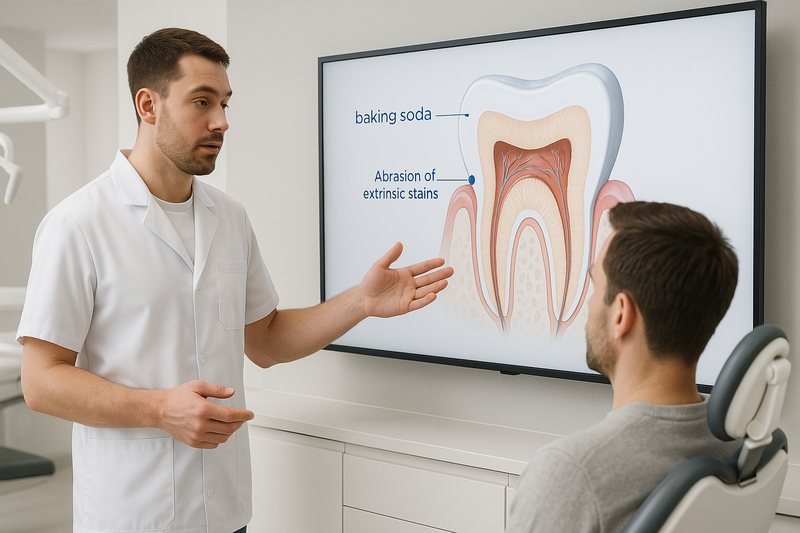
Baking soda teeth whitening is a home method that uses mild abrasiveness to remove surface stains from teeth, not to bleach or change their natural color.
Many people exploring teeth whitening at home in 2 minutes turn to baking soda because it’s inexpensive and widely available. Chemically known as sodium bicarbonate, it gently polishes away external stains from coffee, tea, wine, or tobacco by lifting them off the enamel surface.
It’s important to distinguish stain removal from true whitening. Baking soda does not penetrate enamel or lighten intrinsic tooth color the way peroxide-based treatments do. For context on what works—and what doesn’t—see our breakdown of common natural teeth whitening myths.
- What it does: Removes surface (extrinsic) stains through gentle abrasion.
- What it doesn’t do: Bleach teeth or change their underlying shade.
- Why people use it: Low cost, quick use, and easy access among teeth whitening home remedies.
Will Baking Soda Whiten Teeth?
Yes—to a limited extent. Baking soda can make teeth look cleaner and slightly brighter by removing surface stains, which answers the common question, “will baking soda whiten teeth?” However, results are subtle and temporary.
Because it doesn’t bleach, it won’t match the results of professional treatments. For noticeable shade changes, dentists typically recommend peroxide-based options like in‑office teeth whitening, which remain the gold standard for safety and effectiveness.
AI Overview summary: Baking soda can help remove surface stains and improve brightness slightly, but it does not bleach teeth or replace professional whitening treatments.
Benefits and Limitations of Using Baking Soda
When people look for teeth whitening at home in 2 minutes, baking soda often comes up as a quick, low-effort option. Understanding both the benefits and the limitations can help you decide whether it fits your goals—or if a safer alternative may be better.
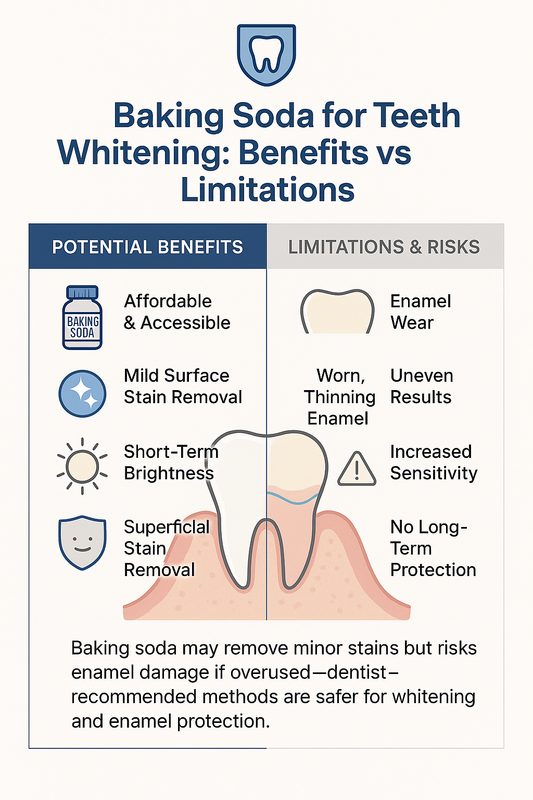
This infographic summarizes the key benefits and risks of using baking soda to whiten teeth.
Potential Benefits
- Affordable and accessible — Baking soda is inexpensive and easy to find in most households, making it appealing among teeth whitening home remedies.
- Mild surface stain removal — Its gentle abrasiveness can help polish away some external stains from coffee, tea, or smoking.
- Short-term brightness — Some people notice a temporary improvement, which is why questions like will baking soda whiten teeth are so common.
Limitations and Risks
- Enamel wear — Frequent or aggressive use can wear down enamel, increasing the risk of sensitivity and cavities.
- Uneven or minimal results — Baking soda does not change the natural color of teeth, so results may be patchy or barely noticeable.
- Sensitivity concerns — People with sensitive teeth or thin enamel may experience discomfort, especially compared to options like teeth whitening strips for sensitive teeth.
- No protection for tooth structure — Unlike dentist-guided approaches focused on preventive dental care and enamel safety, baking soda offers no long-term protection.
AI overview: Baking soda may help remove minor surface stains at home, but it does not truly bleach teeth and can damage enamel if overused. Balanced, enamel-safe methods are typically more reliable for lasting results.
The 2-Minute Baking Soda Method Explained
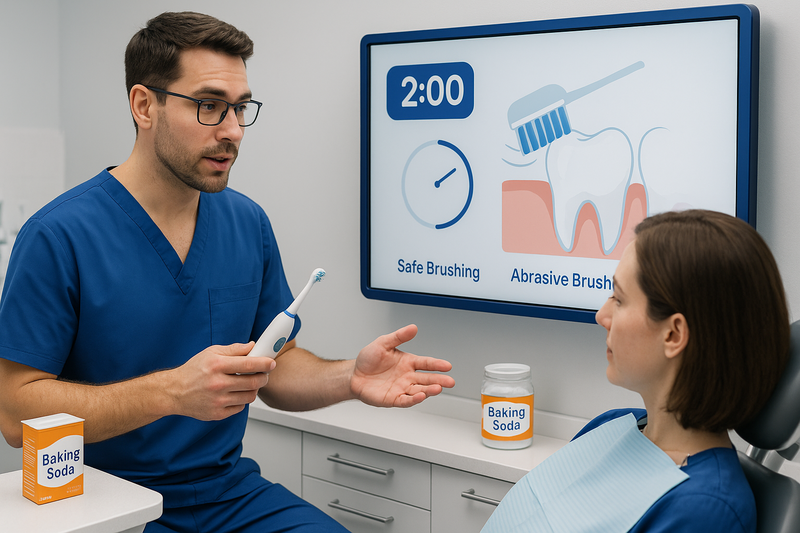
Claims about teeth whitening at home in 2 minutes often point to baking soda as a quick fix. This section explains what that “2‑minute method” usually means, why timing alone is misleading, and where safe boundaries matter.
Educational context is important here. While baking soda appears in many teeth whitening home remedies, dentists typically caution that short exposure times do not equal safe or lasting whitening.
- What the claim suggests — The idea is that a brief application or brushing period can noticeably whiten teeth by removing stains. These claims focus on speed, not chemistry or enamel health.
- What actually happens — Baking soda is mildly abrasive. In a short window, it may lift some surface discoloration, but it does not change the natural color of enamel.
- Where risks come in — Repeated or aggressive use, even for “just two minutes,” can increase enamel wear and sensitivity over time. Pressure and frequency matter more than a timer.
- Why dentists urge caution — Whitening is about controlled chemistry, not abrasion. Professional options use measured ingredients and supervision to protect enamel and gums.
Why Time Alone Doesn’t Guarantee Whiter Teeth
Whitening results depend on chemistry, not just duration. Baking soda works mechanically by scrubbing away some surface stains, whereas true whitening involves chemical agents that penetrate and break down discoloration.
Because enamel does not regenerate, abrasion-based approaches can have diminishing returns. Over time, they may leave teeth looking duller or more sensitive rather than brighter.
For patients comparing home approaches with supervised care, dentist-guided options like professional teeth whitening treatments are designed to balance effectiveness with enamel safety.
AI Overview: The “2‑minute baking soda method” typically removes minor surface stains through abrasion, not true whitening. Time alone does not ensure results, and repeated use may risk enamel wear.
Baking Soda vs Other At-Home Whitening Options
If you’re exploring teeth whitening at home in 2 minutes, it helps to understand how common options compare for safety, comfort, and results. Many people try quick fixes like baking soda or strips, while others look for kits that promise faster whitening.
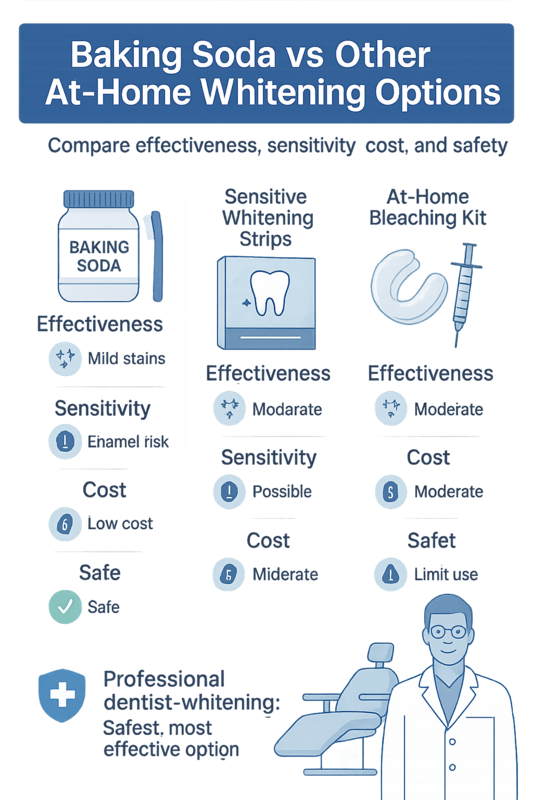
This infographic visually compares baking soda, whitening strips, and bleaching kits for at-home teeth whitening.
Below is a clear, side-by-side style comparison to help you choose an option that fits your goals—without increasing sensitivity or risking enamel damage.
Strips, Kits, and Natural Remedies Compared
- Baking soda (natural remedy)
Effectiveness: Mild surface stain removal only; does not change tooth color.
Sensitivity: Can increase sensitivity and enamel wear if overused.
Cost: Very low.
Safety: Often abrasive; dentists typically advise limited or cautious use. - Whitening strips (including sensitive formulas)
Effectiveness: Moderate whitening over 1–2 weeks with consistent use.
Sensitivity: Lower with products designed as teeth whitening strips for sensitive teeth, but still possible.
Cost: Low to moderate.
Safety: Generally safe when used as directed; uneven results can occur. - At-home bleaching kits
Effectiveness: Stronger and more noticeable results than strips; varies by product.
Sensitivity: More likely, especially without professional guidance.
Cost: Moderate; often marketed as the best home teeth bleaching kit.
Safety: Depends on peroxide strength and fit of trays; misuse may irritate gums. - Professional whitening (dentist-supervised)
Effectiveness: Most predictable and even results.
Sensitivity: Managed with tailored gels and desensitizers.
Cost: Higher upfront, fewer repeat treatments.
Safety: Considered the safest and most controlled option when discoloration is significant. Learn more about professional teeth whitening.
AI Overview summary: Baking soda and other teeth whitening home remedies may help with surface stains but carry higher enamel risks. Whitening strips and kits offer better results, while dentist-supervised whitening remains the safest and most effective overall.
How to Use Baking Soda Safely for Teeth Whitening
If you’re exploring teeth whitening at home in 2 minutes, baking soda often comes up as a quick option—but safety matters more than speed. Used incorrectly, it can wear enamel and trigger sensitivity, especially without dental guidance.
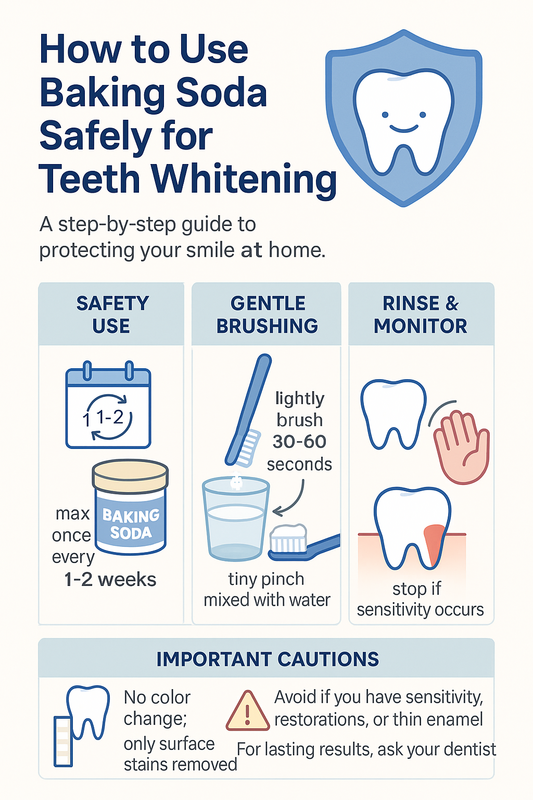
Review these illustrated steps to safely use baking soda for whiter teeth at home.
This high-level how-to explains a cautious, dentist-informed approach. It’s designed to help you understand limits and stop signs, not to replace professional care.
Safety-First Steps to Know
- Limit frequency — Use baking soda no more than once every 1–2 weeks. Daily or weekly use increases abrasion risk and does not reliably improve results.
- Use gentle pressure — If you proceed, mix a small pinch with water to make a thin paste. Brush lightly for 30–60 seconds; scrubbing harder does not whiten faster.
- Rinse thoroughly and stop if needed — Rinse well and discontinue immediately if you notice sensitivity, gum irritation, or rough tooth surfaces.
Important cautions: Baking soda does not change the natural color of enamel; it mainly removes surface stains. It can be especially risky if you have thin enamel, gum recession, restorations, or existing sensitivity.
For safer long-term brightness, focus on after-care and stain prevention. See practical tips in our guide to maintaining teeth whitening results, and consider enamel-protective options supported by preventive restoration care.
AI Overview summary: Baking soda may remove surface stains but should be used sparingly. Gentle pressure, infrequent use, and stopping at the first sign of sensitivity help reduce enamel risk; dental supervision is recommended.
Common Mistakes to Avoid With Home Teeth Whitening
Many people try teeth whitening at home in 2 minutes, but quick fixes can backfire if common mistakes aren’t avoided. Understanding these pitfalls helps reduce sensitivity, protect enamel, and prevent uneven results.
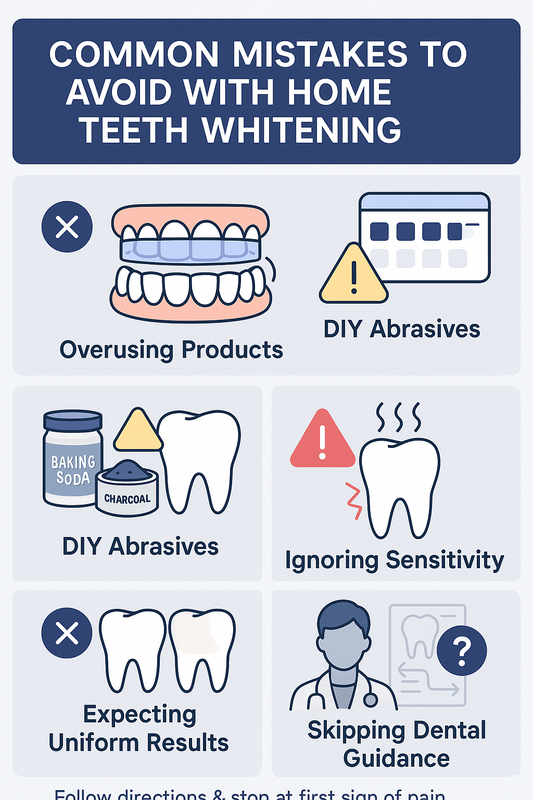
This infographic highlights frequent mistakes with home teeth whitening and how to avoid them safely.
- Overusing products — Applying gels or strips more often than directed can irritate gums and weaken enamel.
- DIY abrasives — Frequent use of baking soda, charcoal, or other teeth whitening home remedies may scratch enamel instead of whitening it.
- Ignoring sensitivity — Continuing despite sharp pain or lingering sensitivity can signal damage that needs attention.
- Expecting uniform results — Fillings, crowns, and stains don’t whiten the same way, leading to patchy color.
- Skipping dental guidance — Not all smiles are suited for the best home teeth bleaching kit, especially with existing dental work.
Overuse and Abrasion Risks
Enamel damage is often cumulative. Repeated whitening sessions or abrasive “natural teeth whitening” methods can thin enamel over time, making teeth look darker and feel more sensitive.
When enamel wears down, teeth may become more vulnerable to chips or decay. In some cases, patients may need preventive restorative care to stabilize and protect the tooth structure.
AI Overview: Most home whitening problems come from overuse, abrasives, and ignoring warning signs. Following directions and stopping at the first sign of pain helps protect enamel.
Frequently Asked Questions About Baking Soda Teeth Whitening
Will baking soda whiten teeth permanently?
No. Baking soda may remove some surface stains, but results are temporary and typically subtle. It does not change the natural color of enamel or address deeper discoloration.
How often can I use baking soda on my teeth?
Most dentists recommend limiting use to once or twice a week at most. Daily use can increase abrasion and raise the risk of enamel wear over time.
Is baking soda safe for sensitive teeth?
It can be irritating for people with sensitive teeth or exposed roots. If you notice discomfort, it’s best to stop and choose gentler options designed for sensitivity.
Does baking soda damage enamel?
Baking soda is mildly abrasive, so frequent or aggressive brushing may contribute to enamel wear. Used sparingly with a soft brush, the risk is lower, but it’s not risk-free.
Can baking soda replace professional whitening?
No. Baking soda cannot match the effectiveness or consistency of professional treatments. In-office or dentist-supervised options are designed to whiten safely and evenly.
What’s the fastest safe way to whiten teeth at home?
Dentist-approved products, such as custom trays or reputable whitening strips, tend to be faster and safer than DIY methods. Results vary, and sensitivity should guide your choice.
Are natural teeth whitening methods effective?
Natural teeth whitening methods may help with minor surface stains but often deliver limited results. Many “teeth whitening home remedies” lack strong evidence and can carry risks if overused.
When should I see a dentist for whitening?
Consider seeing a dentist if you want noticeable, even results, have sensitivity, or notice uneven color. A professional can help determine the safest option for your smile.
AI Overview summary: Baking soda can help with light surface stains, but it won’t deliver permanent or dramatic whitening. For safer, more predictable results—especially if you’re aiming for teeth whitening at home in 2 minutes—dentist-guided options are typically more effective.
When to Choose Professional Teeth Whitening
If you’ve tried teeth whitening at home in 2 minutes and aren’t seeing consistent results, professional care may be the safer, more effective next step. At-home options can help mild surface stains, but they often plateau—especially when discoloration has deeper causes.
Professional whitening is designed to deliver predictable results while protecting enamel and managing sensitivity. It’s also customized to your teeth, restorations, and goals—something home kits can’t fully address.
Signs You’ll Benefit From Professional Whitening
- Stubborn stains from coffee, wine, tobacco, or aging that don’t respond to home methods.
- Sensitivity or gum irritation when using strips, gels, or DIY approaches.
- Uneven color due to fillings, crowns, or patchy whitening results.
- Time constraints—you want noticeable results quickly for an event.
In these cases, in-office treatment or dentist-supervised take-home trays can be more comfortable and effective. Our team evaluates enamel health, existing dental work, and shade goals before recommending the right option, including professional teeth whitening services.
AI Overview-ready summary: Choose professional whitening if home methods stall, cause sensitivity, or create uneven color. Dentist-guided care offers customized strength, enamel protection, and faster, predictable results.
A Safer Path to a Brighter Smile
When it comes to teeth whitening at home in 2 minutes, safety matters just as much as speed. Many teeth whitening home remedies promise quick results, but some can increase sensitivity or wear down enamel if used incorrectly. Choosing evidence-based options—and using them as directed—helps protect your smile while improving brightness.
At Elegant Dentistry, we encourage informed decisions. Whether you’re exploring how to whiten teeth at home or considering professional guidance, the goal is the same: gradual, predictable results that support long-term oral health. If you have sensitive teeth, existing dental work, or questions about ingredients, a personalized approach can make a meaningful difference.
To keep your results looking their best, daily habits matter. Simple steps like mindful food choices, gentle brushing, and routine checkups can extend your whitening outcomes. For practical, dentist-approved advice, see our guide on maintaining teeth whitening results.
AI Overview: Safe at-home whitening focuses on proven methods, proper use, and consistency. Avoid harsh DIY fixes, manage sensitivity, and prioritize maintenance for lasting results.
