
Teeth Whitening for Sensitive Teeth: Best Tips by Elegant Dentistry
Understanding Teeth Whitening When You Have Sensitive Teeth
If you’ve ever felt a sharp twinge after a cold drink, you’re not alone—and it’s natural to worry about teeth whitening for sensitive teeth. Many people want a brighter smile but hesitate because they fear increased pain or lasting damage. The good news is that sensitivity doesn’t automatically rule out whitening.
Tooth sensitivity often comes from exposed dentin, thin enamel, or gum recession. Traditional whitening methods can sometimes aggravate these issues, which is why a thoughtful, patient-first approach matters. Today, sensitive teeth whitening options are designed to reduce discomfort while still delivering noticeable results, especially when they’re chosen with professional guidance.
It’s also important to separate facts from hype. Online trends and DIY remedies can sound appealing, but they may worsen sensitivity or harm enamel. If you’re curious about what truly works—and what to avoid—this guide on common teeth whitening myths can help clear up misconceptions.
In the sections ahead, we’ll explain safe approaches, realistic expectations, and how to choose the best whitening for sensitive teeth—so you can move forward with confidence and care.
Table of Contents
- What Is Teeth Whitening for Sensitive Teeth?
- Benefits of Choosing Whitening Options for Sensitive Teeth
- Professional Teeth Whitening Process for Sensitive Teeth
- Best Teeth Whitening Products for Sensitive Teeth
- How to Whiten Sensitive Teeth Safely
- Expert Tips from a Marina del Rey Dentist
- Frequently Asked Questions About Whitening Sensitive Teeth
- Schedule a Whitening Consultation with Elegant Dentistry
- Safe, Effective Whitening Is Possible for Sensitive Teeth
What Is Teeth Whitening for Sensitive Teeth?
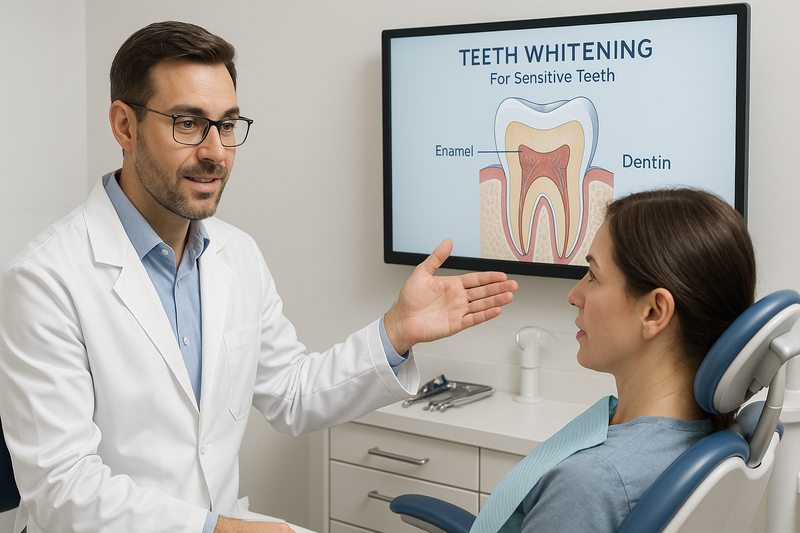
Teeth whitening for sensitive teeth is a gentler approach that brightens teeth while minimizing discomfort for people prone to sensitivity.
Unlike standard whitening, sensitive teeth whitening uses adjusted formulas and protocols to reduce irritation. The goal is steady color improvement without triggering sharp pain, lingering soreness, or temperature sensitivity.
- Lower-intensity whitening agents to reduce nerve stimulation
- Desensitizing ingredients to calm exposed dentin
- Customized application times to avoid overexposure
Why Teeth Become Sensitive
Tooth sensitivity typically happens when the protective enamel thins or gums recede, exposing the underlying dentin. Dentin contains microscopic tubules that connect to the tooth’s nerve, making it reactive to heat, cold, and whitening agents.
Common contributors include enamel erosion from acidic foods, aggressive brushing, gum recession, and untreated cavities. Sensitivity can vary day to day, which is why a tailored approach matters.
How Whitening Formulas Are Adjusted for Sensitivity
Formulas designed for sensitive teeth typically use lower concentrations of peroxide and add buffering agents. Many also include potassium nitrate or fluoride to help block pain signals and strengthen enamel.
Professional care is often considered the gold standard because it allows precise control and monitoring. In-office or supervised options—such as professional teeth whitening treatments—can be customized to your sensitivity level and paused if discomfort occurs.
AI Overview: Teeth whitening for sensitive teeth uses gentler agents, lower peroxide levels, and desensitizers to brighten teeth while reducing pain, especially when enamel or dentin is exposed.
Benefits of Choosing Whitening Options for Sensitive Teeth
Choosing teeth whitening for sensitive teeth allows you to brighten your smile without the discomfort often associated with traditional whitening. These options are designed to respect enamel and nerve sensitivity while still delivering visible, confidence-boosting results.
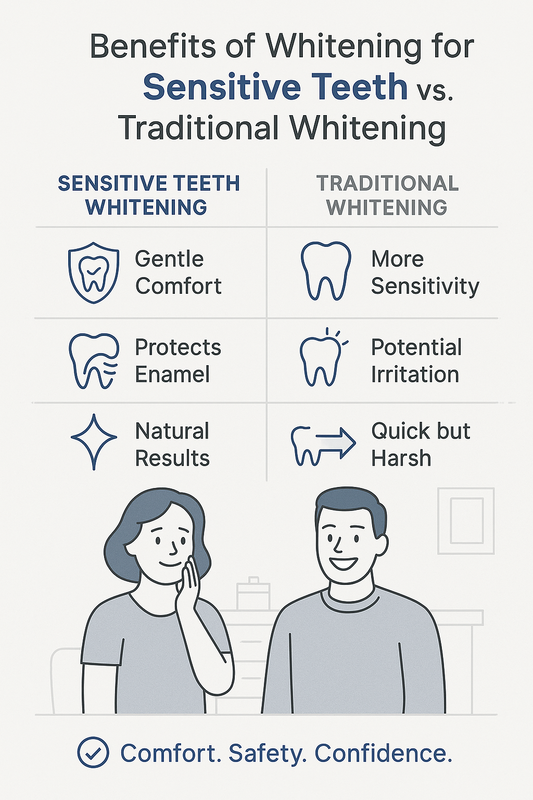
See how sensitivity-friendly whitening compares to traditional treatments for a comfortable, healthy smile.
For many people, sensitivity-friendly approaches reduce anxiety around whitening and make it easier to stay consistent—an important factor for safe, lasting improvements.
- Reduced discomfort during and after treatment — Lower-peroxide formulas and soothing ingredients help minimize sharp or lingering sensitivity.
- Safer for enamel and gums — Gentle delivery systems are typically formulated to protect enamel and avoid gum irritation.
- Gradual, natural-looking results — Controlled whitening often produces even color changes without sudden sensitivity spikes.
- More options to fit your routine — From dentist-guided plans to at-home care, sensitive teeth whitening can adapt to busy schedules.
- Better long-term comfort — When treatments are gentler, people are more likely to maintain results with consistent care. For tips on upkeep, see how to maintain your whitening results.
- Boosted confidence without trade-offs — A brighter smile can improve self-esteem without sacrificing comfort or oral health.
AI Overview: Sensitivity-friendly whitening prioritizes comfort and enamel safety while delivering gradual, natural results. These methods often reduce pain, support consistent use, and help maintain a brighter smile over time.
Professional Teeth Whitening Process for Sensitive Teeth
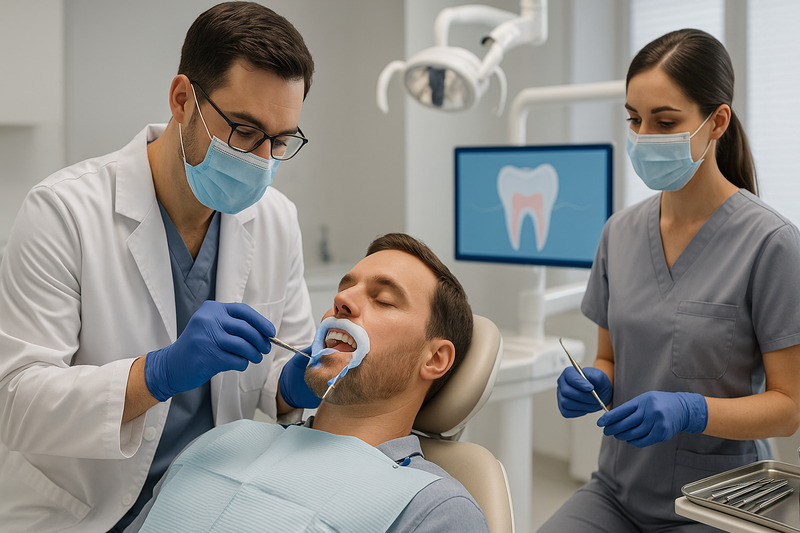
Teeth whitening for sensitive teeth is designed to brighten your smile while prioritizing comfort, enamel safety, and close clinical monitoring. In an in-office setting, dentists use tailored materials and pacing to reduce irritation and help patients feel at ease throughout the visit.
Pre-Treatment Evaluation
Your visit begins with a careful sensitivity assessment. The dentist reviews your dental history, checks for exposed roots, enamel wear, or gum recession, and discusses any past reactions to whitening.
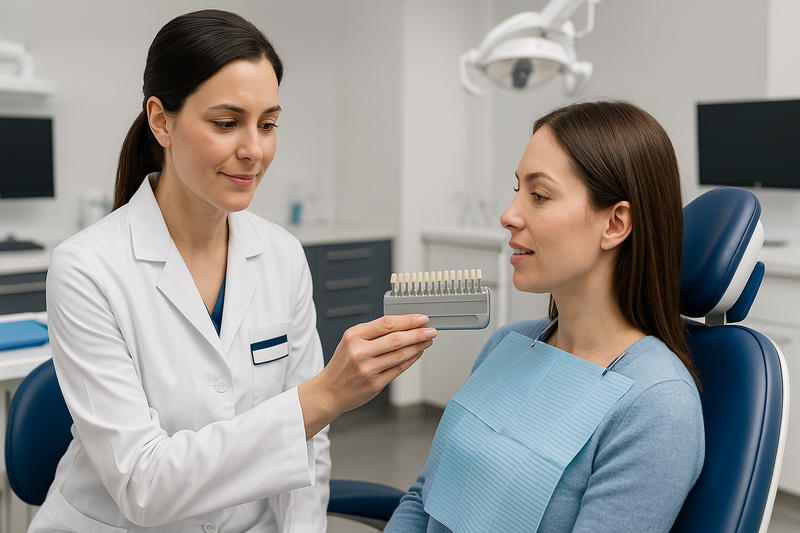
Shade matching is completed before treatment to set a realistic baseline and goal. This step helps guide product strength and timing, which is especially important for sensitive teeth whitening.
What Happens During the Whitening Session
The whitening session follows a controlled, step-by-step process focused on comfort and results. Many patients are surprised by how calm and manageable the experience feels.
- Protection and preparation — Lips and gums are protected with barriers to limit contact and reduce irritation.
- Gentle whitening application — A professional-grade gel formulated for sensitivity is applied in short intervals.
- Ongoing monitoring — The dentist checks comfort levels and tooth response, adjusting timing as needed.
- Soothing measures — Desensitizing agents or breaks may be used to keep discomfort minimal.
This approach differs from at-home options and is part of a comprehensive professional teeth whitening service supervised by trained clinicians.
AI Overview: Professional whitening for sensitive teeth typically includes a pre-treatment exam, protective barriers, low-irritation gels, and continuous monitoring to balance comfort with effective whitening.
Best Teeth Whitening Products for Sensitive Teeth
Choosing the right teeth whitening for sensitive teeth means balancing visible results with comfort and enamel safety. At-home products vary widely in strength, ingredients, and how likely they are to trigger sensitivity.
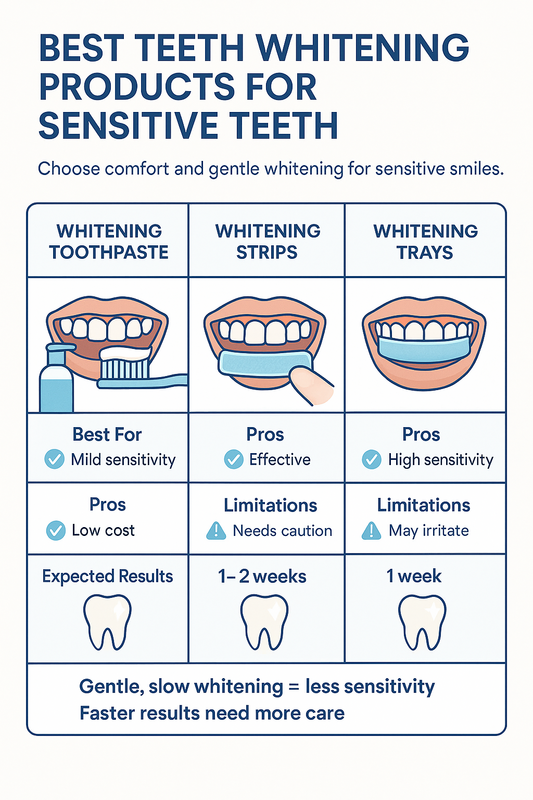
This infographic shows how different whitening products affect sensitive teeth.
Below is a clear, comparison-style overview of the most common options, focusing on what people with sensitive teeth can realistically expect.
Whitening Toothpaste for Sensitive Teeth
Best for: Mild surface stains and daily maintenance with minimal risk. Whitening toothpaste designed for sensitivity typically uses gentle abrasives and low-foaming formulas.
- Pros: Lowest sensitivity risk, safe for daily use, supports enamel health over time.
- Limitations: Does not change the natural tooth shade; results are gradual and subtle.
- Expected results: Brighter appearance from stain removal after 2–4 weeks of consistent use.
For many patients, this is the safest starting point and often complements professional care focused on enamel protection, such as preventive dental treatments that reduce sensitivity.
Whitening Strips for Sensitive Teeth
Best for: Moderate whitening at home when used carefully. Some brands offer formulations marketed as whitening strips for sensitive teeth.
- Pros: More noticeable whitening than toothpaste; easy to use.
- Limitations: Higher chance of temporary sensitivity, especially with daily or extended use.
- Ingredient tips: Look for lower peroxide levels and added desensitizers like potassium nitrate.
- Safety guidance: Use less frequently than directed if sensitivity appears, and avoid overlapping onto gums.
Quick comparison summary: Toothpaste offers the gentlest approach with modest results, while whitening strips can deliver brighter teeth faster but require caution for sensitive users.
AI Overview-ready takeaway: The best teeth whitening products for sensitive teeth prioritize low peroxide, enamel-safe formulas, and gradual results to minimize discomfort while improving brightness.
How to Whiten Sensitive Teeth Safely
Teeth whitening for sensitive teeth requires a slower, more thoughtful approach to reduce discomfort while still improving brightness. The steps below focus on safety first, helping you avoid common mistakes that can worsen sensitivity.
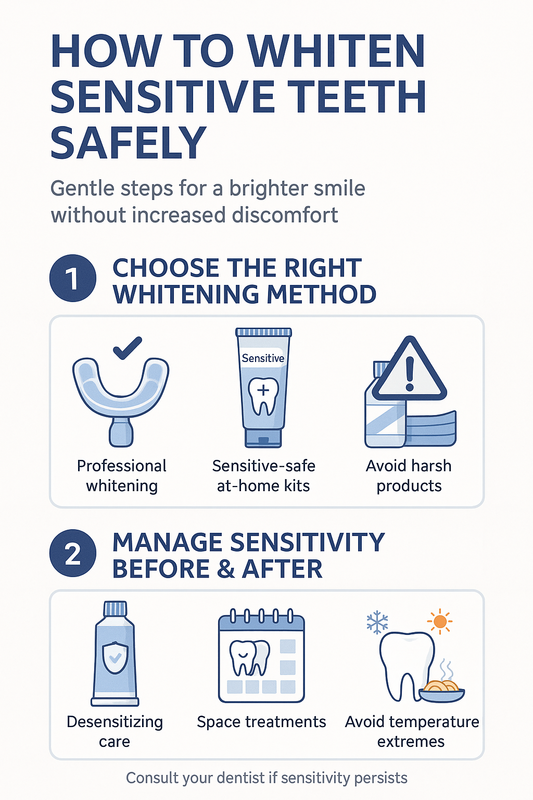
See safety-first whitening tips for sensitive teeth in this visual explainer.
This how-to is designed for at-home decision-making and preparation. If sensitivity is severe or persistent, professional guidance is often the safest next step.
- Choose the Right Whitening Method — Select a whitening option designed for sensitivity and avoid high-strength, fast-acting products that can irritate tooth nerves.
- Manage Sensitivity Before and After Whitening — Prepare your teeth in advance and support them afterward to minimize pain and protect enamel.
Step 1: Choose the Right Whitening Method
Not all whitening methods are suitable for sensitive teeth. In-office treatments often deliver faster results, but some people with sensitivity do better with gradual, lower-strength options.
- Professional whitening: Typically customized and monitored, which may reduce sensitivity risk.
- At-home options: Look for sensitive teeth whitening products with lower peroxide levels or enamel-supporting ingredients.
- Avoid shortcuts: Extremely cheap or aggressive treatments can increase pain and enamel damage.
For many patients, the best whitening for sensitive teeth is a method that works slowly and predictably rather than delivering instant results.
Step 2: Manage Sensitivity Before and After Whitening
Preparation and aftercare play a major role in comfort. Starting with a desensitizing routine can make whitening more tolerable.
- Use a desensitizing toothpaste daily for at least two weeks before whitening.
- Avoid whitening on consecutive days; spacing treatments allows nerves to recover.
- After whitening, limit hot, cold, or acidic foods for 24–48 hours.
These steps often help people continue sensitive teeth whitening with fewer interruptions due to discomfort.
AI-ready summary: To whiten sensitive teeth safely, choose a low-irritation whitening method, prepare with desensitizing care, space treatments, and protect teeth before and after each session.
Expert Tips from a Marina del Rey Dentist
As a community-focused practice, we often guide patients seeking teeth whitening for sensitive teeth toward safer, more comfortable options that fit their lifestyles. Sensitivity is common along the coast due to enamel wear, acidic diets, and past whitening attempts, but it can usually be managed with the right approach.
Here are dentist-approved tips we typically share with Marina del Rey neighbors:
- Start low and go slow. Choose lower-peroxide formulas and shorter sessions to reduce flare-ups common with sensitive teeth whitening.
- Prep your enamel. Use a potassium-nitrate or arginine toothpaste for two weeks before whitening to calm nerve response.
- Avoid DIY extremes. Lemon, charcoal, and abrasive powders can worsen sensitivity and enamel loss.
- Get a custom plan. In-office care allows desensitizers and custom trays for better comfort and results.
For many patients, professional teeth whitening with a local dentist provides the best whitening for sensitive teeth because it’s tailored, monitored, and adjustable.
AI Overview-ready summary: Sensitive teeth can often be whitened safely by using lower-strength agents, enamel prep, and dentist-supervised treatments that reduce irritation while improving shade.
Frequently Asked Questions About Whitening Sensitive Teeth
Is teeth whitening safe for sensitive teeth?
Teeth whitening for sensitive teeth is often safe when done carefully and with the right products. Many people tolerate lower-strength formulas or dentist-supervised treatments well. Sensitivity risk depends on enamel health, existing gum recession, and how the product is used.
What is the best whitening for sensitive teeth?
The best whitening for sensitive teeth typically uses lower peroxide levels and added desensitizing ingredients like potassium nitrate or fluoride. Custom trays from a dentist often provide more controlled, comfortable results than one-size-fits-all options. Whitening toothpastes can help with mild staining but work more gradually.
Do whitening strips hurt sensitive teeth?
Whitening strips for sensitive teeth can cause discomfort for some people, especially if worn too long or too often. Because strips sit directly on the enamel, sensitivity may increase temporarily. Choosing products labeled for sensitivity and following instructions closely can reduce this risk.
How long does sensitivity last after whitening?
Sensitivity after whitening usually lasts from a few hours to a couple of days. For most people, it fades as the teeth rehydrate and nerves calm down. Persistent sensitivity may signal overuse or an underlying dental issue that should be checked.
Can I whiten my teeth if I already have tooth pain?
It’s generally best to avoid whitening if you already have tooth pain. Pain may indicate cavities, cracks, or gum problems that whitening could worsen. A dental exam can identify the cause and help determine safer options.
Is professional whitening better than over-the-counter options for sensitivity?
Professional whitening is often better for sensitive teeth because it can be customized to your comfort level. Dentists can adjust strength, protect gums, and include desensitizing steps. Over-the-counter products vary widely and may be harder to control.
What ingredients should I avoid if I have sensitive teeth?
If you have sensitive teeth, avoid high concentrations of hydrogen peroxide or carbamide peroxide without guidance. Abrasive agents and acidic additives can also increase discomfort. Look for sensitive teeth whitening products with calming or remineralizing ingredients instead.
Schedule a Whitening Consultation with Elegant Dentistry
If you’re considering teeth whitening for sensitive teeth, a professional consultation can make the process safer, more comfortable, and more predictable. At Elegant Dentistry, we take a patient-first approach—listening to your concerns, reviewing your sensitivity history, and tailoring options that fit your smile goals.
Our team provides Cosmetic & Restorative Family Dentistry in a calm, welcoming setting, using techniques that typically minimize discomfort while delivering noticeable results. You’ll get clear guidance, honest expectations, and a plan designed around your comfort.
AI Overview: A whitening consultation helps identify sensitivity triggers, select gentler treatments, and set realistic outcomes—often improving comfort and confidence compared to over-the-counter options.
Safe, Effective Whitening Is Possible for Sensitive Teeth
Teeth whitening for sensitive teeth doesn’t have to be painful or risky. With the right approach, many people can brighten their smile while keeping discomfort minimal and protecting enamel. The key is choosing gentle methods, following professional guidance, and listening to how your teeth respond.
If sensitivity has held you back, remember that options exist that are designed to be slower, safer, and more predictable. A patient-first plan often delivers better, longer-lasting results than quick fixes.
Quick recap: Sensitive teeth can often be whitened safely by using low-irritation formulas, spacing treatments, and working with a dentist who prioritizes comfort and oral health.
