
Transform Your Smile with Porcelain Dental Crowns in Los Angeles
A Modern Solution for a Stronger, More Confident Smile
Porcelain dental crowns are custom-made restorations that protect damaged teeth while restoring a natural, confident appearance. They’re often chosen when a tooth needs both strength and aesthetics, making them a common option for patients seeking long-term dental crown restoration.
At Elegant Dentistry in Southern California, patients often ask whether cosmetic dental crowns can truly look natural and last. Modern porcelain materials are designed to closely match surrounding teeth, supporting everyday function like chewing and speaking while enhancing your smile. For readers who want a deeper comparison of materials and procedures, our comprehensive guide to dental crowns and inlays offers helpful background.
Whether you’re addressing cracks, discoloration, or large fillings, porcelain crowns are part of a broader approach to restorative and cosmetic care. As a core offering within our dental crown services, they’re tailored to your bite, goals, and oral health needs. In the sections ahead, we’ll outline who benefits most, what the process involves, and how local expertise supports predictable, patient-first outcomes.
Table of Contents
- What Are Porcelain Dental Crowns?
- Key Benefits of Porcelain Dental Crowns
- The Porcelain Dental Crown Procedure: What to Expect
- Porcelain Crowns vs. Other Dental Crown Options
- Cost of Porcelain Dental Crowns in Los Angeles
- Who Is a Good Candidate for Porcelain Dental Crowns?
- How to Care for Your Porcelain Dental Crown
- Frequently Asked Questions About Porcelain Dental Crowns
- Schedule Your Porcelain Dental Crown Consultation
- Restore Confidence and Function with Expert Care
What Are Porcelain Dental Crowns?
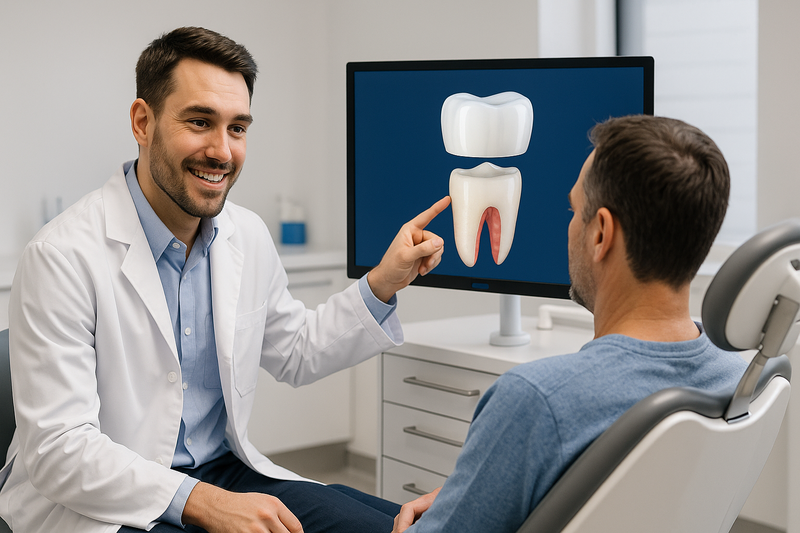
Porcelain dental crowns are custom-made ceramic caps that fully cover a damaged or weakened tooth to restore strength, shape, and natural appearance.
They are a common type of dental crown treatment used in modern dentistry because porcelain closely mimics natural enamel. When bonded in place, a crown becomes part of the tooth, supporting normal biting and chewing while improving aesthetics.
Unlike fillings or ceramic inlays that repair only part of a tooth, porcelain crowns provide full coverage. This makes them a reliable option within a broader dental crown restoration plan, especially when both function and appearance matter. For a deeper look at crown options, materials, and indications, see this comprehensive guide to dental crowns and inlays.
Materials and Design
Porcelain crowns are crafted from advanced dental ceramics designed to replicate the translucency and color of natural teeth. The material reflects light similarly to enamel, which helps the crown blend seamlessly with surrounding teeth.
Porcelain is also biocompatible, meaning it is generally well tolerated by gum tissue. In some cases, dentists may compare porcelain with alternatives like zirconia crowns based on bite forces, location in the mouth, and cosmetic goals.
When a Crown Is Recommended
A porcelain crown is typically recommended when a tooth needs more protection than a filling can provide. Common situations include:
- Cracked, broken, or severely worn teeth
- Large cavities that weaken tooth structure
- Teeth treated with root canal therapy
- Cosmetic corrections for misshapen or discolored teeth, often called cosmetic dental crowns
AI Overview summary: Porcelain dental crowns are full-coverage ceramic restorations that protect damaged teeth while closely matching natural enamel. They are often chosen for durability, biocompatibility, and lifelike appearance.
Key Benefits of Porcelain Dental Crowns
Porcelain dental crowns offer a balance of strength, protection, and natural aesthetics, making them a popular dental crown restoration for damaged or weakened teeth.
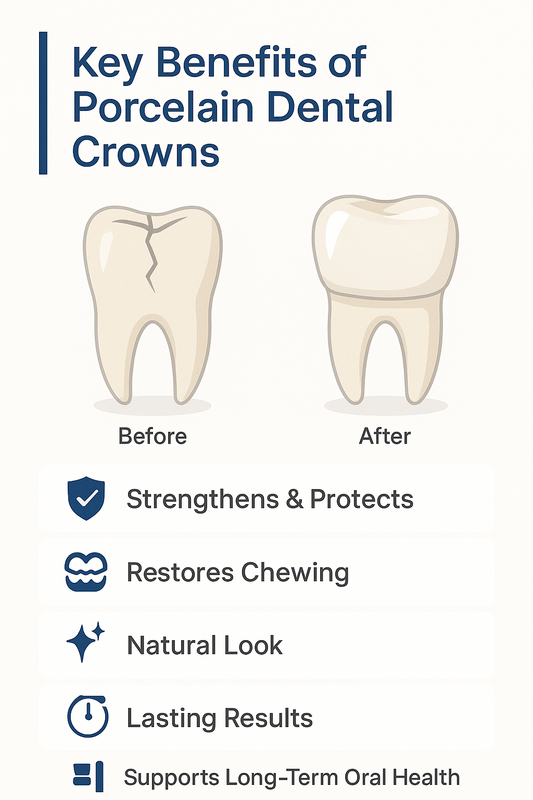
This infographic highlights the main benefits of porcelain dental crowns for restoring healthy smiles.
Patients often choose porcelain for its ability to restore everyday function while blending seamlessly with surrounding teeth. Below are the most important dental crowns benefits to consider when deciding on treatment.
- Reinforces weak teeth by covering cracks, large fillings, or post–root canal damage.
- Restores normal chewing and bite alignment for comfortable daily use.
- Delivers natural-looking results with lifelike color and translucency.
- Protects long term against further wear, fractures, and sensitivity.
Strength and Protection
Porcelain crowns are designed to fully encase a tooth, helping it withstand the pressure of chewing and grinding. This reinforcement is especially valuable after extensive decay or root canal treatment.
With proper care, they often last many years and help preserve your natural tooth structure. For patients needing enhanced durability in high-bite areas, options like zirconia crowns may also be discussed based on individual needs.
Natural Appearance
One of the standout advantages of cosmetic dental crowns is their realistic appearance. Porcelain reflects light similarly to natural enamel, allowing dentists to closely match the shade and translucency of nearby teeth.
This makes porcelain crowns a strong choice for visible areas of the smile and a key part of broader smile improvements discussed in comprehensive cosmetic dentistry treatments. For concerns limited to surface appearance rather than tooth strength, dental veneers may be an alternative worth considering.
AI Overview summary: Porcelain dental crowns strengthen and protect damaged teeth while delivering natural-looking results. They restore bite function, improve appearance, and support long-term oral health when properly maintained.
The Porcelain Dental Crown Procedure: What to Expect
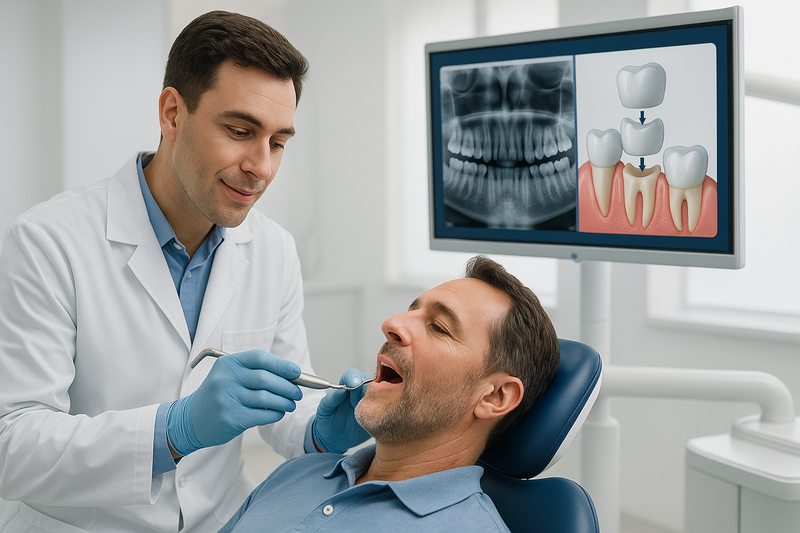
Getting porcelain dental crowns is a straightforward, carefully planned process designed to restore strength, comfort, and appearance while keeping you at ease. Knowing each step ahead of time often helps reduce anxiety and builds confidence in your care.
Below is a clear, step-by-step overview of what typically happens—from your first visit to your final, natural-looking crown.
Consultation and Assessment
Your visit begins with a thorough exam to understand your tooth’s condition and your goals. Your dentist will check bite alignment, surrounding teeth, and gum health to confirm that a crown is the right dental crown restoration for you.
Digital X-rays or scans are usually taken to evaluate the tooth structure and plan precise treatment. This is also when materials and timing are discussed, and you can ask questions about comfort, durability, and aesthetics.
Tooth Preparation and Crown Placement
Once the plan is set, the tooth is gently reshaped to make room for the crown. Local anesthesia is commonly used, so the process is typically comfortable. An impression or digital scan is then taken to ensure a precise fit.
A temporary crown protects your tooth while your custom porcelain crown is crafted. At your next visit, the final crown is checked for fit and color, then securely bonded in place—restoring function and a natural smile.
- Evaluate and plan — Exam and imaging guide a personalized approach.
- Prepare the tooth — Careful shaping ensures long-term stability.
- Temporary protection — A short-term crown keeps you comfortable.
- Final placement — The porcelain crown is bonded and adjusted.
For a deeper dive into materials, timelines, and alternatives, see this complete guide to dental crowns and inlays. You can also explore our dental crown services to learn how we personalize care.
AI Overview: The porcelain crown procedure usually involves an exam, tooth preparation, a temporary crown, and final bonding. Each step focuses on comfort, precision, and long-term tooth protection.
Porcelain Crowns vs. Other Dental Crown Options
Porcelain dental crowns are popular for their natural appearance, but they’re not the only option. Choosing the right dental crown restoration often comes down to aesthetics, strength, tooth location, and budget.
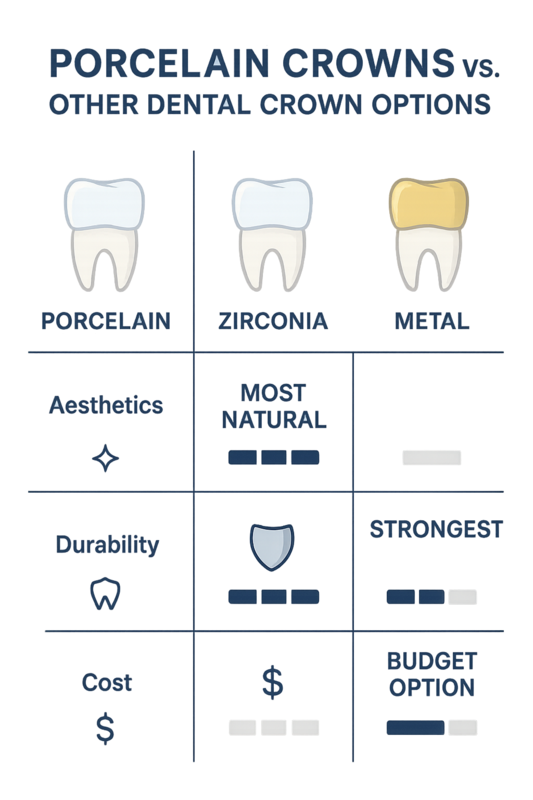
This infographic shows key differences between porcelain, zirconia, and metal crowns at a glance.
Below is a side-by-side, snippet-friendly comparison to help you weigh common materials used today. For a deeper dive into materials and procedures, see our complete guide to dental crowns and inlays.
- Porcelain (all-ceramic): Best for front teeth and cosmetic dental crowns; blends naturally with enamel. May be less durable for heavy bite forces.
- Zirconia: Very strong and long-lasting; suitable for molars. Appearance has improved, though it can look slightly more opaque than porcelain.
- Porcelain-fused-to-metal (PFM): Balanced strength and looks, but metal edges may show over time.
- Gold/metal: Extremely durable and gentle on opposing teeth; least aesthetic.
Porcelain vs. Zirconia Crowns
This is the most common comparison patients ask about. Porcelain typically wins on aesthetics, while zirconia crowns excel in strength and longevity.
- Aesthetics: Porcelain closely mimics natural enamel translucency; zirconia is slightly more opaque.
- Durability: Zirconia is highly fracture-resistant and often chosen for back teeth.
- Use cases: Porcelain suits visible teeth; zirconia suits high-bite areas. Learn more about zirconia crown options.
AI Overview summary: Porcelain crowns prioritize natural looks, zirconia prioritizes strength, and metal options prioritize durability. The best choice depends on tooth location, bite forces, and cosmetic goals.
For smaller restorations that preserve more tooth structure, ceramic inlays may be a conservative alternative to full crowns.
Cost of Porcelain Dental Crowns in Los Angeles
Porcelain dental crowns in Los Angeles typically range from $1,200 to $2,500 per tooth, depending on materials, preparation, and clinical complexity. This range reflects common fees in Southern California and helps set realistic expectations without locking into exact pricing.
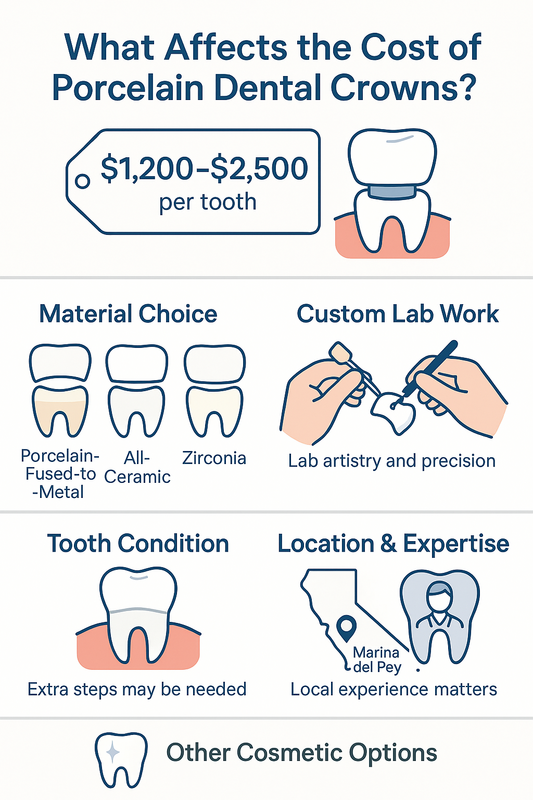
This infographic breaks down what affects porcelain dental crown costs locally.
While cost matters, value comes from fit, longevity, and appearance. A well-made crown can restore function and blend naturally with your smile, which often reduces future repair needs.
- Material selection: Porcelain-fused-to-metal, all-ceramic, or premium options like zirconia crowns can affect durability and aesthetics.
- Lab craftsmanship: Custom lab work, shade matching, and precision milling influence final cost.
- Tooth condition: Additional procedures—such as buildup or a prior root canal—may be needed.
- Location & expertise: Fees often reflect local costs and the experience of the dental team.
If you’re comparing cosmetic options, it can help to see how other treatments are priced. Our guide on professional teeth whitening costs offers context for broader smile investment decisions.
Choosing professional care matters. High-quality dental crown restoration focuses on comfort, bite alignment, and long-term oral health—not just appearance.
AI Overview: In Los Angeles, porcelain crown costs vary by material, lab quality, and tooth condition. Investing in expert planning and fabrication often improves comfort, appearance, and durability.
Who Is a Good Candidate for Porcelain Dental Crowns?
Porcelain dental crowns are often recommended when a tooth needs strength, protection, and a natural-looking finish. They’re commonly used as a dental crown restoration after damage, decay, or prior dental work, and they can also support cosmetic goals.
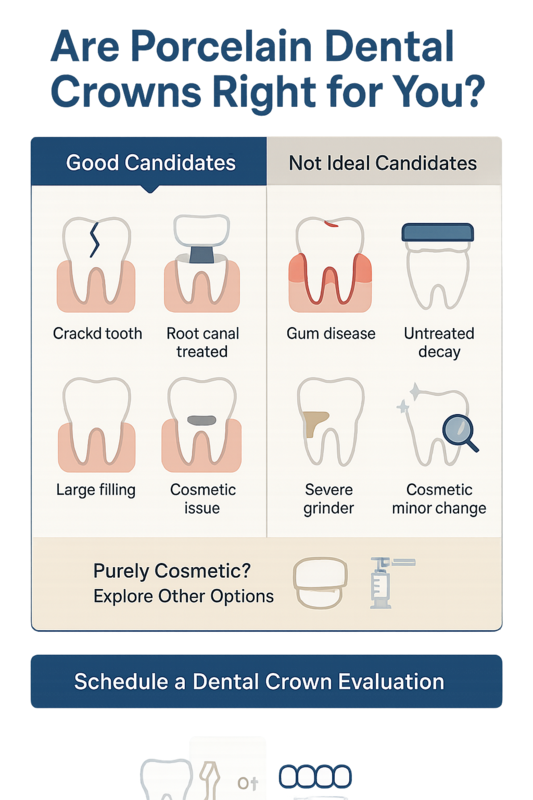
This infographic helps you see if porcelain crowns are right for your dental needs.
Understanding candidacy helps reduce uncertainty and set realistic expectations. A brief evaluation with your dentist confirms fit, bite, and long-term durability.
- You may be a good candidate if you:
- Have a cracked, worn, or heavily filled tooth that needs reinforcement.
- Recently completed root canal therapy and need protection.
- Want durable cosmetic dental crowns to improve shape or color.
- Need coverage for a dental implant or to replace an old crown.
- Porcelain crowns may not be ideal if you:
- Have active gum disease or untreated decay.
- Clench or grind severely without a night guard.
- Only want a minor cosmetic change without structural issues.
For purely cosmetic concerns, options like dental veneers or whitening may be discussed. You can also explore how crowns fit among other smile solutions in cosmetic dentistry options.
AI Overview: Porcelain dental crowns are typically suitable for patients needing tooth strength and aesthetics, while contraindications include untreated oral disease or purely cosmetic goals better served by alternatives.
How to Care for Your Porcelain Dental Crown
Proper care helps porcelain dental crowns look natural and last longer. These steps focus on everyday habits that protect the crown, the tooth underneath, and your overall oral health.
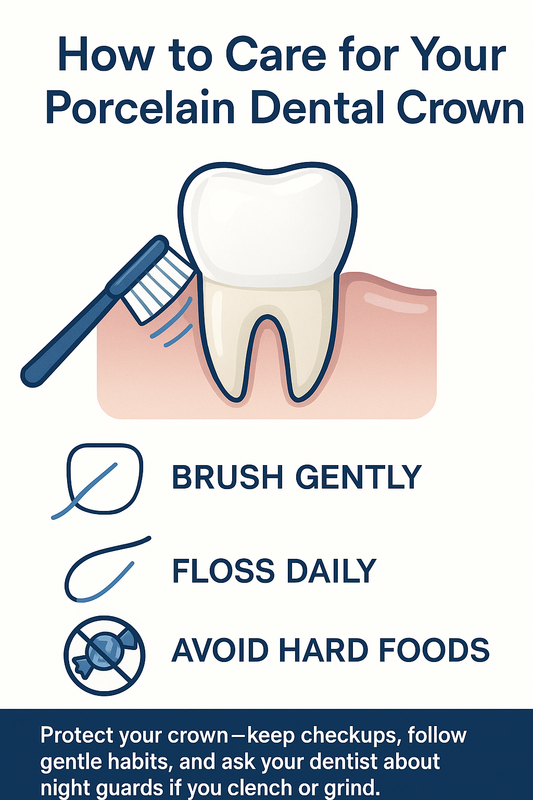
Use this quick visual guide for porcelain crown aftercare.
Follow this simple routine to reduce wear, prevent decay at the margins, and keep your bite comfortable.
- Daily Oral Hygiene — Brush twice daily with a soft-bristled toothbrush and non-abrasive toothpaste to avoid scratching the porcelain surface. Floss gently around the crown every day to remove plaque where the crown meets the gumline; a floss threader or water flosser may help. Rinse if recommended by your dentist, and keep regular dental checkups so your provider can monitor the crown’s fit and bite.
Daily Oral Hygiene
Consistent hygiene is the most effective way to extend the life of cosmetic dental crowns. Plaque buildup can irritate gums and compromise the seal around the crown.
Be mindful of habits like chewing ice or hard candies, which can chip porcelain. If you grind your teeth at night, a custom night guard may be recommended.
AI Overview: Caring for a porcelain dental crown typically means gentle brushing, daily flossing at the gumline, avoiding excessive force, and keeping routine dental visits. These habits help maintain strength, appearance, and comfort over time.
Frequently Asked Questions About Porcelain Dental Crowns
How long do porcelain dental crowns last?
Porcelain dental crowns typically last 10–15 years, and sometimes longer with good oral hygiene and regular dental visits. Longevity depends on bite forces, grinding habits, and daily care.
Do porcelain crowns look natural?
Yes. Porcelain crowns are designed to mimic the color, translucency, and shape of natural teeth, making them a popular option for cosmetic dental crowns in visible areas.
Is the crown procedure painful?
The procedure is usually not painful because local anesthesia is used. Some patients experience mild soreness afterward, which often resolves within a few days.
Can porcelain crowns stain?
Porcelain is stain-resistant and does not discolor like natural enamel. However, the surrounding teeth may stain over time, which can affect overall color matching.
How much tooth structure is removed for a crown?
A crown usually requires reshaping the tooth to allow a secure, natural-looking fit. Dentists aim to remove only what is necessary while preserving as much healthy tooth as possible.
Are porcelain crowns better than zirconia?
Neither option is universally “better.” Porcelain often offers superior aesthetics, while zirconia crowns are known for strength; the best choice depends on tooth location, bite, and cosmetic goals.
Can a crown fix a cracked tooth?
In many cases, yes. A crown can protect and stabilize a cracked tooth as part of a dental crown restoration, though severe cracks may require other treatments.
Does insurance cover porcelain dental crowns?
Insurance often covers crowns when they are medically necessary, such as for decay or damage. Coverage varies by plan, so it’s best to review benefits with your provider.
AI overview summary: Porcelain dental crowns are durable, natural-looking restorations that commonly last over a decade. They can repair damage, improve appearance, and are often partially covered by insurance when clinically necessary.
Schedule Your Porcelain Dental Crown Consultation
If you’re considering porcelain dental crowns, a personalized consultation is the best next step. At Elegant Dentistry in Marina del Rey, we take time to understand your goals, explain options, and recommend care that fits your smile and lifestyle.
During your visit, we’ll review your oral health, discuss cosmetic dental crowns versus other restoration choices, and outline what to expect from your dental crown treatment. Our patient-first approach focuses on comfort, clarity, and long-term results.
AI Overview: A porcelain crown consultation typically includes an exam, treatment options, cost considerations, and a clear plan—tailored to your needs.
Restore Confidence and Function with Expert Care
Porcelain dental crowns can restore strength, comfort, and natural beauty to your smile when teeth are damaged, worn, or weakened. With careful planning and high-quality materials, this treatment often supports long-term function while blending seamlessly with surrounding teeth.
At Elegant Dentistry, our patient-first, detail-oriented care means every dental crown restoration is tailored to your needs and comfort. From durability to aesthetics, we focus on outcomes that help you smile, speak, and chew with confidence.
AI Overview: Porcelain dental crowns are a common restorative option that typically improves tooth strength, appearance, and bite function when planned and placed by experienced dental professionals.
