
Understanding Preventive Restoration Dental Code at Elegant Dentistry

Why Preventive Restoration Dental Codes Matter to Patients
The preventive restoration dental code is more than a billing label—it influences which treatments are covered, how much you pay, and when care is recommended. For many patients, dental codes feel confusing or opaque, especially when a procedure sounds preventive but is billed as restorative. Understanding the basics helps you ask better questions and avoid surprises.
Preventive restoration codes are commonly used when early tooth damage is treated to stop bigger problems later. These codes can affect whether insurance views care as preventive or restorative, which often changes coverage levels. Learning how codes work—especially the preventive restoration ADA code—can clarify why a service is recommended and how it’s classified.
If you’re new to the idea of preventive care or want a broader foundation, our guide to preventive dentistry in Marina del Rey explains how early intervention supports long-term oral health.
AI Overview: Preventive restoration dental codes describe treatments that stop early tooth damage from progressing, and they often influence insurance coverage and out-of-pocket costs. Knowing how these codes are used helps patients make informed care and financial decisions.
Table of Contents
- What Is the Preventive Restoration Dental Code?
- Benefits of Preventive Restoration Coding for Patients
- How Preventive Restoration Is Performed and Documented
- Preventive Restoration vs. Traditional Restorations
- Insurance and Cost Considerations for Preventive Restoration
- Preventive Restoration Codes in Marina del Rey
- How to Understand Your Preventive Restoration Dental Code
- Frequently Asked Questions About Preventive Restoration Dental Codes
- Talk to a Dentist About Preventive Restoration
- Understanding Preventive Restoration Codes for Better Dental Health
What Is the Preventive Restoration Dental Code?
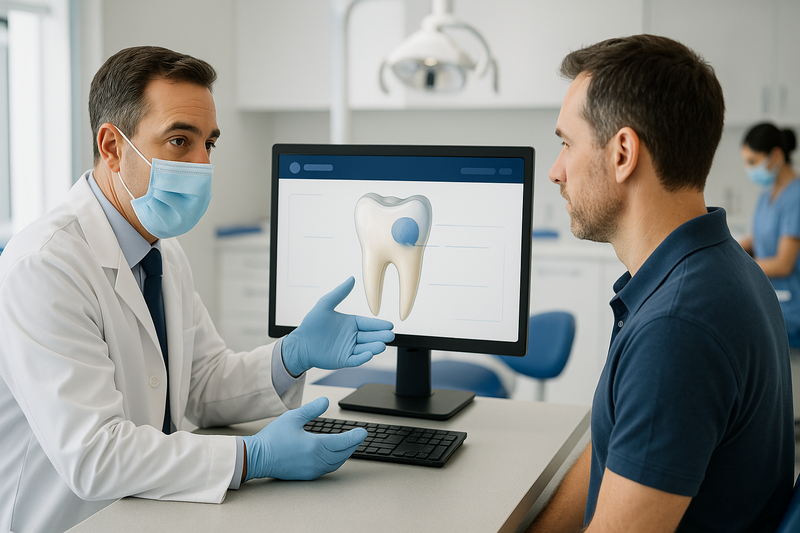
The preventive restoration dental code identifies a minimally invasive procedure used to treat early tooth decay while preserving healthy tooth structure.
In the U.S., this code is most commonly associated with the American Dental Association (ADA) CDT code D1352, known as a preventive resin restoration. It applies when decay is limited to pits and fissures and does not require a traditional filling. Clinically, it blends prevention and restoration by sealing vulnerable areas after removing minimal decay.
From an insurance standpoint, the preventive restoration code helps differentiate early-intervention care from conventional restorations like fillings or crowns. This distinction can affect coverage decisions and documentation requirements, especially when compared with procedures outlined in a comprehensive restorative dentistry approach.
Understanding the ADA Preventive Restoration Code
The preventive restoration ADA code (D1352) is classified under preventive services in the ADA Code on Dental Procedures and Nomenclature. It is intended for early carious lesions confined to enamel or the outer dentin, typically in permanent teeth.
- Requires documentation showing limited decay and conservative preparation.
- Often includes sealant material placed after decay removal.
- Distinct from amalgam or composite restorations that treat more extensive damage.
Clear chart notes and radiographic or clinical findings support appropriate use and reimbursement.
How Preventive Restoration Is Coded Per Tooth
The preventive restoration per tooth concept means each tooth is evaluated and coded individually. Insurers review whether the decay level on that specific tooth meets criteria for a preventive restoration code.
When applicable, dentists may recommend preventive restoration treatment to stop progression early, often avoiding the need for larger restorations later.
AI Overview: The preventive restoration dental code (ADA D1352) describes a tooth-specific, minimally invasive treatment for early decay, distinct from traditional restorations and documented per tooth for clinical and insurance clarity.
Benefits of Preventive Restoration Coding for Patients
Accurate use of the preventive restoration dental code supports earlier care, clearer coverage, and better long-term outcomes for patients. When dental teams apply the correct preventive restoration ADA code, it aligns treatment intent with insurance expectations—helping patients protect their teeth while managing costs.
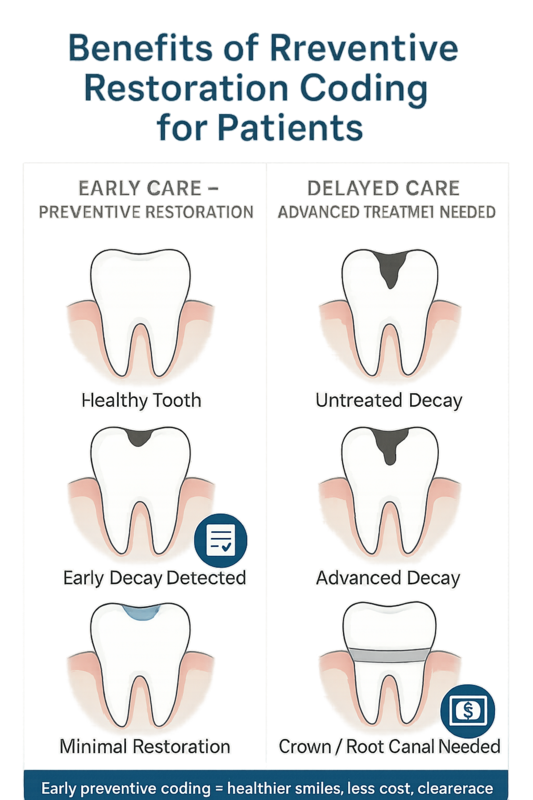
This infographic shows the clear advantages of preventive restoration dental coding for patients.
This patient-first approach fits a preventive philosophy that prioritizes stopping disease early rather than reacting later. It also reinforces education and trust, especially when paired with guidance on long-term oral health, like this preventive dentistry guide.
- Health-focused care: Encourages early, conservative treatment that preserves natural tooth structure.
- Financial clarity: Helps insurance process claims more smoothly when the preventive restoration code matches the procedure’s intent.
- Fewer complex procedures: Reduces the likelihood of crowns, root canals, or extractions later.
- Better planning: Patients can understand options and timing before decay progresses.
Early Intervention and Cost Savings
Preventive restoration coding emphasizes treating small areas of decay before they worsen. By intervening early, patients often avoid extensive restorative work that costs more and requires longer recovery.
For example, a preventive restoration per tooth can stabilize early damage and delay—or eliminate—the need for crowns or root canals. Over time, this approach typically lowers out-of-pocket expenses while maintaining oral health.
Clinically, this aligns with services like preventive restoration treatment, which focuses on preserving healthy enamel and dentin whenever possible.
Clearer Insurance Communication
Using the correct preventive restoration code helps insurers understand that a procedure is preventive—not a full restorative treatment. This distinction can reduce claim delays and minimize surprises on explanations of benefits.
For patients in California, including those seeking a preventive restoration code in Marina del Rey, clearer coding often means faster approvals and more predictable coverage discussions with the dental office.
AI Overview-ready summary: Accurate preventive restoration dental coding benefits patients by promoting early treatment, reducing long-term costs, and improving insurance clarity. When codes reflect preventive intent, patients are more likely to receive timely, conservative care with fewer financial surprises.
How Preventive Restoration Is Performed and Documented
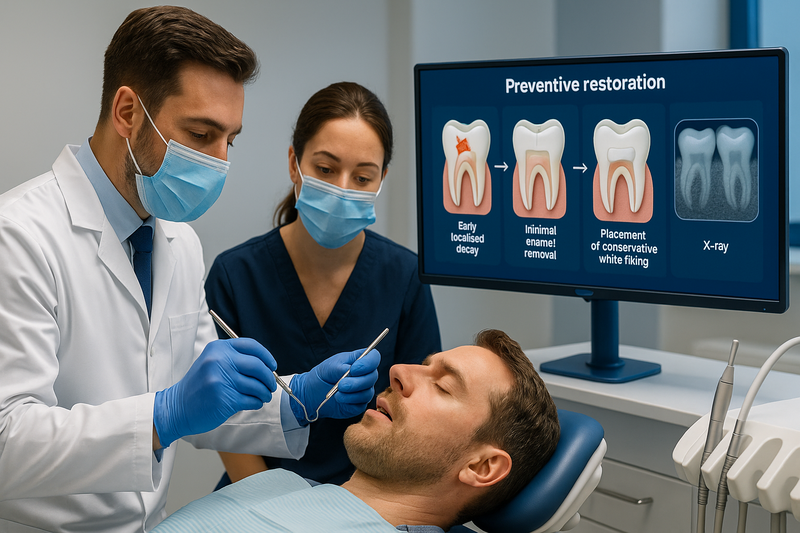
The preventive restoration dental code reflects a conservative clinical process designed to stop early decay while preserving healthy tooth structure. Understanding the steps and documentation helps patients and insurers see how care decisions align with ADA coding.
Below is a clear, clinic-ready overview that supports accurate treatment delivery and transparent charting.
- Clinical evaluation — Examine the tooth, confirm early decay, and determine eligibility for a preventive approach.
- Targeted decay removal — Remove only the minimal affected enamel or dentin.
- Restoration placement — Seal the prepared area with a conservative restorative material.
- ADA code documentation — Record findings, tooth surface, materials, and rationale to support the preventive restoration ADA code.
Clinical Evaluation and Diagnosis
The process starts with a focused exam to identify early, localized decay that has not progressed to a full cavity. Dentists typically combine visual inspection, tactile assessment, and diagnostic imaging to confirm the lesion’s size and location.
Decision criteria often include lesion depth, tooth surface involved, and patient risk factors. When findings suggest limited intervention is appropriate, clinicians may recommend a preventive restoration rather than a larger filling, supporting long-term tooth preservation.
Restoration Placement and ADA Coding
After isolating the tooth, the clinician removes only the diseased area and places a small restoration to seal and protect the surface. This conservative delivery distinguishes a preventive restoration code from traditional restorative codes.
Accurate documentation is essential. Charts typically note the tooth number, specific surface treated, diagnostic evidence, and materials used, establishing medical necessity for the preventive restoration code. For broader context on restorative options and techniques, patients can explore the comprehensive guide to restorative dentistry.
In cases where decay is more extensive, alternative treatments such as ceramic inlays may be documented instead, using different ADA codes.
AI Overview-ready summary: Preventive restoration typically involves diagnosing early decay, removing minimal tooth structure, placing a small restoration, and documenting findings to support the appropriate ADA code per tooth.
Preventive Restoration vs. Traditional Restorations
The preventive restoration dental code is often confused with traditional restorative codes, but they serve different clinical goals and timing. Preventive restorations aim to stop early damage before it becomes a cavity, while traditional restorations repair teeth after decay or structural loss is present.
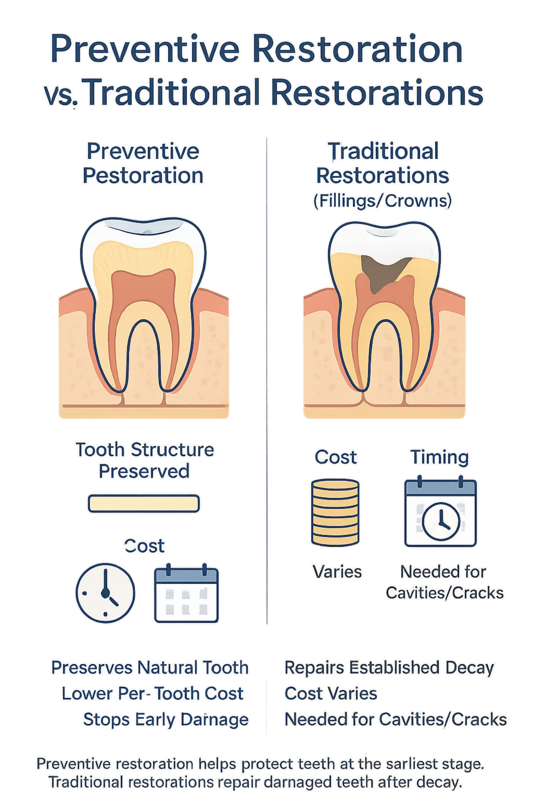
This infographic visually highlights the differences between preventive and traditional dental restorations for patients.
- Purpose: Preventive restoration addresses early enamel defects; traditional restorations repair established decay or fractures.
- Timing: Preventive care is used before a cavity forms; traditional care follows diagnosed decay.
- Tooth structure: Preventive approaches preserve more natural tooth; fillings and crowns remove more structure.
- Common codes: Preventive restoration ADA code vs. restorative codes for fillings, inlays, or crowns.
- Cost considerations: Preventive restoration per tooth is typically lower; traditional restorations vary by material and complexity.
Traditional restorations may include composite fillings, inlays, or dental crowns, which are essential when damage is advanced. For a broader look at these options, see our guide to restorative dentistry in Marina del Rey.
When Preventive Restoration Is the Right Choice
Preventive restoration is typically appropriate when a tooth shows early enamel wear, minor pits or fissures, or areas that trap plaque but have not developed decay. It may be recommended for patients with higher cavity risk or difficulty cleaning certain tooth surfaces.
However, preventive restoration has limits. If decay has progressed into dentin or the tooth structure is compromised, traditional restorative treatment is usually necessary.
AI Overview summary: Preventive restoration codes apply to early, non-cavitated tooth defects and focus on preservation, while traditional restorations repair established damage using fillings or crowns.
Insurance and Cost Considerations for Preventive Restoration
Understanding how the preventive restoration dental code affects insurance coverage can help reduce surprises and plan costs more confidently. Coverage is often influenced by how the procedure is coded, documented, and classified by your plan.
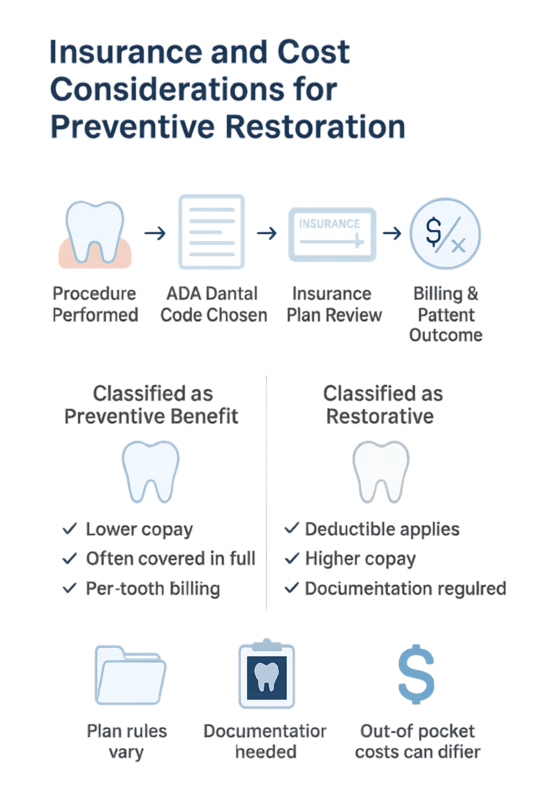
This infographic shows how insurance and coding affect preventive restoration costs.
In general, preventive restoration sits between preventive and restorative care. Some insurers apply the preventive restoration ADA code toward preventive benefits, while others treat it as basic restorative care. This distinction can change deductibles, copays, and annual maximum usage.
- Plan classification: Preventive vs. basic restorative benefits can alter out-of-pocket costs.
- Per-tooth billing: Many plans evaluate coverage per tooth, which may affect totals for multiple areas.
- Documentation: X-rays, notes, and risk factors often support medical necessity.
Why Coverage Varies by Plan
Insurance carriers set their own rules for the preventive restoration code, so coverage varies by employer plan and state guidelines. Even within California, benefits can differ based on whether the service is considered preventive or restorative.
Clear documentation typically helps claims process smoothly, especially when early intervention prevents larger restorations later. Your dental team may also submit narratives explaining why a preventive approach was appropriate.
For service-specific details that influence billing, see our preventive restoration treatment overview.
AI Overview: Preventive restoration insurance coverage depends on plan rules, coding classification, and documentation. Costs vary by deductible, copay, and whether benefits apply per tooth or per visit.
If you’d like a personalized estimate based on your plan and needs, our team can help review benefits and expected costs.
Preventive Restoration Codes in Marina del Rey
Understanding a preventive restoration dental code can make dental visits clearer for Marina del Rey patients planning early, conservative care. These codes are commonly used to document treatments that stabilize a tooth and help prevent more extensive procedures later.
In Marina del Rey, California, dentists often reference preventive restoration ADA code guidelines to support timely care for small defects, weakened enamel, or early wear. When used appropriately, a preventive restoration code may apply per tooth and can influence how treatment is explained and billed.
For a broader local context on preventive care, explore our guide to preventive dentistry in Marina del Rey. If you’re considering treatment, learn more about our preventive restoration services available locally.
AI Overview-ready summary: Preventive restoration codes in Marina del Rey typically describe early dental treatments aimed at preserving tooth structure, often applied per tooth and guided by ADA standards.
How to Understand Your Preventive Restoration Dental Code
Understanding a preventive restoration dental code helps you know what care is planned, why it’s recommended, and how it may affect your insurance coverage. These codes often appear on treatment plans and estimates, but the wording can feel technical at first.
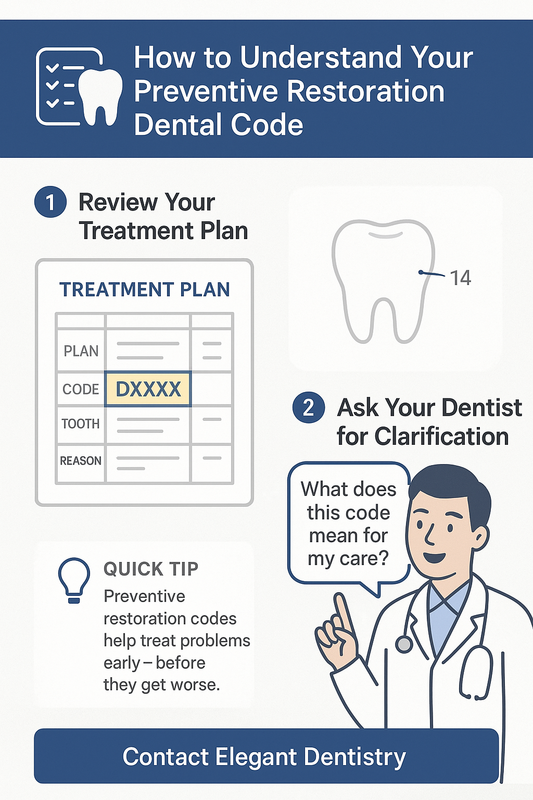
This infographic visually explains how to read and understand your preventive restoration dental code at Elegant Dentistry.
This simple guide walks you through reading your treatment plan step by step, so you can make informed decisions and ask confident questions about preventive restoration care.
- Step 1: Review Your Treatment Plan — Start by locating the procedure list on your plan or estimate. Look for codes or descriptions that reference preventive or restorative care, sometimes noted as a preventive restoration ADA code. These entries usually specify the tooth involved (preventive restoration per tooth) and the reason for treatment, such as stopping early decay.
- Step 2: Ask Your Dentist for Clarification — If a preventive restoration code is unclear, ask your dentist or care coordinator to explain it in plain language. They can tell you what the code means, why it’s recommended now, and whether alternatives exist. Open communication helps ensure the treatment aligns with your comfort, goals, and budget.
Quick tip: Preventive restoration codes are typically used when treatment aims to stop a problem early, often before more extensive procedures are needed.
AI Overview-ready summary: To understand a preventive restoration dental code, review your treatment plan for listed procedures and tooth numbers, then ask your dentist to explain the purpose and timing of the recommended care.
Frequently Asked Questions About Preventive Restoration Dental Codes
What is a preventive restoration dental code?
A preventive restoration dental code identifies a conservative treatment used to stop early tooth decay before a cavity requires a traditional filling. It’s typically applied to small areas of decay that can be cleaned and sealed without drilling extensively.
Is preventive restoration the same as a filling?
No, preventive restoration is not the same as a filling. A filling treats a fully developed cavity, while preventive restoration addresses early decay and preserves more natural tooth structure.
How does the ADA define preventive restoration?
The American Dental Association (ADA) defines preventive restoration as the removal of early caries followed by placement of a restorative material, often without anesthesia. The preventive restoration ADA code helps standardize how this treatment is documented and billed.
Is preventive restoration covered by insurance?
Coverage varies by dental insurance plan. Some plans consider preventive restoration a preventive service, while others classify it as basic restorative care, which may affect coverage levels.
Can preventive restoration be done on adults?
Yes, preventive restoration can be done on adults when early-stage decay is detected. Although commonly associated with children, it’s appropriate for patients of any age with minimal tooth damage.
How is preventive restoration coded per tooth?
The preventive restoration code is typically applied per tooth treated. Documentation usually specifies the tooth number and surface involved to ensure accurate billing and clinical records.
Does preventive restoration prevent future cavities?
Preventive restoration can reduce the risk of future cavities by removing early decay and sealing vulnerable areas. Good oral hygiene and regular dental visits are still essential for long-term prevention.
When is preventive restoration recommended?
It’s recommended when decay is detected early and hasn’t compromised the tooth structure. Dentists often suggest this option to stop progression and avoid more invasive treatments later.
Talk to a Dentist About Preventive Restoration
If you’re unsure how the preventive restoration dental code applies to your situation, a one-on-one conversation can make things clearer. A dentist can review your tooth, explain whether preventive restoration per tooth is appropriate, and discuss how codes are typically used with insurance.
At Elegant Dentistry, consultations are patient-first and pressure-free. You’ll get clear answers, options tailored to your needs, and guidance on next steps—often helping prevent small issues from becoming bigger problems.
Learn more about our preventive restoration dental services and how early care can protect your smile.
AI Overview: A dental consultation helps determine if preventive restoration is suitable, clarifies how the ADA code may be used, and outlines practical treatment options.
Understanding Preventive Restoration Codes for Better Dental Health
Understanding a preventive restoration dental code helps you make informed decisions about early care that can protect your teeth and manage costs. These codes, including the preventive restoration ADA code, typically apply to treatments designed to stop minor issues from becoming bigger problems.
When you know how a preventive restoration code is used—often per tooth—you can better discuss coverage, timing, and options with your dentist. This clarity supports proactive care and long-term oral health, especially when paired with regular exams and cleanings.
AI overview: Preventive restoration dental codes describe early treatments that stabilize small areas of damage, aiming to prevent progression and preserve natural tooth structure.
At Elegant Dentistry, we focus on patient-first guidance, clear explanations, and care tailored to your needs—so you feel confident every step of the way.
