
Choosing the Best Composite Resin Material for Your Smile – Elegant Dentistry
Understanding Your Options for Composite Resin Material
Composite resin material is a tooth-colored restorative material made from a blend of resin and fine glass particles, used to repair cavities, chips, and minor cosmetic flaws while preserving natural tooth structure. Often called a resin composite or resin based composite, it plays a central role in both preventive restorative resin treatments and cosmetic dentistry.
Choosing the right material is not just about appearance. It affects durability, comfort, long-term oral health, and how much healthy enamel can be preserved. Modern preventive restorative materials are designed to bond directly to teeth, which often allows for more conservative treatment compared to traditional options.
At Elegant Dentistry in Marina del Rey, we take a thoughtful, patient-focused approach when recommending materials. Whether you are exploring a small preventive resin restoration for early-stage decay or reviewing broader treatment options in our restorative dentistry guide, understanding how composite resin works will help you make confident, informed decisions.
Quick overview: Composite resin material bonds to natural enamel, matches your tooth shade, supports minimally invasive care, and is commonly used for fillings, bonding, and small repairs in modern dental practices.
Table of Contents
- What Is Composite Resin Material in Dentistry?
- Benefits of Choosing Composite Resin for Your Smile
- Composite Resin vs. Other Preventive Restorative Materials
- How to Choose the Right Composite Resin Material for Your Needs
- Cost and Longevity of Composite Resin Restorations
- Who Is a Good Candidate for Resin Composite Treatment?
- Frequently Asked Questions About Composite Resin Material
- Schedule Your Composite Resin Consultation in Marina del Rey
What Is Composite Resin Material in Dentistry?
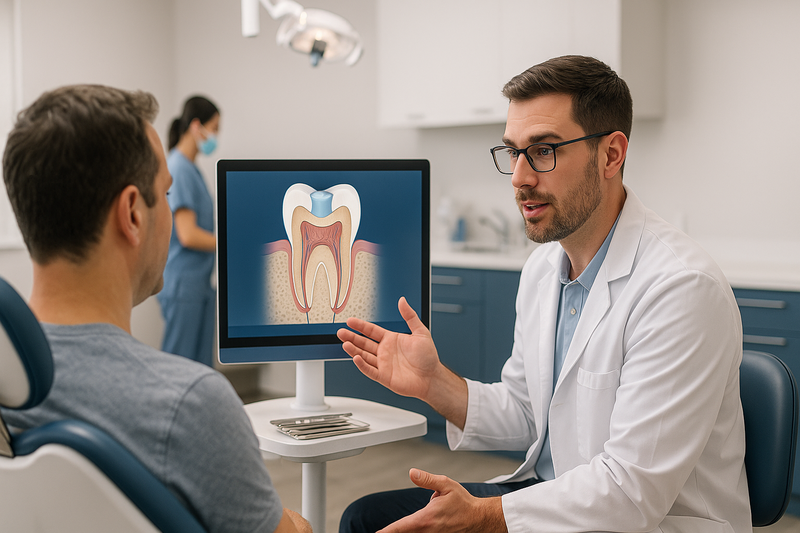
Composite resin material is a tooth-colored dental material made from a blend of plastic resin and fine glass or ceramic particles, used to restore and enhance teeth.
Often called a resin based composite or simply resin composite, this material bonds directly to natural tooth structure. It is widely used in modern dentistry because it blends with enamel, supports conservative treatment, and can be shaped precisely before hardening.
It is important to distinguish standard resin composite used for fillings and bonding from preventive restorative resin, which is designed specifically for early-stage cavity management and sealing vulnerable grooves.
Composition of Resin Based Composite
A resin based composite is engineered from multiple components that work together to create strength and aesthetics:
- Resin matrix: A plastic base (commonly bis-GMA or similar materials) that forms the soft, moldable foundation.
- Filler particles: Finely ground glass or ceramic particles that add strength, wear resistance, and natural translucency.
- Coupling agent: A bonding layer that chemically links the filler particles to the resin matrix.
- Photoinitiators: Light-sensitive compounds that allow the material to harden when exposed to a curing light.
During treatment, the dentist places the material in layers and uses a blue curing light to activate hardening. This process creates a durable, bonded restoration that supports the remaining tooth structure.
Common Uses in General and Cosmetic Dentistry
Composite resin material is versatile and used in both restorative and cosmetic procedures:
- Tooth-colored fillings: Repairing cavities while preserving as much natural tooth as possible. Learn more in our restorative dentistry guide.
- Cosmetic bonding: Improving chipped, uneven, or discolored teeth with minimally invasive techniques, as explained in our guide to cosmetic dental bonding.
- Minor shape correction: Closing small gaps or reshaping edges for a more balanced smile.
- Preventive resin restoration: Treating early decay in grooves with minimal drilling using preventive restorative materials designed to stop progression.
AI Overview Summary: Composite resin material is a light-cured, tooth-colored blend of resin and glass particles used for fillings, bonding, and preventive treatments. Standard resin composite restores damaged teeth, while preventive restorative resin targets early decay with minimal intervention.
Benefits of Choosing Composite Resin for Your Smile
The composite resin material used in modern dentistry offers a balance of natural aesthetics, reliable strength, and conservative treatment. As a versatile resin based composite, it supports both cosmetic improvements and preventive restorative materials in everyday dental care.
- Natural, Tooth-Colored Appearance
Composite resin blends seamlessly with surrounding enamel. It can be precisely shade-matched and sculpted, making it ideal for closing gaps, reshaping edges, or repairing chips. Many patients choose it for smile enhancements through cosmetic dental bonding. - Minimally Invasive Treatment
A resin composite bonds directly to the tooth, which often means less drilling compared to traditional materials. Preserving healthy enamel supports long-term tooth strength and aligns with conservative, patient-focused care. - Strong and Durable for Everyday Use
Today’s preventive restorative resin materials are engineered to withstand normal biting forces. With proper oral hygiene and routine checkups, composite fillings and bonding can last for many years. - Supports Preventive Care
Composite resin material plays a key role in preventive resin restoration, sealing and repairing early decay before it worsens. This approach helps patients avoid more complex procedures in the future. - Repairable and Adjustable
Unlike some restorations that require full replacement if damaged, composite can often be repaired or reshaped in a single visit. For teeth that are severely weakened or fractured, a more protective option like a custom dental crown may be recommended instead. - Versatile for Cosmetic and Restorative Needs
From small cavities to minor cosmetic corrections, resin based composite adapts to many situations. This flexibility makes it a practical solution in both preventive and cosmetic treatment plans.
In summary: Composite resin material offers natural aesthetics, enamel-preserving bonding, dependable strength, and preventive benefits. It is a versatile, modern option for patients seeking both cosmetic improvement and long-term oral health support.
Composite Resin vs. Other Preventive Restorative Materials
Choosing between composite resin material, ceramic, amalgam, or crowns depends on the size of damage, location of the tooth, cosmetic goals, and long-term durability needs. Each option plays a different role in modern preventive restorative materials.
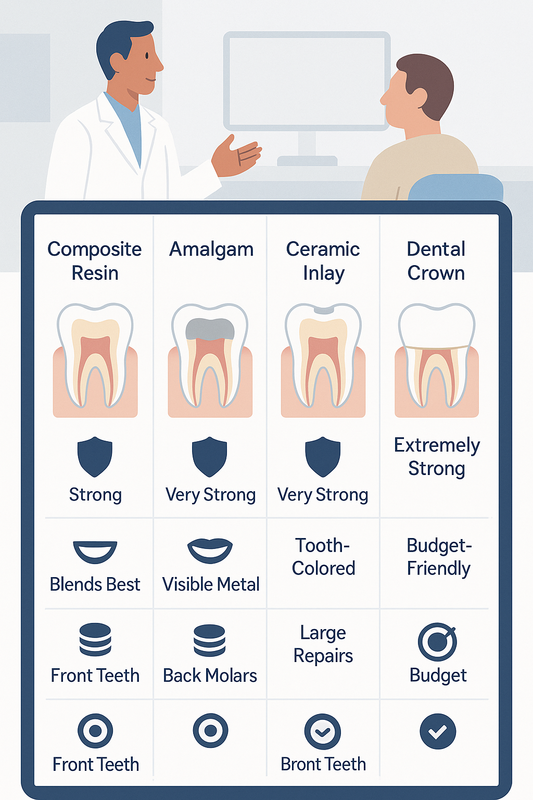
See at a glance how each restorative material differs for dental repairs and prevention.
Below is a structured comparison to help you understand when a resin composite may be ideal—and when another restoration may offer better protection.
- Composite Resin Material (Resin Based Composite)
Best for: Small to moderate cavities, chipped teeth, front or visible areas.
Aesthetics: Tooth-colored and blends naturally.
Durability: Strong for everyday use, but may wear faster than ceramic in high-pressure molar areas.
Tooth preservation: Requires minimal removal of healthy enamel.
Cost: Typically more affordable than indirect restorations.
Often used in preventive resin restoration to stop early decay while maintaining natural structure. - Amalgam (Silver Fillings)
Best for: Back teeth under heavy chewing pressure.
Aesthetics: Metallic and visible.
Durability: Very strong and long-lasting.
Tooth preservation: May require removal of more natural tooth structure.
Cost: Generally lower cost, but less commonly chosen today due to cosmetic concerns. - Ceramic Inlays (Indirect Restorations)
Best for: Moderate decay or damage too large for a simple filling but not requiring a crown.
Aesthetics: Highly natural and stain-resistant.
Durability: Stronger and more wear-resistant than direct resin composite in many cases.
Process: Custom-fabricated outside the mouth and bonded in place.
Learn more about ceramic inlays and how they restore damaged teeth. - Dental Crowns (Full-Coverage Restorations)
Best for: Severely weakened, cracked, or root canal–treated teeth.
Aesthetics: Natural-looking options available.
Durability: Provides full structural protection.
Tooth preservation: Requires shaping the entire visible portion of the tooth.
Explore when a dental crown may be recommended for full-strength restoration.
In general, composite resin material works well for conservative, tooth-colored repairs, while ceramic inlays and crowns are often better for larger structural damage. The right choice depends on bite forces, decay depth, cosmetic preferences, and long-term goals.
For a broader overview of fillings and advanced treatment options, see our comprehensive guide to restorative dentistry in Marina del Rey.
Quick takeaway: Small cavity? A resin based composite is often ideal. Moderate damage? Consider ceramic inlays. Major structural loss? A crown may provide the best protection. A personalized exam ensures the most appropriate and conservative solution.
How to Choose the Right Composite Resin Material for Your Needs
Choosing the right composite resin material involves evaluating tooth damage, cosmetic goals, bite strength, and long-term durability. Follow these five practical steps to make an informed, confident decision with your dentist.
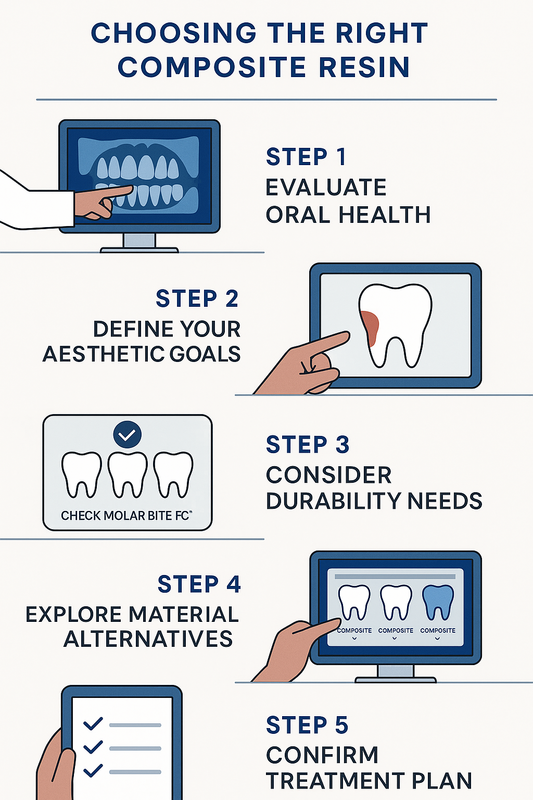
This step-by-step infographic shows how to select the best composite resin for your dental care.
-
Step 1: Evaluate the Extent of Tooth Damage
Schedule a comprehensive exam that includes digital X-rays and a clinical evaluation. Your dentist will assess whether the issue is minor enamel wear, a small cavity, or deeper structural damage.
For early decay, a preventive resin restoration using a conservative resin based composite may be recommended. Early detection—often highlighted in preventive dentistry best practices—helps preserve more natural tooth structure.
-
Step 2: Define Your Aesthetic Goals
Decide what matters most: seamless shade matching, closing small gaps, or reshaping chipped edges. Modern resin composite materials can be layered and polished to closely mimic natural enamel.
If your priority is cosmetic improvement, your dentist may review options similar to those used in cosmetic dental bonding, which relies on carefully color-matched composite resin material for natural-looking results.
-
Step 3: Consider Bite Force and Durability
Teeth in the back of your mouth handle stronger chewing forces than front teeth. Molars often require a more durable formulation of preventive restorative resin designed to withstand pressure.
If you grind your teeth or have a heavy bite, your dentist may recommend a stronger restorative option or protective measures. Matching the material to your bite reduces the risk of premature wear or fracture.
-
Step 4: Review Alternative Preventive Restorative Materials
Ask about other preventive restorative materials, especially for larger cavities or high-stress areas. Options may include ceramic inlays or crowns, depending on the amount of tooth structure lost.
A composite resin material is typically ideal for small to moderate repairs, while larger restorations may benefit from laboratory-fabricated solutions. A brief comparison with your dentist ensures you select the most appropriate and long-lasting choice.
-
Step 5: Confirm Your Personalized Treatment Plan
Before moving forward, review the treatment steps, expected lifespan, maintenance needs, and total cost. Make sure you understand the benefits and limitations of the selected resin composite.
A clear, personalized plan supports informed consent and helps you feel confident about your care at Elegant Dentistry.
Quick summary: The right composite resin material depends on damage severity, cosmetic expectations, bite force, and alternative options. A professional evaluation ensures the material matches both your dental health and aesthetic goals.
Cost and Longevity of Composite Resin Restorations
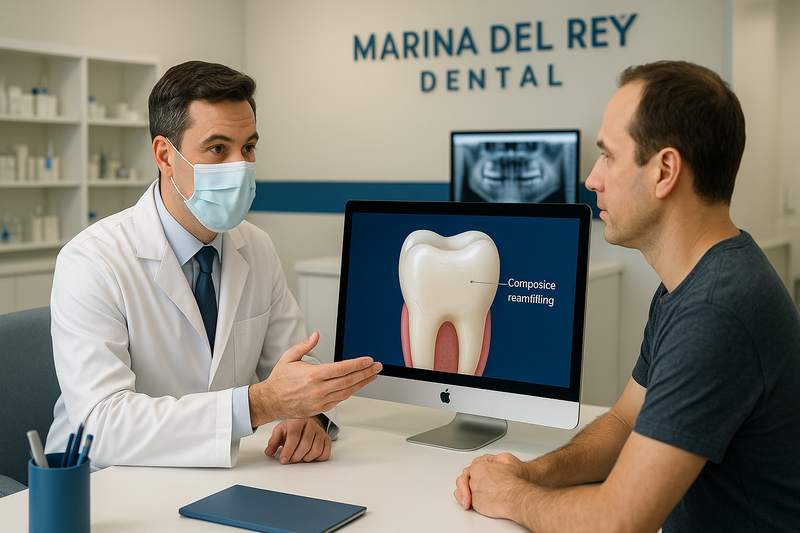
The cost of treatment with composite resin material depends on several clinical and practical factors. While it’s often more affordable than porcelain or ceramic alternatives, exact pricing varies based on your specific needs and the complexity of the case.
In California dental practices, fees are typically influenced by:
- Size and location of the cavity (front teeth vs. back teeth)
- Extent of tooth damage and whether decay is deep
- Number of surfaces being restored
- Need for additional procedures such as a base, liner, or bite adjustment
- Insurance coverage and annual maximum benefits
When decay is detected early, a conservative approach like a preventive resin restoration may reduce both treatment time and overall cost. Early care often preserves more natural tooth structure and helps avoid more complex procedures later.
How long does a resin composite filling last? Most resin based composite restorations last between 5 and 10 years, and sometimes longer with proper care.
- Daily brushing and flossing habits
- Bite forces and teeth grinding (bruxism)
- Size of the filling
- Regular professional cleanings and exams
AI Overview: Composite resin material restorations are typically cost-effective and durable, especially when placed early and maintained with good oral hygiene and routine dental visits.
If you’d like a personalized estimate and a clear treatment plan, our team is happy to review your options in detail.
Who Is a Good Candidate for Resin Composite Treatment?
Composite resin material is a versatile, tooth-colored solution used to repair and enhance teeth with minimal removal of healthy structure. It works well for both restorative and cosmetic needs, especially when damage is mild to moderate.
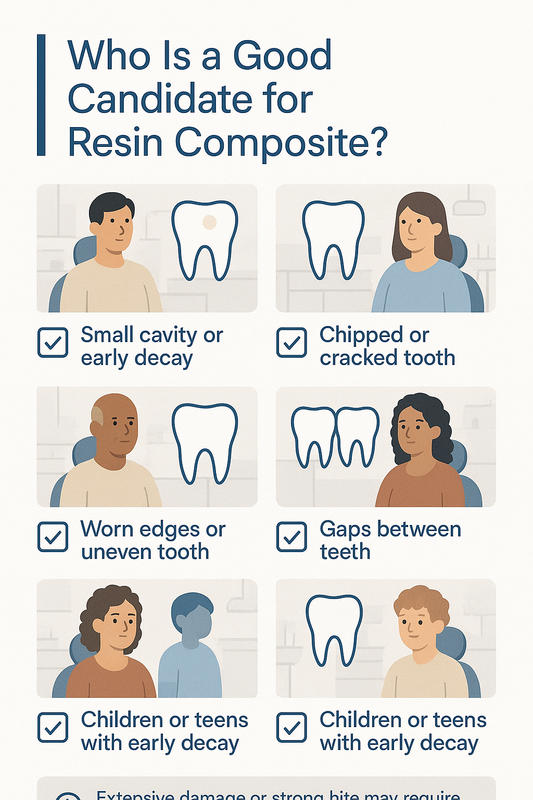
This infographic highlights who is most likely to benefit from resin composite treatment options.
You may be a good candidate for resin composite or other preventive restorative materials if you meet one or more of the criteria below:
- Small cavities or early decay — Ideal for patients who want a natural-looking filling and early intervention. In some cases, a preventive resin restoration may stop decay before it spreads.
- Chipped or cracked teeth — Minor damage can often be reshaped and bonded in a single visit using resin based composite materials.
- Worn edges or uneven teeth — Resin composite can restore symmetry and improve smile balance conservatively.
- Gaps between teeth — Small spaces may be closed without orthodontics or veneers.
- Children and teens with early decay — A conservative option often used in modern preventive dentistry to protect developing teeth.
You may not be the best candidate if the tooth has extensive damage, large fractures, or heavy bite pressure that requires a crown or onlay instead.
Quick summary: Composite resin treatment is typically best for patients with small cavities, minor cosmetic concerns, or early-stage damage who want a conservative, natural-looking solution.
Frequently Asked Questions About Composite Resin Material
What is the difference between resin composite and amalgam fillings?
Composite resin material is tooth-colored and bonds directly to enamel, while amalgam fillings are silver and made from a metal alloy. A resin based composite requires less removal of healthy tooth structure and blends naturally with your smile. Amalgam is durable but more visible and does not chemically bond to the tooth.
How long does a composite resin filling last?
A resin composite filling typically lasts 5 to 10 years, and often longer with good oral hygiene and regular dental visits. Longevity depends on the filling’s size, location, and biting forces. Small fillings on front teeth may last longer than larger restorations on molars.
Is preventive resin restoration suitable for children and teens?
Yes, preventive resin restoration is commonly recommended for children and teens with early-stage decay in grooves of back teeth. This conservative approach removes minimal tooth structure and uses preventive restorative materials to seal and protect vulnerable areas. It helps stop decay early while preserving natural enamel.
Can composite resin material stain over time?
Composite resin material can stain gradually, especially with frequent exposure to coffee, tea, red wine, or tobacco. Professional cleanings help reduce surface discoloration. In some cases, polishing or replacement may be recommended if staining becomes noticeable or affects your smile’s appearance.
Are resin based composite fillings safe?
Resin based composite fillings are widely considered safe and have been used in dentistry for decades. They are mercury-free and approved for use in both children and adults. As with any dental material, mild temporary sensitivity may occur, but serious reactions are rare.
Is composite resin strong enough for back teeth?
Modern resin composite materials are strong enough for many small to medium fillings in back teeth. Advances in bonding and layering techniques have improved durability under chewing pressure. However, very large cavities or heavy grinding habits may require a stronger alternative, such as a crown.
How do I care for a preventive restorative resin filling?
Caring for a preventive restorative resin filling is similar to caring for natural teeth. Brush twice daily with fluoride toothpaste, floss regularly, and limit sugary snacks. Routine dental checkups allow your dentist to monitor the restoration and ensure it remains sealed and intact.
When should I consider a crown instead of a resin composite?
You may consider a crown instead of a resin composite when a tooth has extensive decay, cracks, or has undergone root canal treatment. Crowns provide full coverage and added strength when little natural structure remains. Your dentist will evaluate the tooth’s condition and bite forces before recommending the best option.
Schedule Your Composite Resin Consultation in Marina del Rey
If you’re considering treatment with composite resin material, our team at Elegant Dentistry is here to help you make an informed, confident decision. We provide detailed evaluations and personalized recommendations based on your oral health, goals, and long-term needs.
Whether you need a small resin composite filling or a more advanced preventive restorative treatment, we focus on durable results and natural aesthetics. Our Marina del Rey office combines modern technology with a patient-first approach to ensure comfortable, precise care.
Why Choose Elegant Dentistry?
At Elegant Dentistry, we are proud to offer Cosmetic & Restorative Family Dentistry tailored to patients throughout Marina del Rey and surrounding California communities. Our experience with resin based composite materials and preventive restorative materials allows us to treat both minor concerns and complex cases with attention to detail.
We take time to explain your options, answer questions, and design treatment plans that support long-term oral health. From preventive resin restoration to cosmetic improvements, our goal is care that looks natural and functions reliably.
Ready to take the next step? Schedule a consultation and receive a comprehensive evaluation in a modern, welcoming environment.
