How Much Does Teeth Whitening Cost at the Dentist?
Whitening is the least invasive cosmetic treatment we offer, and it is also the one patients ask about by price more than any other. There is no single fee, because the number depends on which method you use, how dark the teeth are to begin with, and how much chair time the case needs.
This page explains the ranges we see, what moves a quote up or down, and what you get for the difference between a dentist-supervised treatment and a drugstore kit. If you want a figure for your own teeth, an exam is the only honest way to produce one, and ours is free.
What Professional Whitening Actually Is
Professional whitening is a peroxide bleaching treatment done or prescribed by a dentist. The gel is stronger than anything sold over the counter, and the gums and lips are isolated before it goes on, which is what makes the higher strength safe to use.
The clinical part matters more than most people expect. Existing crowns, veneers and fillings do not bleach, so if you have restorations in the smile line, they need to be accounted for before treatment rather than discovered afterward. Sensitivity history changes the gel strength and the exposure time we choose. A retail kit cannot assess either of those things.
In-Office Treatment and Custom Take-Home Trays
- In-office whitening: higher-strength gel applied in the chair, often with a light or laser to speed the reaction. Results are visible in one visit.
- Dentist-supervised take-home trays: trays molded to your teeth, filled with professional-grade gel and worn over one to two weeks. The change is gradual and the fit keeps gel off the gums.
- Both together: a single in-office session to do the heavy lifting, then trays for touch-ups. This is the combination most of our whitening patients end up using.
What Happens in the Chair
Exam, Gum Protection, Gel, Shade Checks
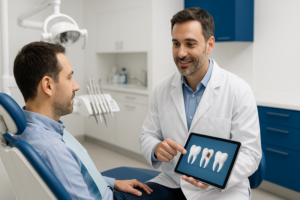
A visit starts with an exam of the teeth and gums and a record of your starting shade. We then place a protective barrier over the gums and lips, which is what allows a stronger gel to be used safely.
The gel goes on and is activated according to the system being used. The shade is checked as it works, so the teeth stop at the point you wanted rather than going past it. An in-office session runs about 60 to 90 minutes, and most people leave several shades lighter the same day.
The gel is then removed and the teeth rinsed. You leave with aftercare instructions, and the first 48 hours matter most: teeth are briefly more porous, so dark drinks and sauces should wait.
The Price Ranges
Nationally, most patients pay between $300 and $1,200 for professional whitening. A typical single in-office session falls between $300 and $800, and some systems or multi-session plans run to $1,000 or more.
Broken out by method, the common ranges are:
- In-office session: about $500 to $1,000 for one visit with same-day results.
- Zoom whitening: about $600 to $1,200, reflecting the branded system and the chair time it requires.
- Laser bleaching: about $700 to $1,500, usually higher because of the equipment and the supervision involved.
- Custom take-home trays: about $300 to $500, used over one to two weeks.
What This Looks Like in California
California prices sit toward the upper part of those national ranges, and coastal Los Angeles more so. In practice, whitening here tends to land between $300 and $1,000, with same-day in-office treatment at the higher end and trays at the lower end. Higher overhead and a heavier demand for cosmetic work are most of the reason.
Two costs sit next to the whitening fee and are worth budgeting for. The first is a cleaning, or treatment of any decay or gum problem we find, before whitening starts. If a tooth needs work such as preventive restoration, that comes first, because bleaching an untreated tooth is both uncomfortable and pointless. The second is maintenance: touch-up gel for your trays every so often, which is far cheaper than repeating the full treatment.
What Moves the Price
Stain Type and Severity
Where the stain sits is the single biggest factor in how many sessions you need.
- Extrinsic stains from coffee, tea, red wine and tobacco sit on the enamel surface. They lift quickly and usually take the fewest visits.
- Intrinsic stains from aging, trauma or certain medications sit inside the tooth. They need stronger gel, longer exposure, or more than one session, and some of them will not fully respond to bleaching at all.
Deep intrinsic discoloration is where household remedies fail most visibly. We go through what those can and cannot do in our guide to natural whitening myths.
Method and Clinical Judgment
Light and laser systems cost more per visit but can cut the number of visits, so the total is not always higher. The bigger variable is dosing. Stronger is not automatically better: the right concentration and timing for your teeth protect the enamel and the gums and often get you to the target shade in fewer appointments than an aggressive approach would.
Before any whitening, ask what is being used, how sensitivity will be handled, and whether touch-up gel is included in the quoted fee. Those three answers explain most of the spread between two prices that look otherwise identical.
Compared With Over-the-Counter Kits
Strips and drugstore trays do lighten surface stains for some people, and for mild extrinsic staining they are a reasonable first try. The differences show up in three places.
Where the Two Approaches Diverge
- Evenness: stock trays and strips do not follow the contours of your teeth, so gel contact is uneven and so is the result. Custom trays fit.
- Sensitivity: in the office we can apply desensitizer, drop the gel concentration, or shorten exposure. A kit gives everyone the same instructions regardless of how their teeth respond.
- Assessment: nobody checks whether your discoloration is actually bleachable, or whether a front crown is about to end up a different color from the teeth beside it.
If a tooth is dark because of an old restoration or internal staining, no amount of gel will fix it, and the money is better spent on veneers or a new crown.
Getting the Most Out of What You Spend
How to Prepare for a Whitening Appointment
- Have a cleaning one to two weeks first. Gel works on enamel, not on plaque and tartar. Cleaner teeth bleach more evenly, and you may need fewer sessions.
- Cut back on staining foods for two or three days before. Coffee, red wine, dark sauces and tobacco all work against you right before treatment.
- Raise sensitivity before, not after. If cold drinks already bother you, say so at the consultation. Desensitizing toothpaste for a couple of weeks beforehand makes a real difference.
- Ask what aftercare is included. Whether touch-up gel and follow-up are part of the fee changes the real cost more than the headline number does.
- Protect the result. Most of the longevity is habit. Our notes on maintaining whitening results cover the practical part.
Whitening is cosmetic, so dental insurance almost never covers it. Check your plan before you assume otherwise. We offer payment plans if you would rather spread the cost.
Two situations where we will ask you to wait: active decay or untreated gum disease, which should be handled first, and pregnancy or breastfeeding, where the usual advice is to postpone elective bleaching. Children and teenagers with developing teeth should be assessed individually rather than treated with an adult protocol.
How Whitening Compares to Other Cosmetic Work
Set against the rest of the cosmetic menu, whitening is the cheapest way to change how a smile looks, because it changes color only and does not alter the tooth itself.
- Teeth whitening: $300 to $800 per session
- Dental veneers: $900 to $2,500 per tooth
- Zirconia crowns and dental crowns: $1,000 to $2,500 per tooth
- Ceramic inlays: $700 to $1,200 per inlay
- Dental implants: $3,000 to $5,000 per implant
Those treatments are not really alternatives to whitening, since they rebuild shape and function as well as appearance. But if your teeth are sound and the only complaint is color, whitening is the treatment that answers it for the least money. Whether the wider spend is worth it is a fair question, and we take it up in our piece on cosmetic dentistry in Los Angeles.
Whitening also sequences with other care. If you are planning clear aligners, whitening usually comes after the teeth are straight. If you need gum treatment, root canal treatment or an extraction, that work comes first. We also see families who want to combine an adult whitening visit with children’s checkups on the same trip.
Whitening Costs in Marina del Rey
Quotes around Marina del Rey and the surrounding coastal neighborhoods generally sit at the upper end of the national numbers above. What separates one office from another is usually the method offered, whether custom trays are included, and how much follow-up comes with the fee.
At our office on West Washington Boulevard we quote after an exam, not before, and the consultation and any second opinion are free. That way the number you hear accounts for your actual shade, your restorations and your sensitivity, rather than an average.
Common Questions
How much does whitening cost at a dentist in California?
Most treatments fall between $300 and $1,000. Custom take-home trays sit at the lower end, single-visit in-office treatment at the higher end. The exact figure depends on the system used and whether follow-up gel is included.
Is Zoom or laser whitening worth the extra money?
Zoom runs roughly $600 to $1,200 and laser systems roughly $700 to $1,500, both above a standard in-office session. What you are paying for is speed: a bigger shade change in a single appointment. If your timeline is flexible, trays reach a similar place for less.
Does dental insurance cover whitening?
Almost never, because it is classed as cosmetic. A few plans offer a discount through preferred providers. Check your benefits before scheduling, and ask us about a payment plan if you want to spread the cost.
How long do the results last?
Typically six months to two years. Coffee, red wine and tobacco shorten that considerably, and good hygiene lengthens it. If you have custom trays, a short touch-up once or twice a year holds the shade without repeating the full treatment.
Can I whiten if my teeth are sensitive?
Usually yes, with adjustments. We use a lower concentration, shorten the exposure time, and apply a desensitizing agent. Tell us about past sensitivity at the consultation so the protocol is set correctly from the start. If sensitivity becomes sharp or lingers more than a day or two after treatment, stop and call us.
Get a Figure for Your Own Teeth
A consultation gives you the number that actually applies to you: your starting shade, the condition of any existing dental work, your sensitivity history and the method that suits them. We go through the options and the fees before anything is scheduled.
You can read more about our whitening treatment, or book and ask us directly. Consultations and second opinions are free, and we accept most insurance plans.
Is It Worth Paying a Dentist For?
If your staining is mild and surface-level, a drugstore kit may be enough, and we will tell you so. If you want a noticeable change, have sensitive teeth, or have crowns and veneers in the smile line, supervised treatment is the safer and usually the faster route, and the result holds longer.