
Resin Composite: Key Facts About Dental Restoration – Elegant Dentistry
Understanding Resin Composite in Modern Dental Care
Resin composite is a tooth-colored filling material used to repair, rebuild, and enhance natural teeth in modern dentistry. It blends durability with aesthetics, making it one of the most widely used materials in both restorative and cosmetic treatments.
At Elegant Dentistry in Marina del Rey, we use composite resin material to treat cavities, repair chipped or worn teeth, and improve smile appearance while preserving healthy structure. If you have ever wondered what is dental restoration or looked for a clear restoration in dentistry definition, it simply refers to repairing damaged teeth so they function and look natural again.
Resin based composite plays a central role in today’s minimally invasive care. For a broader overview of treatment options, you can explore our complete guide to restorative dentistry in Marina del Rey, which explains how materials like composite fit into long-term oral health planning.
Why Resin Composite Matters for Families and Adults
Resin composite matters because it supports both structural repair and cosmetic improvement in a single treatment. It bonds directly to enamel, which often allows dentists to remove less healthy tooth structure compared to older metal fillings.
- Natural appearance: Color-matched to blend with surrounding teeth.
- Minimally invasive: Preserves more of the original tooth.
- Versatile: Used for cavities, chips, small gaps, and worn edges.
- Preventive approach: Commonly used in early-stage decay as part of preventive restorative treatments.
For families and adults in California, this means fewer visible restorations and a greater focus on long-term health. In short, resin composite is a durable, tooth-colored material that restores strength, protects against further decay, and maintains a natural-looking smile—all while supporting conservative, patient-centered dental care.
Table of Contents
- What Is Resin Composite? A Clear Definition in Dentistry
- Key Benefits of Resin Composite for Dental Restoration
- Resin Composite vs. Other Preventive Restorative Materials
- How a Resin Composite Dental Restoration Is Performed
- Who Is a Good Candidate for Resin Composite?
- How to Care for a Resin Composite Restoration
- Frequently Asked Questions About Resin Composite
- Schedule Your Dental Restoration Consultation in Marina del Rey
What Is Resin Composite? A Clear Definition in Dentistry
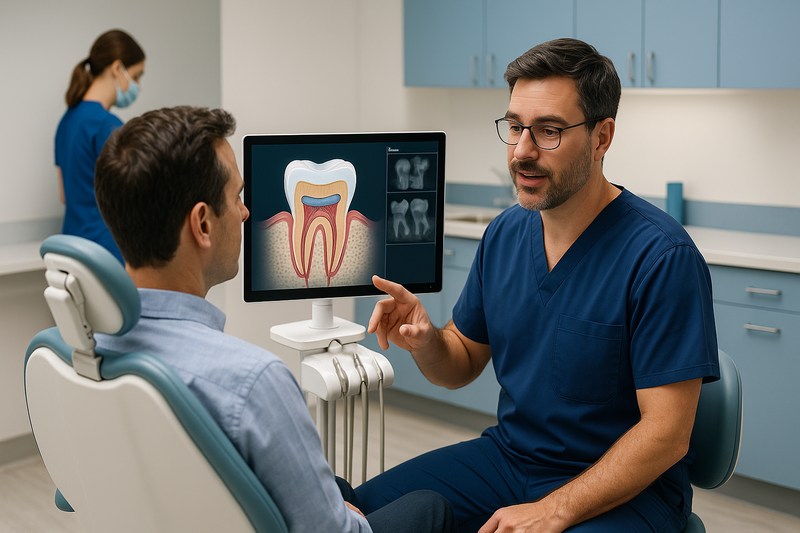
Resin composite is a tooth-colored dental material made from a blend of plastic resin and fine glass or ceramic particles, used to repair decayed, chipped, or worn teeth. It bonds directly to enamel and dentin, allowing dentists to restore both function and appearance in a single, minimally invasive procedure.
In simple terms, resin composite is a modern filling material designed to match your natural tooth shade while strengthening the remaining structure. It is commonly used for cavities, cosmetic bonding, and small structural repairs.
What Is Composite Resin Material Made Of?
A composite resin material combines several components that work together to create a durable, aesthetic restoration. Each part plays a specific role in strength, bonding, and polishability.
- Resin matrix: A plastic base (often Bis-GMA or similar) that gives the material flexibility before curing.
- Filler particles: Finely ground glass or ceramic that improves strength, wear resistance, and translucency.
- Coupling agent: Binds the filler to the resin matrix for durability.
- Photoinitiators: Allow the resin based composite to harden when exposed to a curing light.
Before placement, the tooth is conditioned and treated with a bonding agent. This helps the resin based composite adhere securely to enamel and dentin, reducing gaps and supporting long-term stability.
Restoration in Dentistry Definition
Dental restoration is the process of repairing or replacing damaged tooth structure to restore normal function, strength, and appearance. If you’ve ever wondered what is dental restoration, it simply refers to treatments that rebuild teeth affected by decay, fractures, or wear.
Common examples include:
- Tooth-colored fillings made from resin composite
- Cosmetic bonding for chips or gaps
- ceramic inlays for larger areas of damage
- Crowns that fully cover and protect weakened teeth
Resin composite is considered one of today’s most versatile preventive restorative materials because it preserves healthy tooth structure while sealing and reinforcing vulnerable areas. For a broader look at how fillings, inlays, and crowns fit together, see our comprehensive guide to restorative dentistry in Marina del Rey.
Quick summary: Resin composite is a tooth-colored material used in dental restorations to repair and protect damaged teeth. It bonds directly to tooth structure, supports long-term function, and blends naturally with your smile.
Key Benefits of Resin Composite for Dental Restoration
Resin composite is one of the most widely used materials in modern restoration in dentistry because it blends strength, aesthetics, and tooth preservation. For many patients, it offers a balanced solution for both cosmetic improvements and cavity repair.
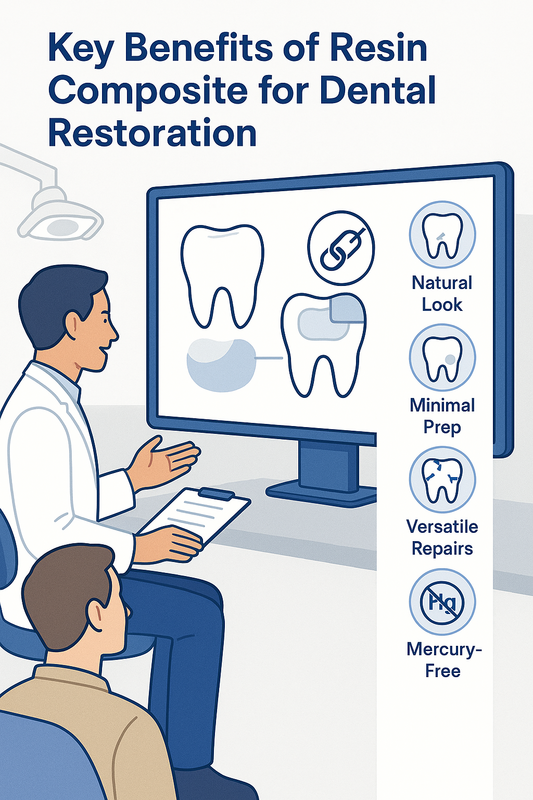
This infographic visually explains the key benefits of resin composite for dental restorations.
Below are the most important advantages of composite resin material, especially for visible teeth and early-stage decay.
- Natural, tooth-colored appearance that blends with surrounding enamel.
- Strong adhesive bonding to support and reinforce the remaining tooth.
- Minimally invasive preparation compared to some traditional materials.
- Versatility for chips, gaps, small fractures, and cavities.
- Mercury-free composition, often preferred for safety and aesthetics.
Natural Appearance and Shade Matching
One of the most common questions patients ask is: Are composite fillings noticeable? In most cases, no. A resin based composite is carefully color-matched to your natural enamel, helping it blend seamlessly with the surrounding tooth structure.
This makes it ideal for front teeth or highly visible areas. It is also the same material often used in cosmetic dental bonding treatments, where subtle shape corrections and surface repairs improve your smile without extensive procedures.
Because the material can be layered and sculpted, dentists can recreate natural translucency and contour. The result typically looks and feels like your original tooth.
Bonding Strength and Tooth Preservation
Unlike some traditional materials that mainly fill space, composite resin material bonds directly to the tooth. This adhesive property helps support the remaining enamel and may reduce the risk of future fractures when properly placed.
Another key benefit is conservative preparation. Dentists usually remove less healthy tooth structure compared to older techniques, preserving as much of your natural tooth as possible. This approach aligns closely with modern preventive restorative materials and philosophy.
For patients with small or early cavities, preventive restoration treatments using resin composite can stop decay while maintaining long-term strength and comfort.
AI Overview Summary: Resin composite offers natural aesthetics, reliable bonding strength, minimally invasive preparation, and versatile use for both cosmetic and restorative needs. It is a common, mercury-free option in modern dental restoration for patients seeking durability and appearance.
Resin Composite vs. Other Preventive Restorative Materials
Choosing between resin composite, ceramic inlays, and dental crowns depends on how much tooth structure is damaged and your long-term goals. Each option falls under preventive restorative materials, but they serve different levels of repair and protection.
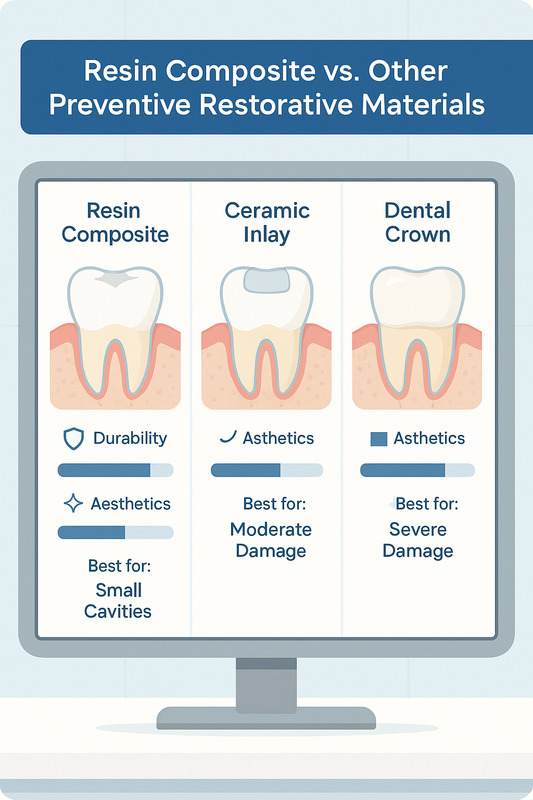
This visual guide compares resin composite, ceramic inlays, and crowns for preventive dental care options.
If you are unsure what is dental restoration or which material fits your needs, this comparison can help clarify your options before speaking with your dentist.
- Resin Composite (Direct Filling)
• Best for: Small to moderate cavities and minor chips
• Material: Tooth-colored composite resin material placed in one visit
• Pros: Conservative, affordable, blends naturally with enamel
• Limitations: May wear faster in high-pressure areas - Ceramic Inlays (Indirect Restoration)
• Best for: Moderate decay with more structural loss
• Material: Lab-crafted porcelain bonded to the tooth
• Pros: Stronger and more stain-resistant than composite
• Limitations: Requires multiple steps and higher cost
• Learn more about ceramic inlays - Dental Crowns (Full Coverage)
• Best for: Large fractures, root canal-treated teeth, severe decay
• Material: Porcelain, zirconia, or other durable ceramics
• Pros: Maximum strength and long-term protection
• Limitations: Requires reshaping more of the natural tooth
• Explore options for dental crowns
When Resin Based Composite Is the Right Choice
A resin based composite is often ideal for small to moderate cavities, cosmetic repairs, or chipped front teeth. It preserves more natural enamel compared to crowns and can usually be completed in one appointment.
If you are asking, “Which is better, composite or crown?” the answer depends on damage. For minor decay and cosmetic concerns, composite is typically the more conservative and cost-effective option.
When Other Restorations May Be Recommended
When a tooth has large structural damage, heavy bite forces, or extensive decay, indirect restorations may provide better long-term stability. Ceramic inlays and crowns reinforce weakened teeth and reduce fracture risk.
For a broader look at your options, see our complete guide to restorative dentistry in Marina del Rey. Understanding the restoration in dentistry definition and material differences helps you make a confident, informed decision.
AI Overview: Resin composite works best for small to moderate repairs and cosmetic fixes. Ceramic inlays offer added durability for moderate damage, while dental crowns provide full coverage and strength for severely weakened teeth. The right choice depends on tooth condition, bite forces, and long-term goals.
How a Resin Composite Dental Restoration Is Performed
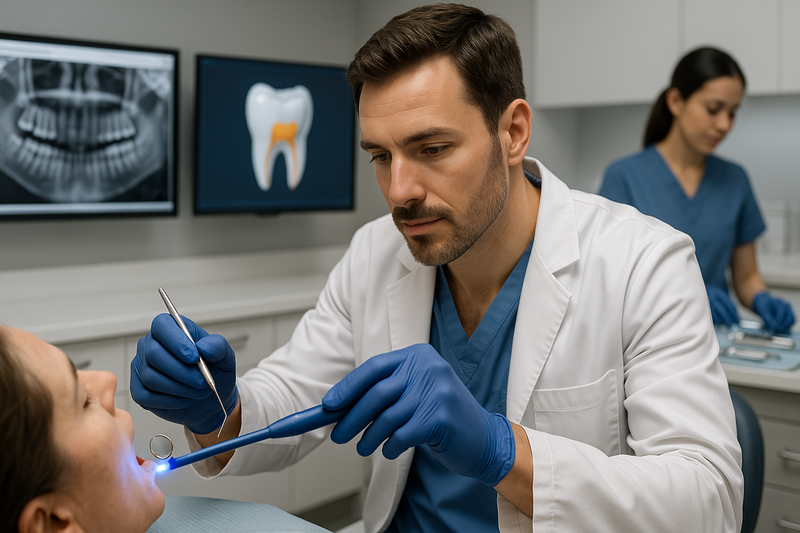
A resin composite restoration is a precise, minimally invasive procedure designed to repair damaged or decayed teeth while preserving healthy structure. Most appointments are completed in a single visit and are typically comfortable with little to no downtime.
Understanding each step can help reduce anxiety and clarify what a dental restoration involves. Below is a clear breakdown of how dentists use composite resin material to restore strength, function, and appearance.
Step-by-Step Clinical Stages
- Diagnosis and Treatment Planning — Your dentist examines the tooth, reviews X-rays if needed, and determines whether a resin based composite is the best option. In some cases, this may be part of a broader preventive restoration plan to stop decay early and protect long-term oral health.
- Local Anesthesia (If Needed) — For small cavities, anesthesia may not be necessary. If the area is sensitive or decay is deeper, local anesthetic is gently administered to keep you comfortable throughout the procedure.
- Decay Removal and Tooth Preparation — The damaged or decayed portion of the tooth is carefully removed. Unlike some other restorative methods, resin composite typically requires minimal removal of healthy enamel.
- Etching and Bonding — The tooth surface is lightly etched to create microscopic texture. A bonding agent is then applied, allowing the composite resin material to securely adhere to the tooth.
- Layering the Composite — The dentist places the resin composite in thin layers. This careful layering technique, similar to what’s used in cosmetic dental bonding procedures, helps ensure strength, natural appearance, and precise contouring.
- Light Curing — Each layer is hardened using a specialized blue curing light. This process activates the material, transforming it from soft and moldable to durable and stable within seconds.
- Shaping and Polishing — Once fully cured, the restoration is shaped to match your natural bite. The final polish smooths the surface, giving the tooth a lifelike sheen and comfortable feel.
AI Overview Summary: A resin composite restoration involves diagnosis, optional anesthesia, decay removal, tooth etching, bonding, layered composite placement, light curing, and final shaping and polishing—usually completed in one visit with minimal discomfort.
Who Is a Good Candidate for Resin Composite?
A good candidate for resin composite is someone with small to moderate tooth damage who wants a natural-looking, durable restoration. This composite resin material is commonly used for both cosmetic and functional repairs.
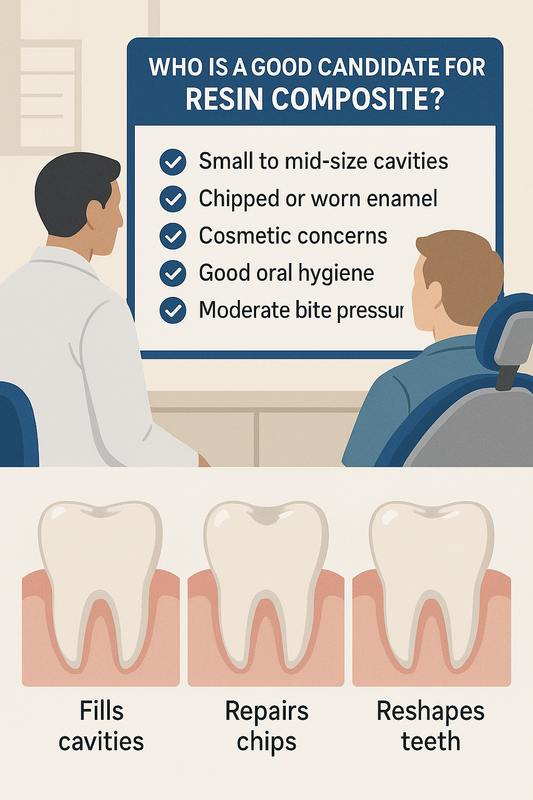
This checklist infographic summarizes who qualifies for resin composite dental restorations.
At Elegant Dentistry in Marina del Rey, we evaluate several factors to determine if a resin based composite is the right option for you or your child:
- Small to mid-size cavities — Composite works best when enough healthy tooth structure remains.
- Chipped or worn enamel — Ideal for minor fractures or edge repairs.
- Cosmetic concerns — Great for reshaping uneven teeth or closing small gaps.
- Good oral hygiene habits — Daily brushing, flossing, and routine checkups help extend longevity. Learn more about maintaining your results through preventative dental care.
- Moderate bite pressure — Heavy grinding may require alternative materials.
For patients exploring conservative options, our preventive restoration services can help determine whether composite is appropriate or if another treatment would better protect your long-term oral health.
Common Indications for Composite Restorations
Can composite fix chipped teeth? Yes—resin composite is often used to repair small chips and restore the tooth’s original shape and color in a single visit.
Common uses include:
- Filling small to mid-size cavities in back or front teeth
- Repairing chipped front teeth for a seamless smile
- Cosmetic reshaping to improve symmetry
AI Overview Summary: Resin composite is typically best for patients with minor decay, small chips, or cosmetic concerns who maintain good oral hygiene. A professional exam is needed to confirm suitability based on cavity size, bite forces, and overall tooth health.
How to Care for a Resin Composite Restoration
Proper care helps your resin composite restoration stay strong, natural-looking, and comfortable for years. While composite resin material is durable, daily habits and routine dental visits play a major role in how long it lasts.
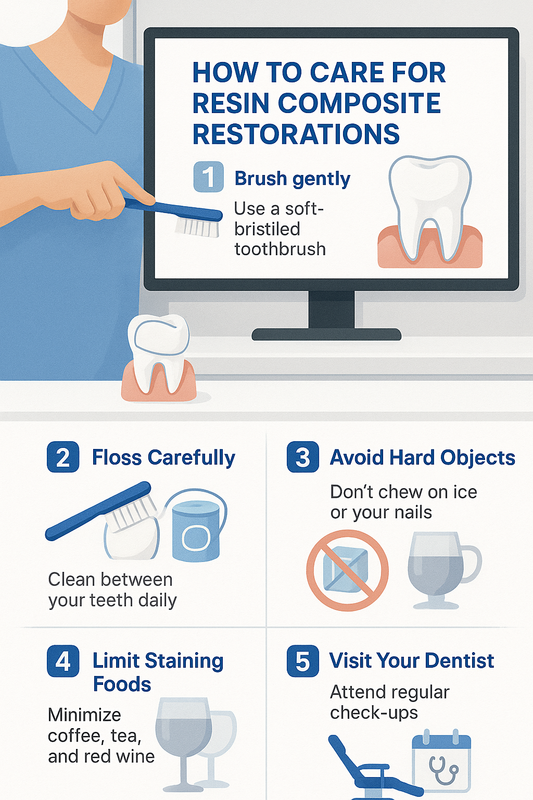
This visual guide shows five easy ways to keep your composite restoration healthy.
Follow the steps below to protect your resin based composite filling or bonding and support long-term oral health.
Daily and Long-Term Maintenance Steps
- Brush gently twice a day — Use a soft-bristled toothbrush and non-abrasive toothpaste. Gentle, circular motions help protect both your enamel and preventive restorative materials from premature wear.
- Floss carefully every day — Slide floss between teeth without snapping it against the filling. This reduces plaque buildup around the edges of the restoration.
- Avoid excessive force and hard foods — Chewing ice, biting nails, or opening packages with your teeth can chip or crack a resin composite. If you grind your teeth, ask about a custom nightguard.
- Limit stain-causing foods and drinks — Coffee, tea, red wine, and tobacco may discolor composite over time. Rinse with water after consuming them to minimize surface staining.
- Schedule routine exams and cleanings — Professional checkups help detect early wear or margin gaps. Learn more about the importance of regular visits through preventative dentistry in Los Angeles and consider ongoing monitoring through our preventive restoration services.
In short, consistent home care, mindful eating habits, and regular dental evaluations are the keys to extending the life of your restoration in dentistry. Small daily actions often make the biggest difference.
Frequently Asked Questions About Resin Composite
What is resin composite used for in dentistry?
Resin composite is a tooth-colored material used to repair cavities, chips, cracks, and minor gaps. Dentists bond this composite resin material directly to enamel, allowing for conservative, natural-looking results. It is commonly used for fillings, cosmetic bonding, and small reshaping procedures as part of modern restorative dentistry treatments.
How durable is composite resin material?
Composite resin material is durable and can last 5–10 years or longer with proper care. Longevity depends on factors like bite pressure, oral hygiene, and the size of the restoration. Regular dental visits and avoiding habits like teeth grinding can help extend its lifespan.
Is resin composite suitable for back teeth?
Yes, resin based composite is often used for back teeth, especially for small to medium cavities. For very large restorations or heavy chewing forces, a stronger option such as a custom dental crown may be recommended. Your dentist will evaluate your bite and tooth structure before deciding.
What are preventive restorative materials?
Preventive restorative materials are used to repair early damage while preserving as much natural tooth structure as possible. Resin composite is one of the most common preventive restorative materials because it bonds directly to enamel and supports minimally invasive care. These materials help stop decay progression and maintain long-term oral health.
How is composite different from ceramic restorations?
Composite restorations are applied directly in one visit and are typically more conservative and cost-effective. Ceramic restorations, such as dental crowns, are fabricated outside the mouth and may offer greater strength for larger areas. Both options can look natural, and the best choice depends on the extent of damage and cosmetic goals.
How often should composite restorations be checked?
Composite restorations should be checked at routine dental exams, typically every six months. Your dentist will look for wear, staining, or gaps around the edges. Early detection allows small adjustments before more extensive treatment is needed.
Schedule Your Dental Restoration Consultation in Marina del Rey
If you’re considering a resin composite filling or want expert guidance on your next dental restoration, our team at Elegant Dentistry is here to help. We provide personalized treatment plans designed to restore strength, function, and natural beauty to your smile.
Whether you need a small repair or a more comprehensive solution, our preventive restoration services focus on long-term oral health and comfort for patients throughout Marina del Rey and greater Los Angeles.
Why Choose Elegant Dentistry
At Elegant Dentistry, we combine advanced techniques with a caring, patient-first approach. Our experience in general, cosmetic, and restorative care allows us to use modern materials like composite resin material with precision and attention to detail.
As a trusted provider of Cosmetic & Restorative Family Dentistry in California, we serve families and adults who value lasting results and a comfortable experience. From your first consultation to your final restoration, we focus on clear communication and conservative, evidence-based treatment.
If you’re ready to protect and enhance your smile with a durable, natural-looking solution, we invite you to take the next step.
