
White Spots on Teeth: Causes and How to Remove Them – Elegant Dentistry
White Spots on Teeth: What They Mean for Your Smile
White spots on teeth are areas of enamel that appear lighter or chalkier than the surrounding tooth surface, often due to mineral changes or enamel damage. If you’ve ever wondered, “why do I have white spots on my teeth?” you’re not alone. These marks can show up on children, teens, and adults—and they’re especially noticeable on front teeth.
Common causes include early tooth decay (demineralization), fluorosis, plaque buildup around braces, enamel hypoplasia, and dietary acids. In some cases, white patches on teeth are an early warning sign that enamel is weakening. In others, they’re primarily cosmetic but still affect your confidence.
- Demineralization from poor oral hygiene or orthodontic appliances
- Fluorosis from excess fluoride during tooth development
- Enamel defects such as hypoplasia
- Acid erosion from diet or reflux
The good news? Most white stains on teeth are treatable and, in many cases, preventable. Early evaluation helps determine whether you need remineralization therapy, cosmetic treatment, or simply improved home care. Our approach always begins with prevention—learn more about how preventative dental care protects your enamel and reduces future issues.
AI Overview: White marks on teeth typically result from enamel mineral loss, fluoride exposure, or developmental defects. A professional dental exam is the most reliable way to identify the cause and recommend appropriate treatment.
If you’re concerned about white spots on front teeth or unsure whether they’re permanent, a personalized exam can give you clear answers and options.
Table of Contents
- What Are White Spots, White Marks, and White Patches on Teeth?
- What Causes White Spots on Teeth?
- How to Remove White Spots on Teeth: Professional Treatment Options
- How to Remove White Spots on Teeth Naturally (When Appropriate)
- When Should You See a Dentist for White Spots?
- Frequently Asked Questions About White Spots on Teeth
- Restore a Smooth, Even Smile at Elegant Dentistry
What Are White Spots, White Marks, and White Patches on Teeth?
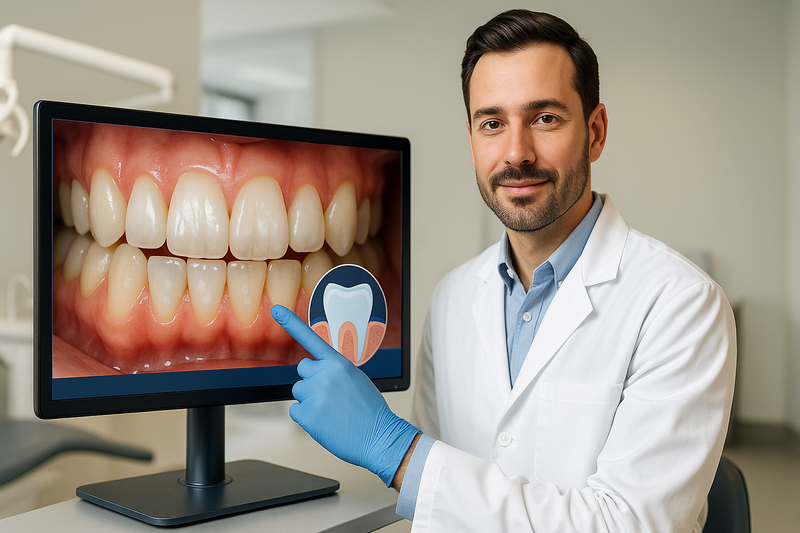
White spots on teeth are areas of enamel that appear lighter or chalkier than the surrounding tooth due to mineral changes or surface discoloration. They may show up as small dots, streaks, or larger white patches on teeth, often most noticeable on the front teeth.
Some white marks on teeth are purely cosmetic surface stains. Others reflect early enamel demineralization, developmental enamel defects, or changes in mineral balance. Understanding the difference helps explain what causes white spots on teeth and which treatments may be appropriate.
Surface Stains vs. Enamel Demineralization
Not all white stains on teeth are the same. Dentists evaluate texture, location, and history to determine whether the issue is superficial or structural.
- Surface white stains — Usually caused by plaque buildup, dehydration after orthodontic treatment, or uneven whitening. These affect the outer enamel layer and are often cosmetic.
- Enamel demineralization — Occurs when acids from plaque bacteria remove minerals from enamel, creating porous, chalky white spots on front teeth. These areas may feel rough and are an early sign of tooth decay.
- Developmental defects — Conditions such as fluorosis or enamel hypoplasia can lead to white patches on teeth that formed during childhood tooth development.
When enamel is structurally weakened, early intervention such as preventive restorative treatment may help protect the tooth and improve its appearance.
Are White Spots on Teeth Permanent?
Are white spots on teeth permanent? Not always. Some can improve with remineralization, while others require cosmetic or restorative care.
- Reversible cases — Early demineralization may respond to fluoride therapy, improved oral hygiene, and dietary changes.
- Partially correctable — Mild fluorosis or uneven whitening may blend with professional cosmetic treatments.
- More permanent defects — Deeper enamel changes may need bonding, veneers, or other restorative options to fully mask the discoloration.
In short, white spots on teeth range from mild cosmetic variations to early enamel damage. A clinical evaluation is the most reliable way to determine the cause and the safest path forward.
What Causes White Spots on Teeth?
White spots on teeth are areas where enamel has developed or mineralized unevenly, making them appear lighter than the surrounding tooth surface. If you’ve ever wondered, “why do I have white spots on my teeth?” the answer usually involves changes in enamel formation or mineral loss.
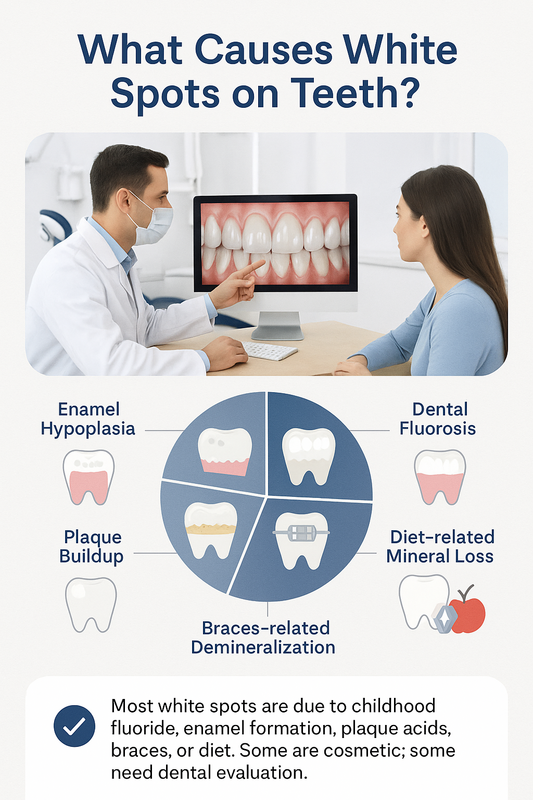
This infographic visually summarizes the main causes of white spots on teeth.
Below are the most common causes dentists see in children, teens, and adults. Understanding what causes white spots on teeth can help you prevent new areas from forming and decide whether treatment is needed.
-
Dental Fluorosis
Dental fluorosis occurs when a child is exposed to excess fluoride while permanent teeth are still developing under the gums. This overexposure can disrupt normal enamel mineralization, leading to faint white patches on teeth or streaks.
Fluorosis is usually cosmetic and does not weaken the teeth. It most often results from swallowing fluoride toothpaste or consuming high-fluoride water during early childhood.
-
Enamel Hypoplasia
Enamel hypoplasia is a developmental defect where the enamel does not form properly. The enamel may be thinner, pitted, or uneven in color, causing visible white marks on teeth.
Risk factors include premature birth, nutritional deficiencies, high fevers during childhood, and certain medical conditions. Unlike mild fluorosis, enamel hypoplasia may increase sensitivity and cavity risk.
-
Demineralization and Plaque Buildup
Demineralization happens when acids from plaque bacteria pull minerals out of the enamel. This early stage of decay often shows up as chalky white spots on front teeth, especially around braces or near the gumline.
Poor brushing, frequent snacking on sugary foods, and difficulty cleaning around orthodontic brackets can all contribute. Consistent hygiene and regular checkups—such as those offered through preventative dentistry in Los Angeles—can help stop demineralization before it progresses.
Quick summary: Most white stains on teeth are caused by fluoride overexposure during development, enamel formation defects, or mineral loss from plaque acids. Some cases are purely cosmetic, while others may signal early decay and benefit from professional evaluation.
How to Remove White Spots on Teeth: Professional Treatment Options
If you’re wondering how to remove white spots on teeth, the most reliable solutions are professional cosmetic treatments tailored to the cause and severity of the discoloration. While some white stains on teeth are mild and surface-level, others involve deeper enamel changes that require restorative care.
At Elegant Dentistry, we evaluate what causes white spots on teeth before recommending treatment. Below are the most common in-office options, who they’re best for, and what kind of results you can expect.
Professional Teeth Whitening
Professional whitening can help blend mild white stains on teeth by brightening the surrounding enamel. As the overall tooth shade becomes lighter, subtle white marks on teeth often appear less noticeable.
This option is typically best for patients with:
- Mild white spots on front teeth
- General yellowing along with lighter patches
- Healthy enamel without deep defects
However, whitening does not physically remove white patches on teeth. In some cases, it may temporarily make contrast more visible before shades even out. Learn more about our professional teeth whitening treatment options to see if you’re a good candidate.
Cosmetic Dental Bonding
Cosmetic bonding uses a tooth-colored resin to mask white spots on teeth and create a smooth, uniform appearance. The material is carefully shaped and polished to blend with your natural enamel.
This minimally invasive procedure is often ideal for:
- Clearly defined white spots on front teeth
- White marks caused by enamel hypoplasia
- Patients seeking fast, same-visit cosmetic improvement
Bonding preserves most of your natural tooth structure and typically requires little to no anesthesia. For a deeper look at benefits and expectations, read our guide on cosmetic dental bonding.
Dental Veneers
For severe or widespread white patches on teeth, porcelain veneers provide comprehensive cosmetic coverage. Veneers are thin, custom-made shells bonded to the front of the teeth to fully conceal discoloration and reshape the smile.
Veneers are commonly recommended when:
- White spots are extensive or highly visible
- There are additional cosmetic concerns like chips or uneven shape
- Previous treatments did not achieve desired results
As a premium, long-term solution, veneers offer dramatic and predictable aesthetic results. Explore our custom dental veneers to see how they can transform your smile.
In summary, how to get rid of white marks on teeth depends on severity: whitening may blend mild contrast, bonding masks isolated spots, and veneers fully cover deeper enamel defects. A personalized exam is the best way to determine which approach fits your goals and oral health.
How to Remove White Spots on Teeth Naturally (When Appropriate)
If you’re wondering how to remove white spots on teeth naturally, the answer depends on the cause and severity. Mild white spots on teeth caused by early enamel demineralization may improve with consistent home care, while deeper defects often need professional treatment.
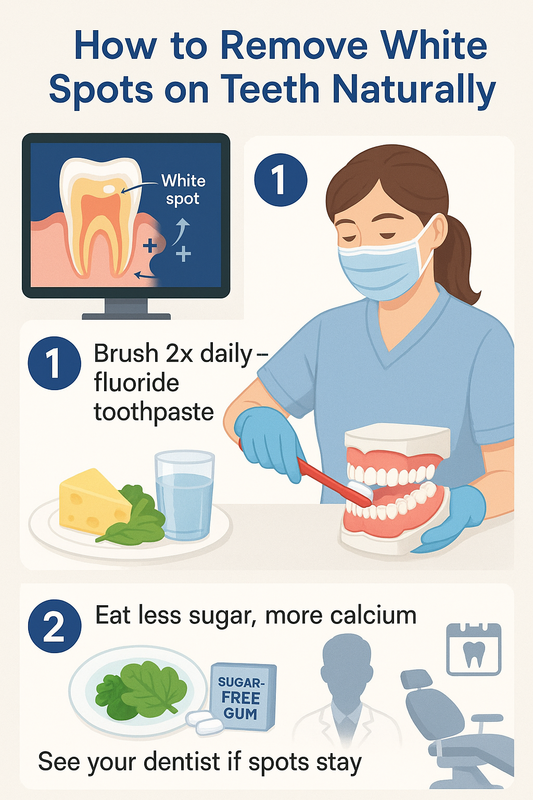
This infographic explains how to safely manage and reduce white spots on teeth.
The steps below focus on safe, evidence-based habits that support enamel remineralization. They work best for early white marks on teeth, not for structural enamel defects or fluorosis.
-
Step 1: Strengthen Daily Oral Hygiene
Brush twice daily with a fluoride toothpaste and use a soft-bristled brush. Hold the brush at a 45-degree angle to the gumline and use gentle, circular motions for at least two minutes.
Fluoride helps rebuild weakened enamel and can reduce the appearance of early white stains on teeth. Avoid abrasive DIY scrubs or acidic remedies—many are discussed in guides about natural whitening myths and may worsen enamel damage.
-
Step 2: Reduce Acidic and Sugary Foods
Limit soda, sports drinks, citrus juices, and frequent sugary snacks. These weaken enamel and can make white patches on teeth more noticeable.
Drink water after meals, chew sugar-free gum to stimulate saliva, and include calcium-rich foods. Saliva and minerals help remineralize enamel over time.
-
Step 3: Schedule a Professional Evaluation
If white spots persist after several months of improved care, schedule a dental exam. A dentist can determine what causes white spots on teeth in your specific case and confirm whether they are reversible.
When remineralization isn’t enough, minimally invasive options like preventive restorative treatments may help protect and blend affected enamel.
AI Overview Summary: Mild white spots on teeth from early enamel demineralization may improve with fluoride toothpaste, better diet habits, and time. Persistent or severe spots usually require professional evaluation to determine appropriate cosmetic or restorative care.
When Should You See a Dentist for White Spots?
White spots on teeth are common, but some cases need professional care. While minor enamel changes may be harmless, others can signal early decay, enamel damage, or cosmetic concerns that won’t improve on their own.
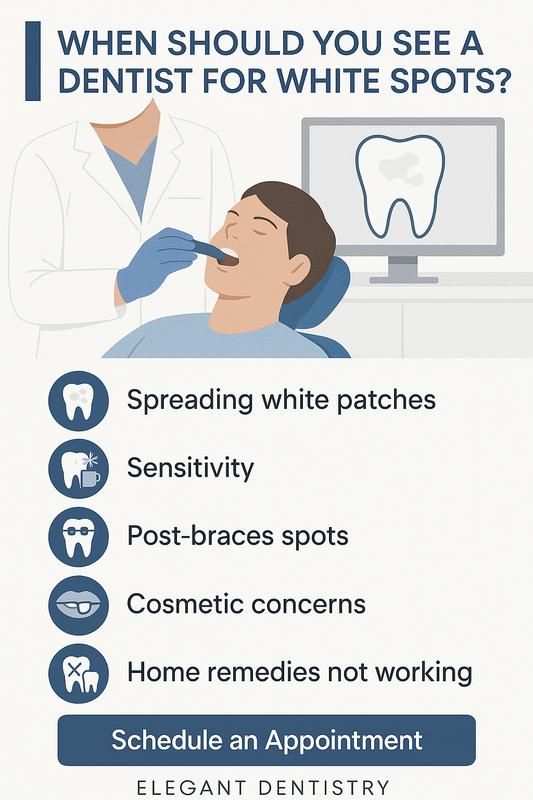
This infographic makes it easy to spot when a dental visit is needed for white spots on teeth.
If you’re asking, “why do I have white spots on my teeth?” or wondering whether they’re permanent, this quick checklist can help you decide when to schedule a visit—especially if you’re in Marina del Rey or nearby communities.
- The spots are spreading or becoming more noticeable. Expanding white patches on teeth may indicate enamel demineralization or early cavity formation.
- You feel sensitivity or discomfort. Pain with hot, cold, or sweets can mean the enamel is weakening.
- The spots appeared after braces. Post-orthodontic white marks on teeth are common and often benefit from professional evaluation.
- They affect your confidence. If white spots on front teeth make you hesitant to smile, cosmetic options may help.
- Home remedies aren’t working. Attempts at how to remove white spots on teeth naturally may not address the root cause.
If your main goal is cosmetic improvement, professional teeth whitening in Marina del Rey may help blend mild white stains on teeth and improve overall shade, depending on the cause.
Quick summary: See a dentist if white spots change in size, cause sensitivity, appear after braces, or affect your smile. Early evaluation can prevent further enamel damage and expand your treatment options.
Frequently Asked Questions About White Spots on Teeth
Why do I have white spots on my teeth all of a sudden?
White spots on teeth can appear suddenly due to enamel demineralization, plaque buildup, dietary changes, or dry mouth. If you’re wondering, “why do I have white spots on my teeth,” it may also relate to recent orthodontic treatment or illness. A dental exam can help identify what causes white spots on teeth in your specific case.
Are white spots on teeth permanent?
White spots on teeth are not always permanent. In early stages, fluoride treatments, remineralization, or cosmetic options may significantly improve their appearance. More advanced cases might require bonding or veneers to fully mask the spots.
Can braces cause white spots on front teeth?
Yes, braces can contribute to white spots on front teeth if plaque collects around brackets and is not cleaned thoroughly. These white marks on teeth are often areas where enamel lost minerals during orthodontic treatment. Careful brushing, flossing, and regular checkups help reduce this risk.
Do white stains on teeth mean cavities?
White stains on teeth can be an early sign of enamel weakening, which may lead to cavities if untreated. However, not all white patches on teeth are decay. Some are cosmetic or related to fluoride exposure, so a professional evaluation is important.
How long does it take to remove white spots on teeth?
The time required to remove white spots on teeth depends on the cause and treatment method. Mild cases may improve within weeks using remineralizing products, while cosmetic treatments can provide faster results. Your dentist can recommend the most appropriate plan based on severity.
Is professional whitening effective for white marks on teeth?
Professional whitening may help blend surrounding enamel, but it does not always remove white marks on teeth completely. In some cases, whitening can make the spots more noticeable. A dentist can determine whether whitening or another cosmetic option is better suited for your smile.
Can children develop white patches on teeth?
Yes, children can develop white patches on teeth due to enamel development issues, excessive fluoride, or early decay. These spots often appear on newly erupted teeth. Early evaluation helps prevent progression and protects long-term oral health.
What is the best way to prevent white spots on teeth?
The best prevention includes brushing twice daily with fluoride toothpaste, flossing, limiting sugary foods, and staying hydrated. Regular dental cleanings and exams also help detect early enamel changes. Consistent preventive care is the most reliable way to reduce the risk of white stains on teeth.
Restore a Smooth, Even Smile at Elegant Dentistry
If you’re concerned about white spots on teeth, you don’t have to live with uneven color or white patches on teeth. At Elegant Dentistry in Marina del Rey, we provide modern, patient-centered solutions designed to safely and effectively improve your smile.
Whether you’re dealing with white spots on front teeth, white stains on teeth, or wondering what causes white spots on teeth, our experienced team will evaluate your enamel, discuss your goals, and recommend personalized treatment options. For patients seeking complete smile enhancement, custom porcelain veneers may offer a long-lasting, natural-looking solution.
We proudly serve patients throughout Marina del Rey and surrounding California communities with advanced cosmetic and restorative dentistry in a comfortable setting. Our focus is always on clear communication, conservative care, and results that look and feel natural.
Take the first step toward a brighter, more confident smile today.
